Southern France’s Roman Treasures | Ancient Sites That Rival Rome Itself
When you think of Roman ruins, grand sites such as Rome’s Colosseum may spring to mind. But what may surprise you is that some of the most spectacular and best preserved monuments of the Roman Empire aren’t in Italy at all. They’re scattered across the bucolic landscapes of southern France.
Provence earned its name from the Romans themselves – ‘Provincia Romana,’ the Province of Rome. This was the jewel in the crown of Roman Gaul (the ancient name for what we now know as France). And these ancient conquerors didn’t just pass through. They stayed for 500 years, transforming this region into one of the empire’s most prosperous territories.
The result? An astonishing collection of amphitheatres, temples, aqueducts and triumphal arches that, in many cases, surpass their counterparts in Rome in both preservation and grandeur.
Why the Roman Sites in the South of France are Extraordinary
Get set to step back into an era of gladiators, emperors and architectural marvels. Many historians argue that the finest Roman architecture outside Italy is found right here in the South of France. Unlike Rome, where centuries of continuous urban development buried or destroyed many ancient structures, Provence’s Roman monuments have survived remarkably intact.
The dry Mediterranean climate helped, but so did something else. Many of these buildings simply never stopped being used. Yes, you read that right! These 2000-year-old structures are still very much part of the cultural calendar today.
The Nîmes Arena – Better Preserved than the Colosseum
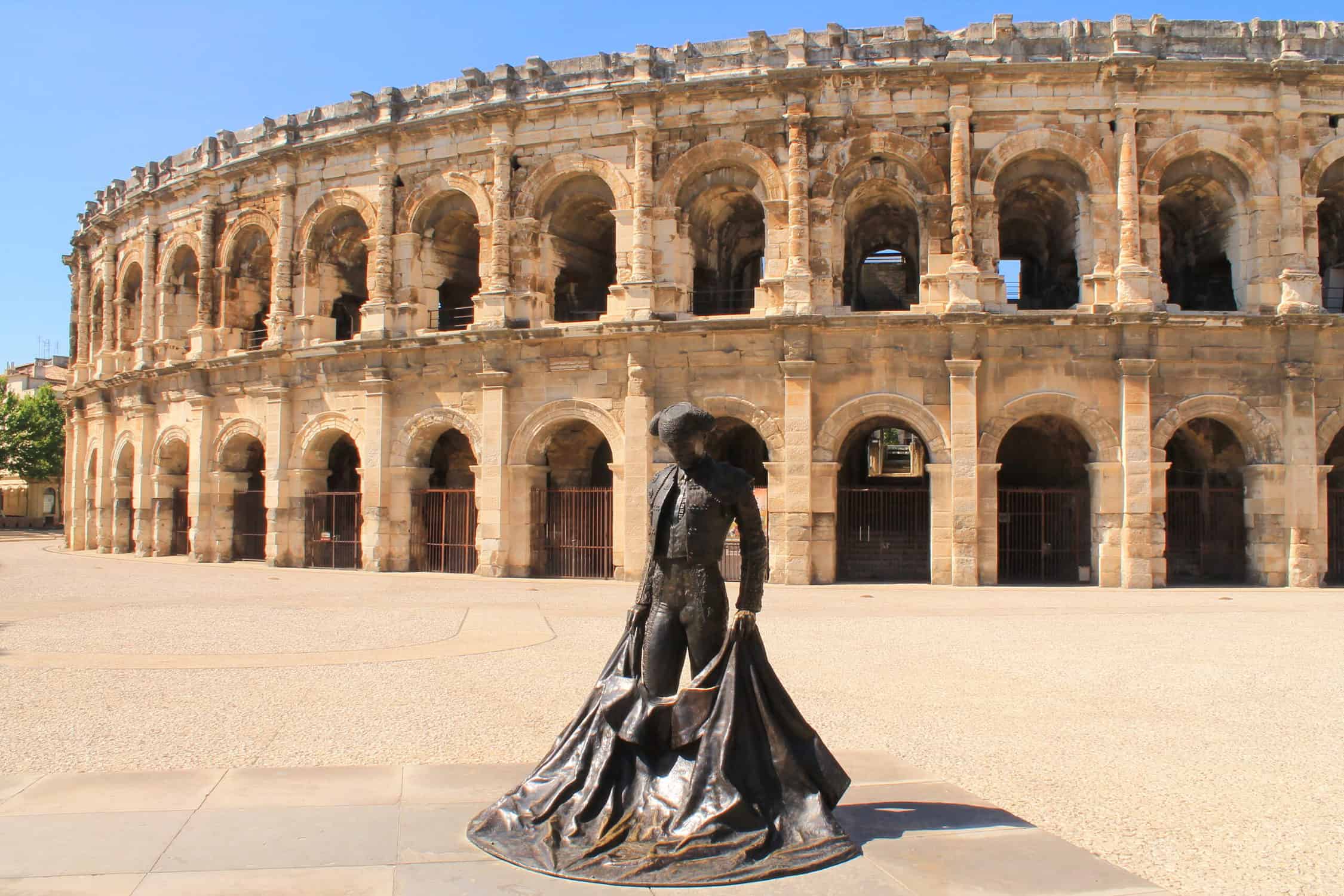
Built around 100 AD, shortly after Rome’s Colosseum, the Nîmes amphitheatre stands as one of the best-preserved Roman amphitheatres. While Rome’s famous Colosseum has lost much of its outer wall and interior structure, Nîmes remains nearly complete.
The arena measures 133m long and 100m wide, with an imposing facade that rises 20m high. Making it the only amphitheatre in the world that has kept its entire upper story intact. In Roman times, this venue welcomed 24,000 spectators to watch both gladiator battles and wild animal hunts.
Later, during the Middle Ages, the amphitheatre was turned into a fortress, housing an entire neighbourhood between its protective walls. This continuous occupation protected the structure from being dismantled for building materials, a fate that befell so many Roman monuments throughout Europe.
Today, the arena is still very much in use. Concerts and re-enactments of Roman games regularly take place here, keeping its heritage alive.
Related Reading: Famous Landmarks in France to Visit at Least Once in Your Lifetime
Orange’s Theatre – The Best in Europe
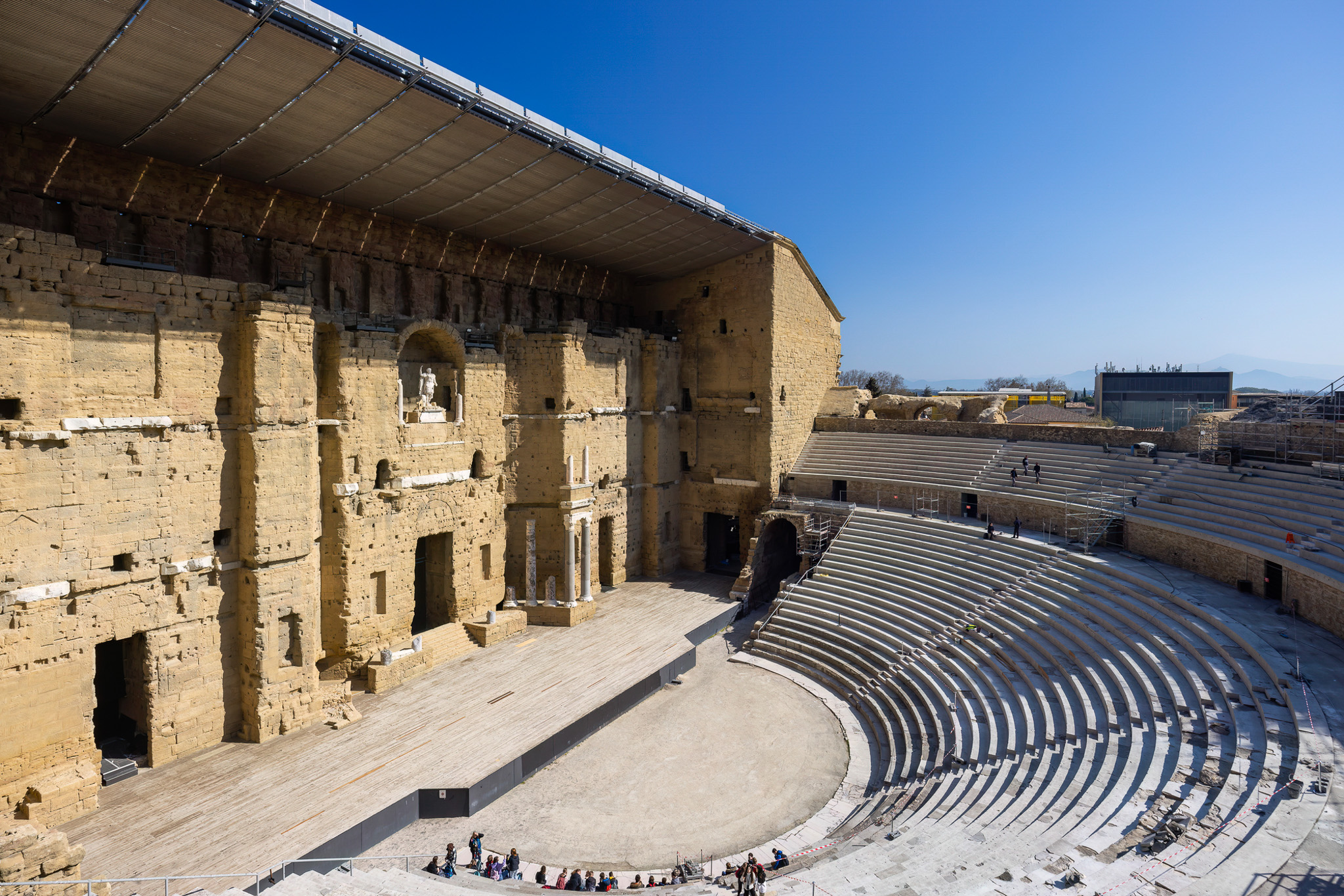
Travel to the small city of Orange in northern Provence, and you’ll encounter what experts call the best-preserved Roman theatre in all of Europe. Built in the reign of Emperor Augustus during the first century AD, with seating for up to 10,000 guests, this UNESCO World Heritage site features something many Roman theatres have lost: its complete stage wall.
Standing at around 37m, this massive backdrop provides incredible acoustics. The theatre was so well designed that even today, without modern sound systems, performers can be heard perfectly from the highest seats. Each summer, the venue hosts the Chorégies d’Orange, an internationally renowned opera festival, proving that 2,000-year-old Roman engineering still works beautifully.
Pont du Gard – Engineering Marvel in the Countryside
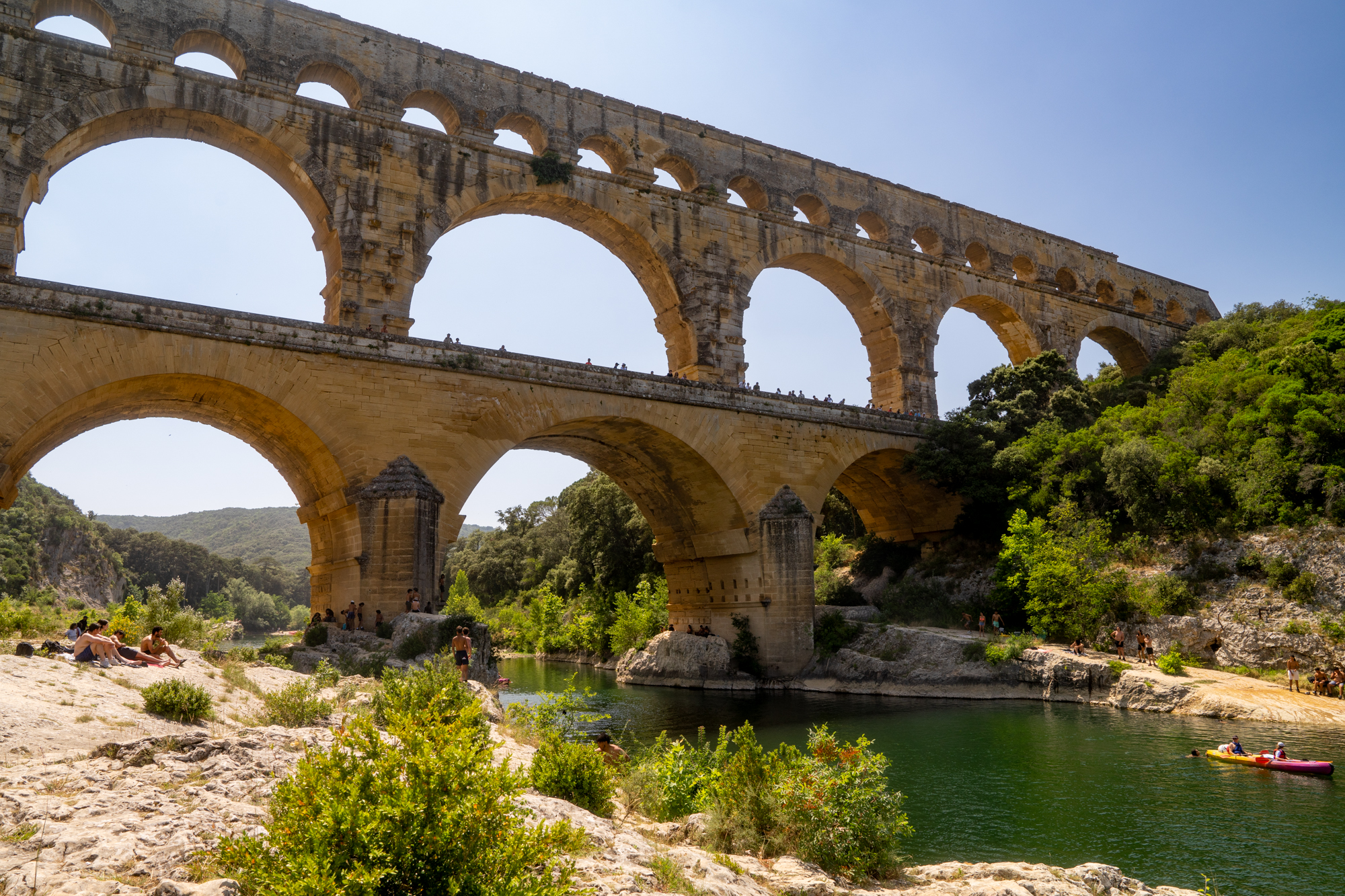
About 25 km from Avignon, the Pont du Gard rises above the Gardon River valley like something from a movie set. This three-tiered aqueduct is the tallest Roman aqueduct to exist, standing at 49m high.
It was built to transport water from natural springs to the city of Nîmes, using nothing but gravity to guide it on its journey. Nine million gallons of fresh spring water would traverse the length of the aqueduct every day. The engineering precision required to maintain the gentle slope necessary for water to flow over such a distance and height is awe-inspiring.
The aqueduct is constructed from massive limestone blocks, some weighing up to six tonnes, assembled entirely without mortar. Yet it has stood firm for nearly 2000 years, even with the lower level serving as a road bridge up until 1996!
Today, it’s protected under its UNESCO World Heritage designation. Visitors can still access the bridge and its surrounds, walk across the lower level, swim beneath its arches and picnic in its grounds. Read more about planning your visit to the Pont du Gard here.
Pont Flavien – A Hidden Gem in Saint-Chamas
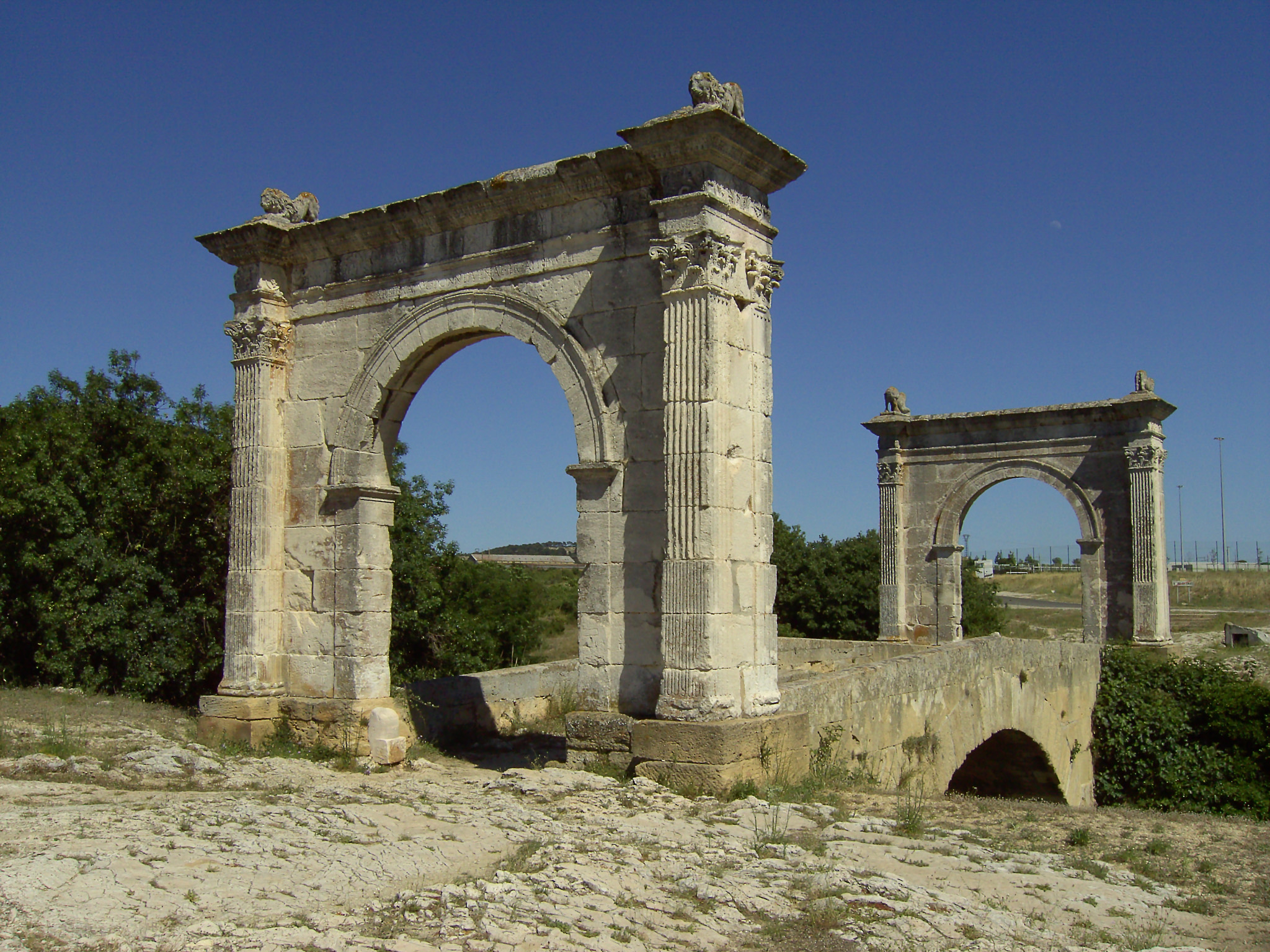
We first bumped into this Roman bridge by accident, as it’s just sitting innocuously by the side of a roundabout near Saint-Chamas. One of the most beautiful Roman bridges, it was built around 20-10 BCE and is the only surviving Roman bridge with triumphal arches standing at both ends.
These elegant arches, standing 7m high, feature carved eagles clutching wreaths. You can also see lion statues sitting atop the arches, although only one of these is original, with the other 3 having been reconstructed following damage over the years. The bridge served as the main crossing over the Touloubre River for nearly 2000 years – you can still see the deep ruts carved into the rock by the countless wagon wheels that traversed it.
If you’re driving between Marseille and Arles, stop by this underrated gem and run your hands along the same stones that Roman travellers touched. It’s openly accessible and free to enter.
Pont Julien – The Luberon’s Roman Treasure
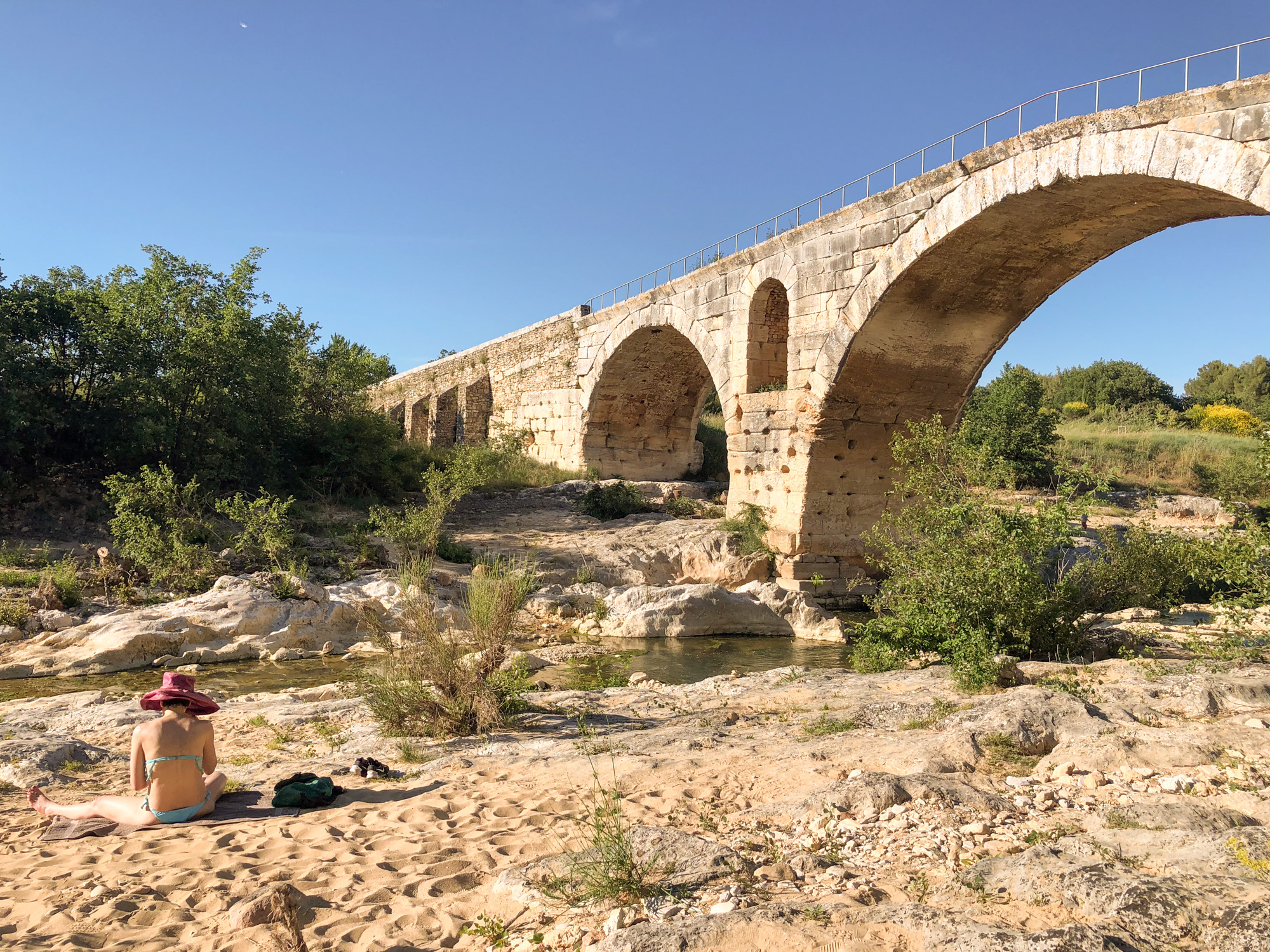
Near Bonnieux, in the heart of the Luberon, the Pont Julien has been carrying traffic across the Calavon River since 3BCE. The elegant three-arched bridge was part of the Via Domitia, the first Roman road connecting Italy to Spain through Gaul – and it’s the only surviving bridge from that ancient route.
Built from limestone blocks quarried from nearby Luberon mountains, the bridge showcases ingenious Roman engineering. The supporting pillars feature openings to allow floodwater to pass through, protecting the structure during high water. Cars and trucks used this 2000-year-old bridge until 2005, when a modern replacement was built in parallel.
These days, you can walk or cycle across it – and it forms part of the Veloroute de Calavon, a cycle route passing through the Luberon. It’s also a popular picnic spot, with handy parking nearby. And, when the water is high enough, the locals can be found cooling off in the natural rock pools below.
Discover more things to do in and around Bonnieux here.
Vaison-la-Romaine – France’s Largest Archaeological Site
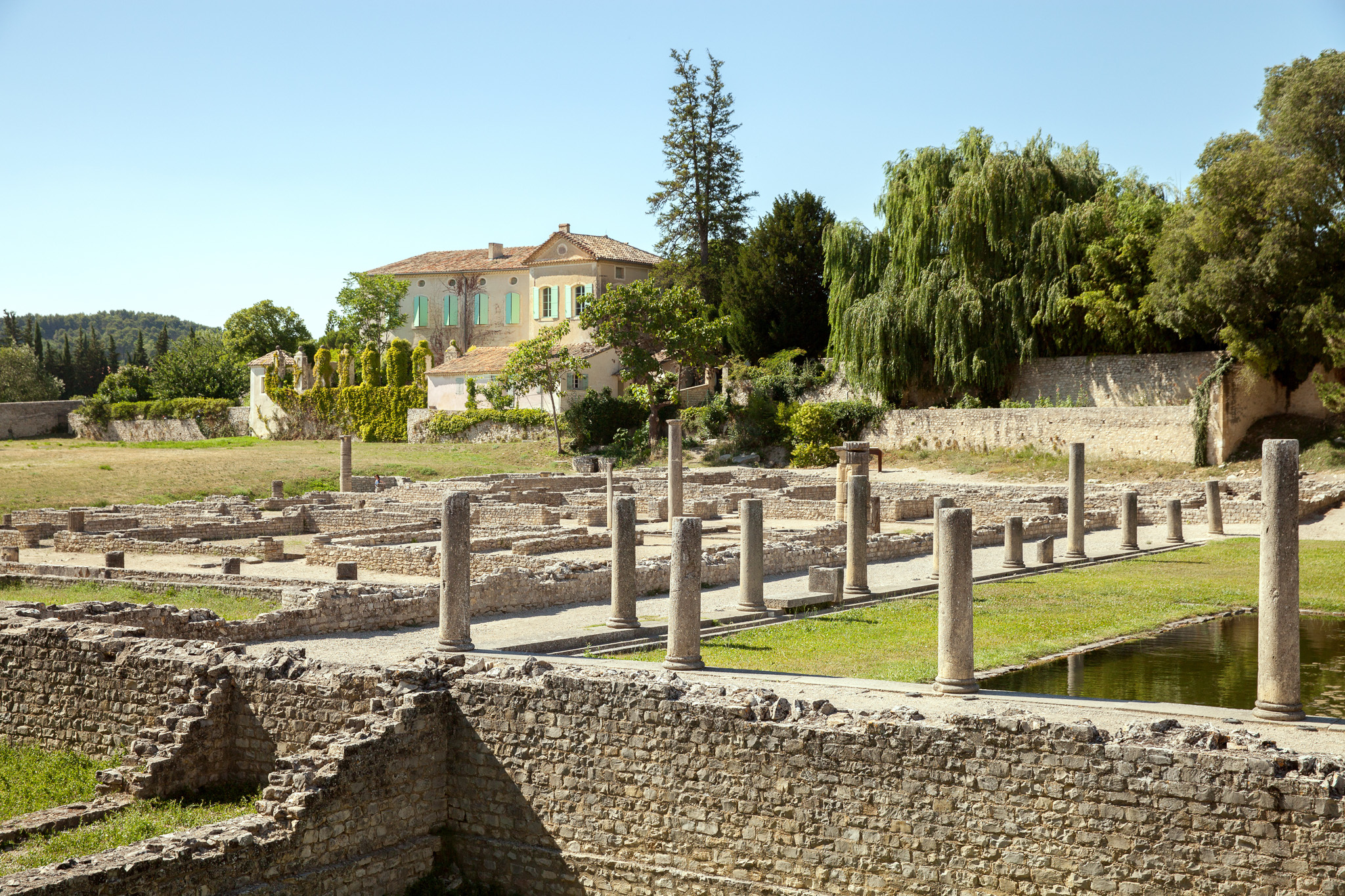
There are plenty of reasons why Vaison-la-Romaine should be on your itinerary when visiting the south of France, but its Roman sites should be at the top of the list! Two major excavations in the early 20th century revealed the layout of a once-thriving Roman city. It’s only then that “la Romaine” (the Roman) was added to the town’s name, in a testament to its past.
Two main archaeological areas are open to the public – Puymin and La Villasse – both conveniently located in the town centre on either side of the tourist office. One ticket allows you access to both areas.
You can walk down ancient streets, explore the foundations of wealthy villas decorated with intricate mosaics and sit in a theatre that once entertained 6,000 spectators. The site includes shops, a nymphaeum with elaborate fountains, public baths and an extraordinarily well-preserved first-century Roman bridge that’s still in use today.
The earliest Roman buildings date to 50-30 BCE, and by the 2nd century CE, it was one of the richest cities in Provence. Walking through these ruins, you get an intimate sense of daily life in Roman Provence – far more so than at many sites in Italy, where only scattered fragments remain.
Maison Carrée – A Perfect Roman Temple
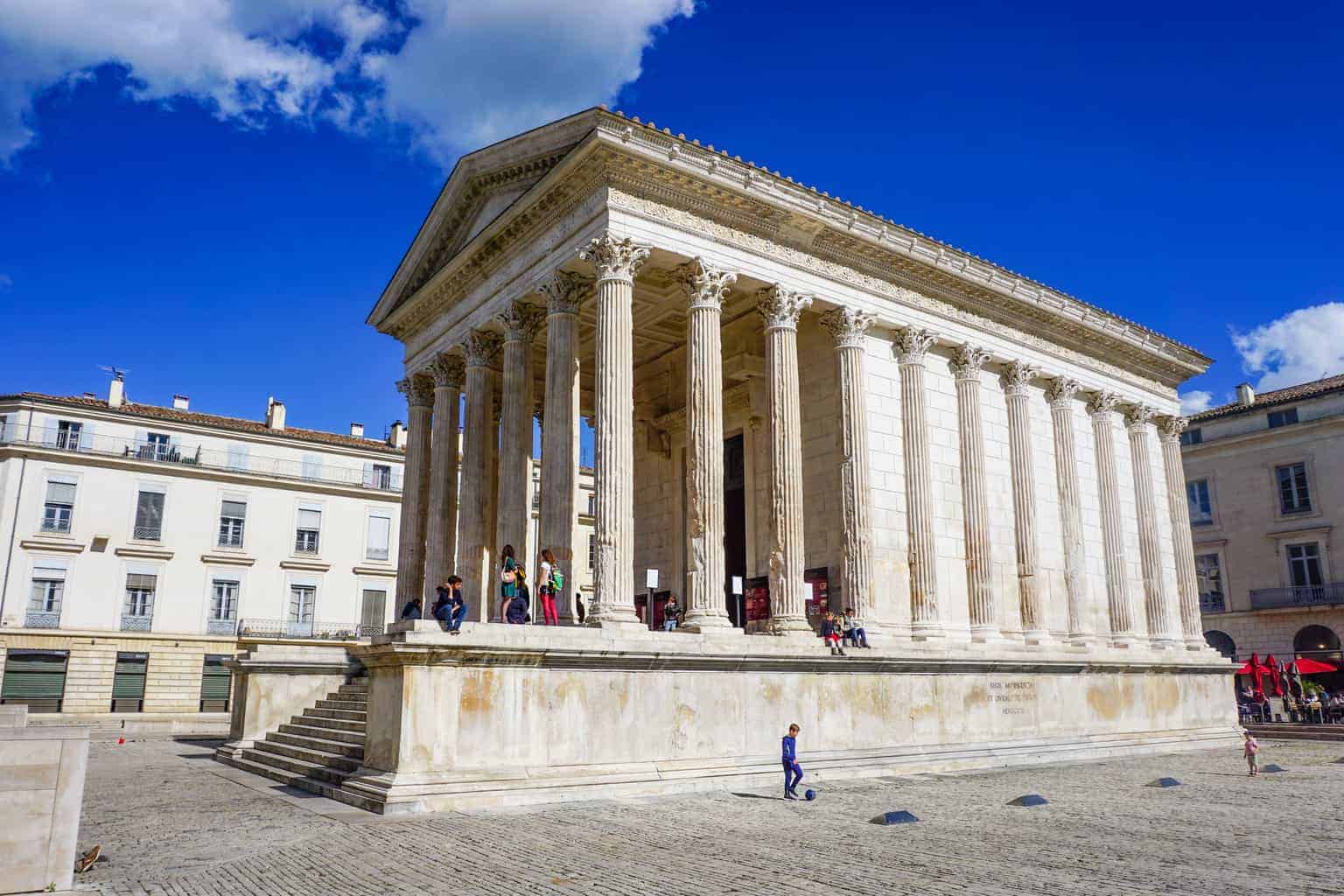
Back in Nîmes, you’ll find the Maison Carrée – square house – though it’s neither a house nor particularly square! It’s a Roman temple, and the most perfectly preserved one in the entire Roman Empire.
Built in the early first century to honour the imperial family, this Corinthian-style temple takes inspiration from the great temples of Apollo and Mars in Rome. However, while those Roman originals have been reduced to ruins, the Maison Carrée remains virtually complete with its columns, pediment and entablature intact.
Its excellent state of preservation has had a major influence on neoclassical architecture worldwide, inspiring buildings such as the US Supreme Court and countless other structures across Europe and America.
You can view the exterior of this magnificent building in Nîmes anytime, but there is a small fee to visit the interior (buy a combined ticket if you wish to visit other Roman sites in Nîmes).
Glanum and Les Antiques – Layers of History in St Remy

Just outside Saint-Remy-de-Provence, the archaeological site of Glanum reveals layers of civilisation. Originally a Celtic-Ligurian oppidum built around a sacred spring, it was later Hellenised through contact with Greek traders from Marseille, before being fully Romanised with the addition of the forum, baths, and theatres.
Across the road from the excavated city stand two magnificent monuments known as Les Antiques: a Triumphal arch celebrating Julius Caesar’s conquest of Gaul, and a 60-foot-high mausoleum that’s considered one of the best-preserved funerary monuments from the ancient world.
The city of Glanum is open year-round except for public holidays, and has an entrance fee. Les Antiques are across the road from Glanum, and are free to observe. Discover other attractions in Saint-Rémy here.
Arles Amphitheatre and Beyond
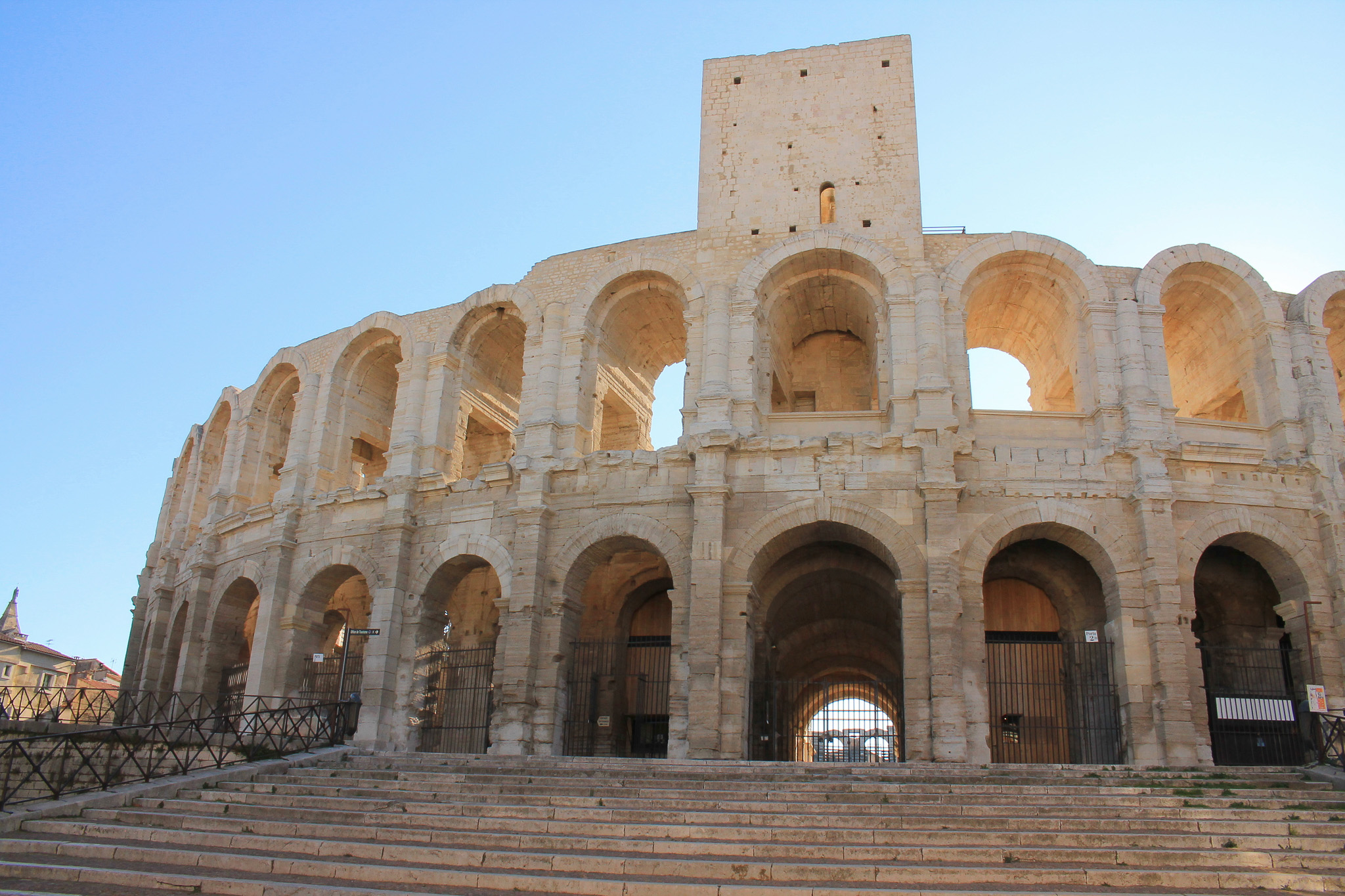
Arles offers another spectacular Roman amphitheatre, this one with UNESCO World Heritage status. Like its sibling in Nîmes, the Arles arena was built using the same architectural plans as the Colosseum. It too became a fortified town in the Middle Ages, with towers added to the structure that remain visible today.
However, despite its popularity, Arles isn’t just about its amphitheatre. The city boasts a Roman theatre, the Baths of Constantine, an ancient forum, and the spectacular Musée Départemental Arles Antique. This modern museum houses an extraordinary range of Roman artefacts, including a remarkably preserved 31m Roman barge recovered from the Rhone River.
Discover more of Arles’ top sights and things to do here.
The Trophée d’Auguste – Monument to Imperial Power
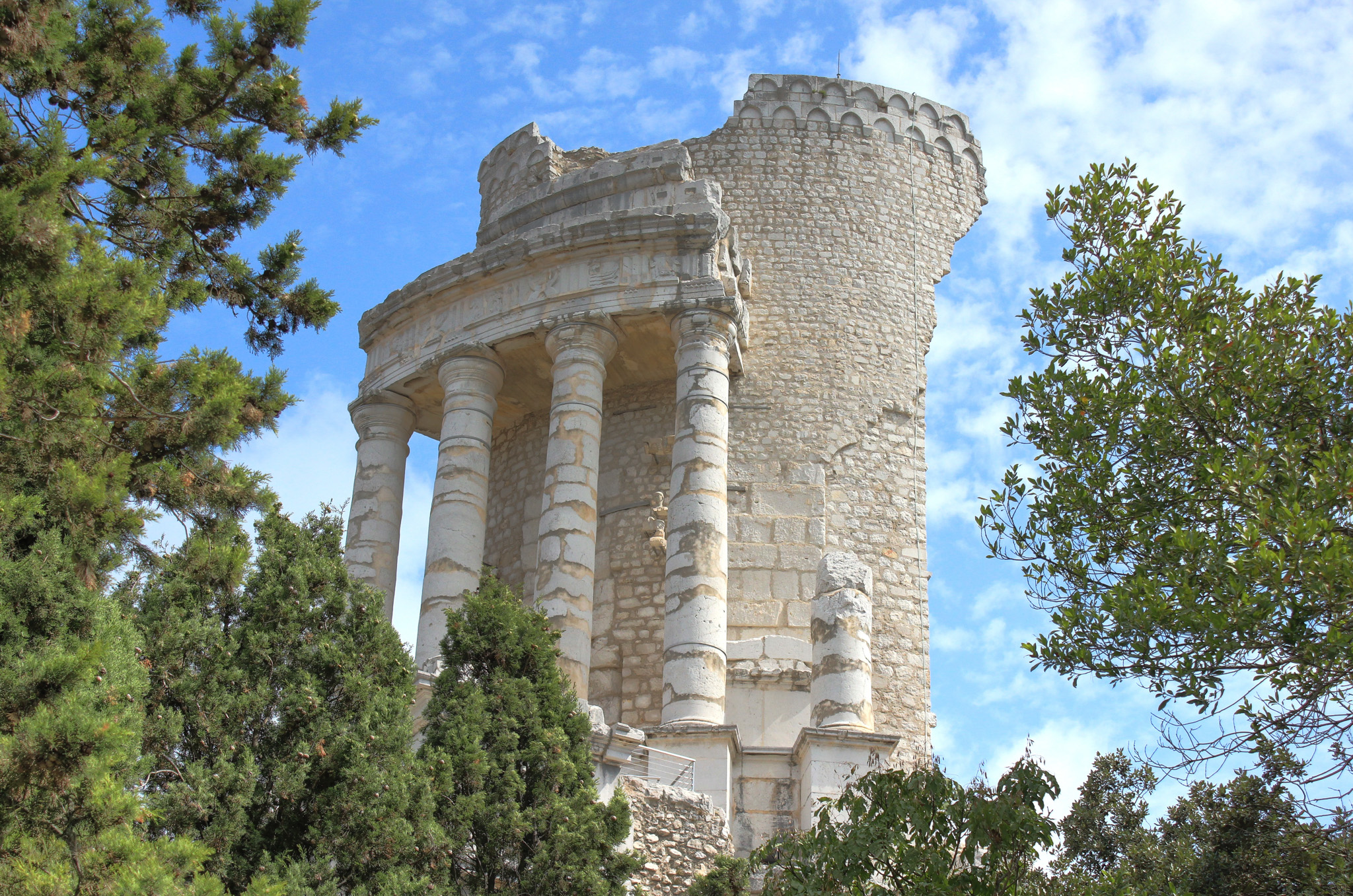
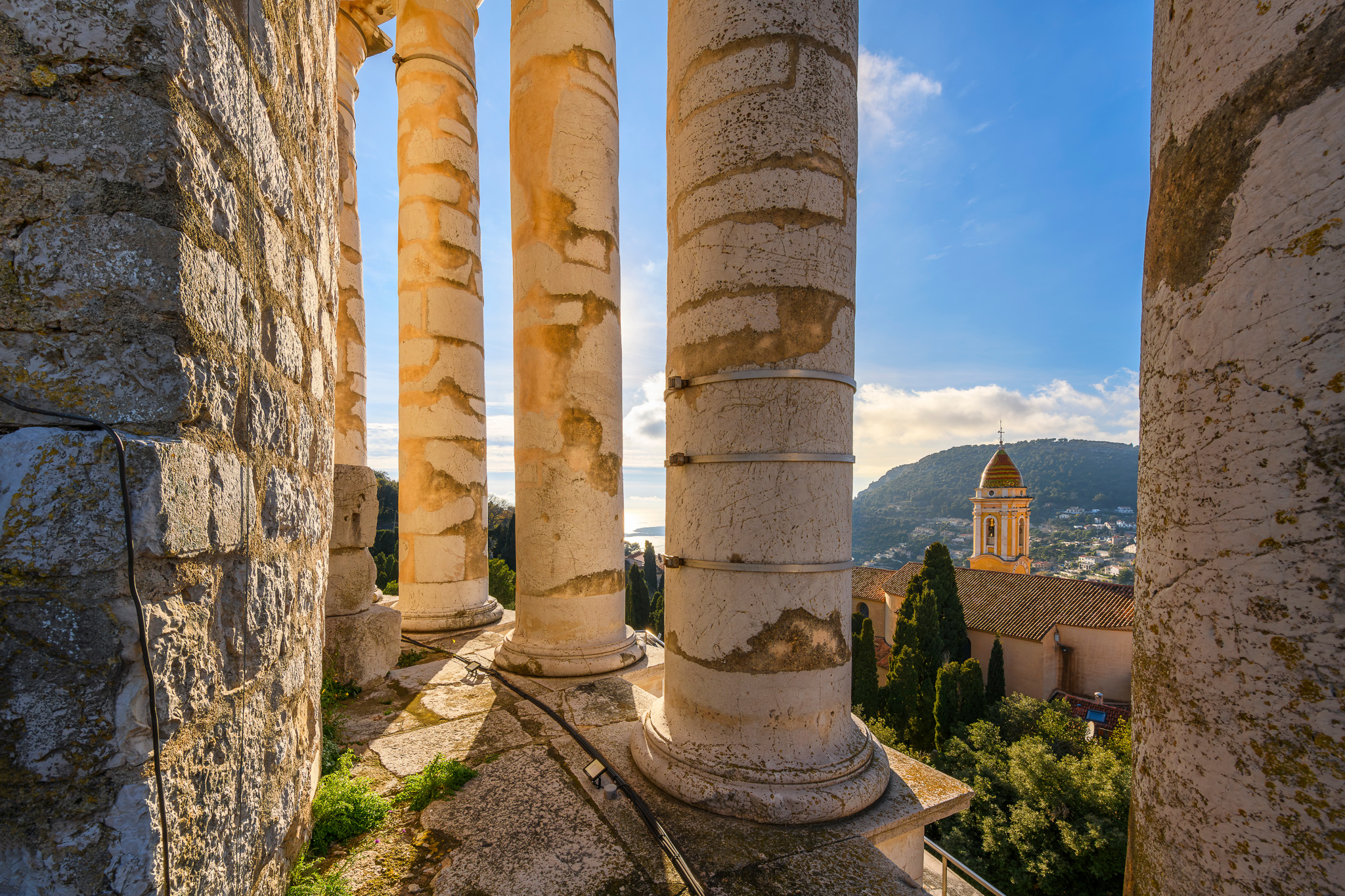
High in the hills above Monaco, at La Turbie, you’ll find the Trophée d’Auguste – Trophy of Augustus. This 35 m monument was erected to celebrate the Roman Emperor’s victory over the Alpine tribes and mark the boundary between Gaul and Italy.
Though partially reconstructed, the monument’s remaining columns and inscriptions still convey the power and ambition of the Roman Emperor at its height. The views from here are spectacular, offering panoramas across the Mediterranean that helped the monument serve its purpose: reminding all who passed of Rome’s dominance.
Unlike some of the Roman monuments listed above, this one does come with an admission price, and opening hours are limited, so check the official website before your visit.
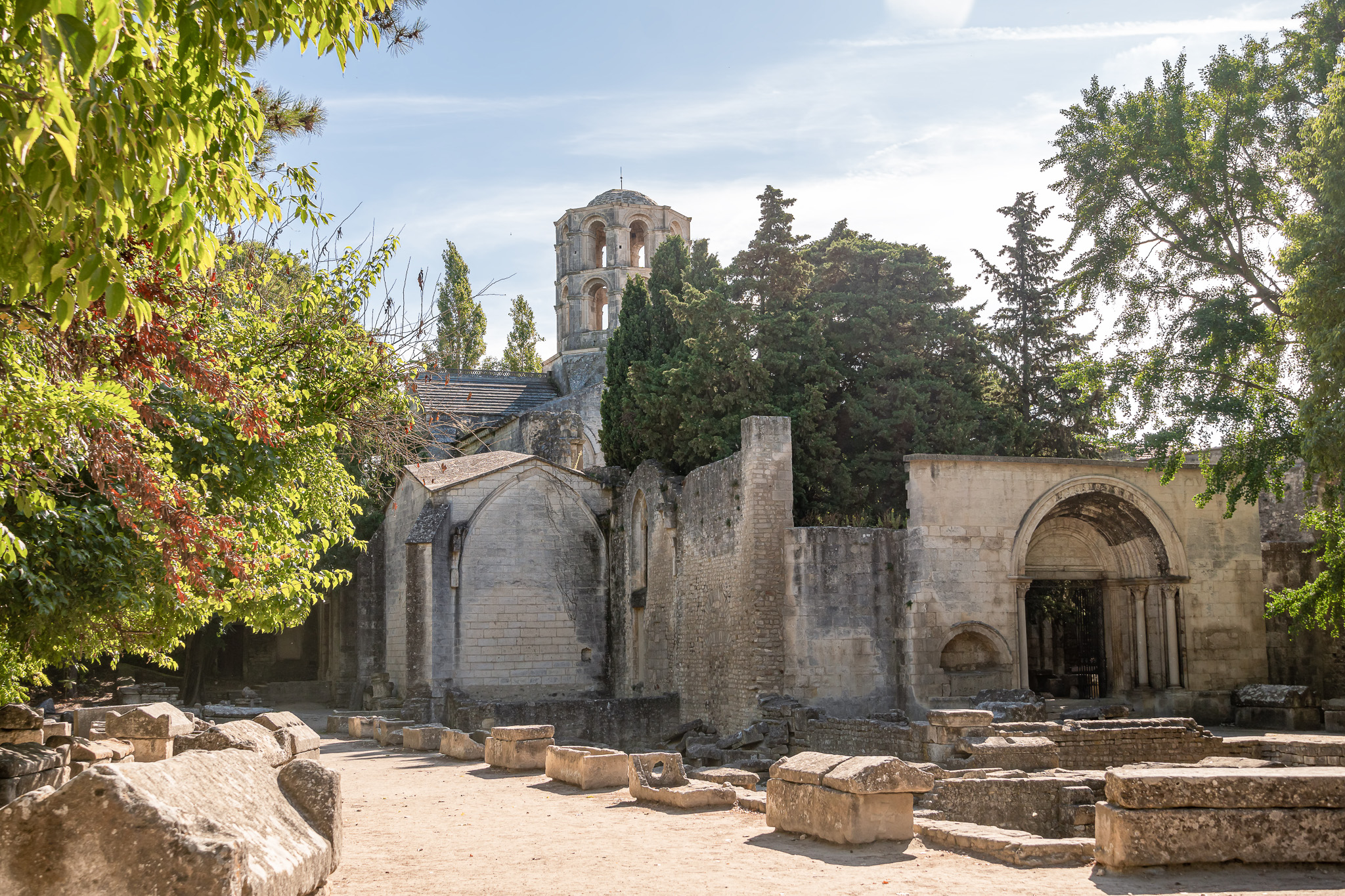
Best Time to Visit the Roman Sites of the South of France
Perhaps best of all, you can visit these incredible sites year-round. Summer brings special events – the Roman Games re-enactments in Nîmes in late April, opera performances in Orange, and concerts in the arenas. However, visiting in spring or autumn means fewer tourists, milder temperatures, and often better light for photography.
Winter has its own charm too, with fewer crowds and that crisp Mediterranean light perfect for exploring ancient stones without melting into a pool of sweat.
Why Roman Southern France Deserves a Spot on Your Itinerary
If you’ve been putting off a trip to see Roman ruins because you can’t face the crowds at the Colosseum or the queues at Pompeii, southern France offers something refreshingly different. These monuments are often better preserved, less touristy and far more accessible than their Italian cousins.
You can walk across 2,000-year-old bridges for free, attend opera in ancient theatres and explore entire Roman neighbourhoods without being herded along by tour groups. The combination of spectacular ruins, gorgeous Provençal scenery, fantastic food and wine, and that relaxed French art de vivre makes this one of Europe’s most rewarding destinations for history lovers.
So, get set to discover Roman grandeur with a French twist, and you might just find it’s even more impressive than Rome itself!