Visiting the Millau Viaduct | A Guide to France’s Most Iconic Bridge
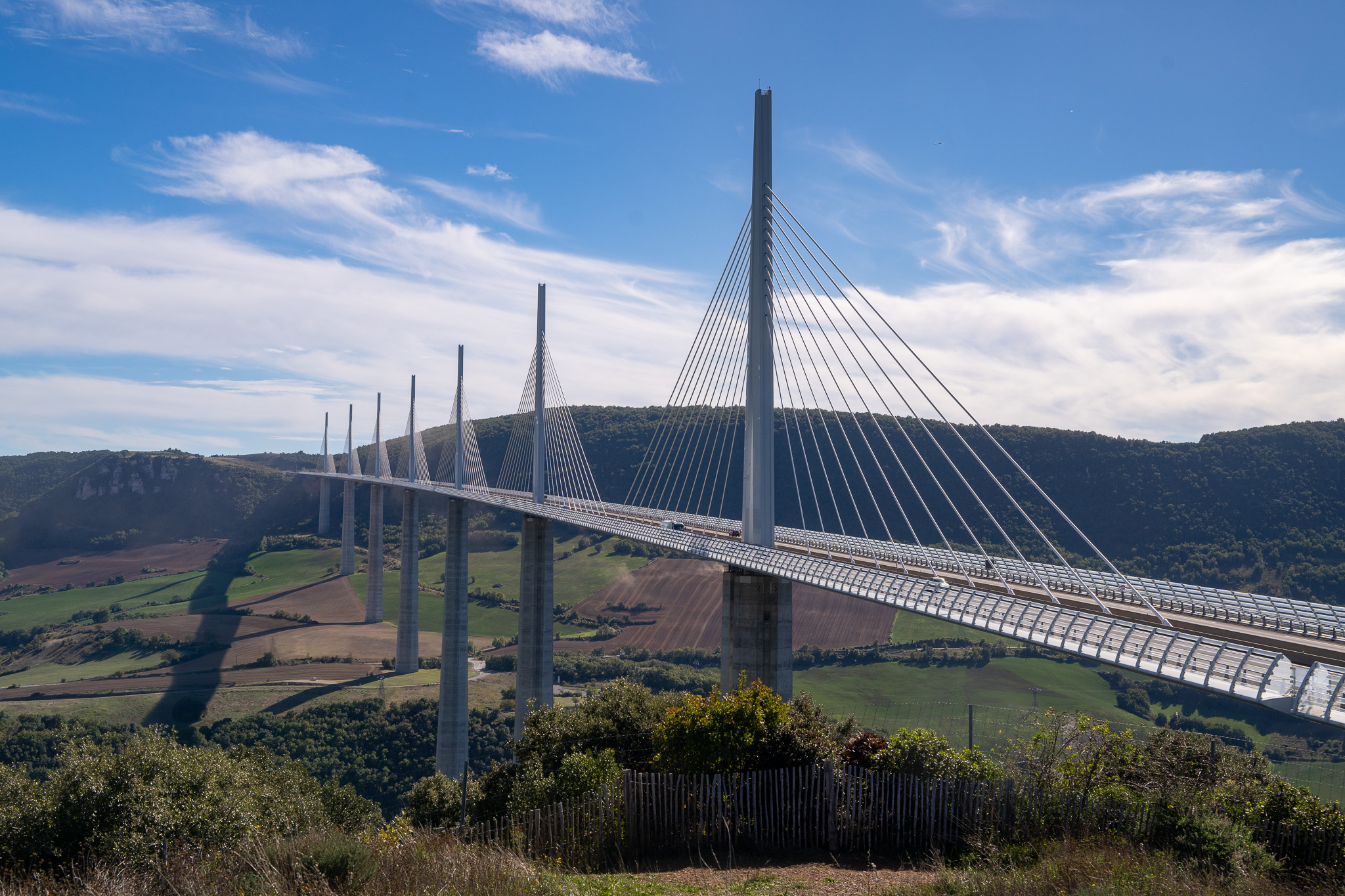
Slicing through the mist above the Tarn Valley, the Millau Viaduct is both a fascinating feat of modern engineering and a beautifully designed piece of architecture. The white cable-stayed silhouette seemingly floats between the Larzac and Levezou plateaus, turning a practical motorway crossing into a destination in itself.
It’s the tallest bridge in the world, and stands higher than the Eiffel Tower at 343 meters. Supported by only seven slender pillars, it spans an incredible 2460m across the valley.
We’ve driven this route countless times on the way from Provence to visit family in Cantal, and the viaduct’s sheer scale and presence still impress us every time. Below, you’ll find everything you need to know to plan a visit – from how to get there, the best viewpoints and rewarding nearby places to visit.
How to Get There
There are several ways to access the viaduct via car, but only some are free.
If you’re travelling along the A75 (La Méridienne) through central France, there are two exits you can take. Take the exit marked “aire du Viaduc du Millau” in either direction if you plan to cross the viaduct, as this route requires passing through the toll gates. Tolls currently cost €13.70 for a car during the summer months, and €11.20 for the rest of the year.
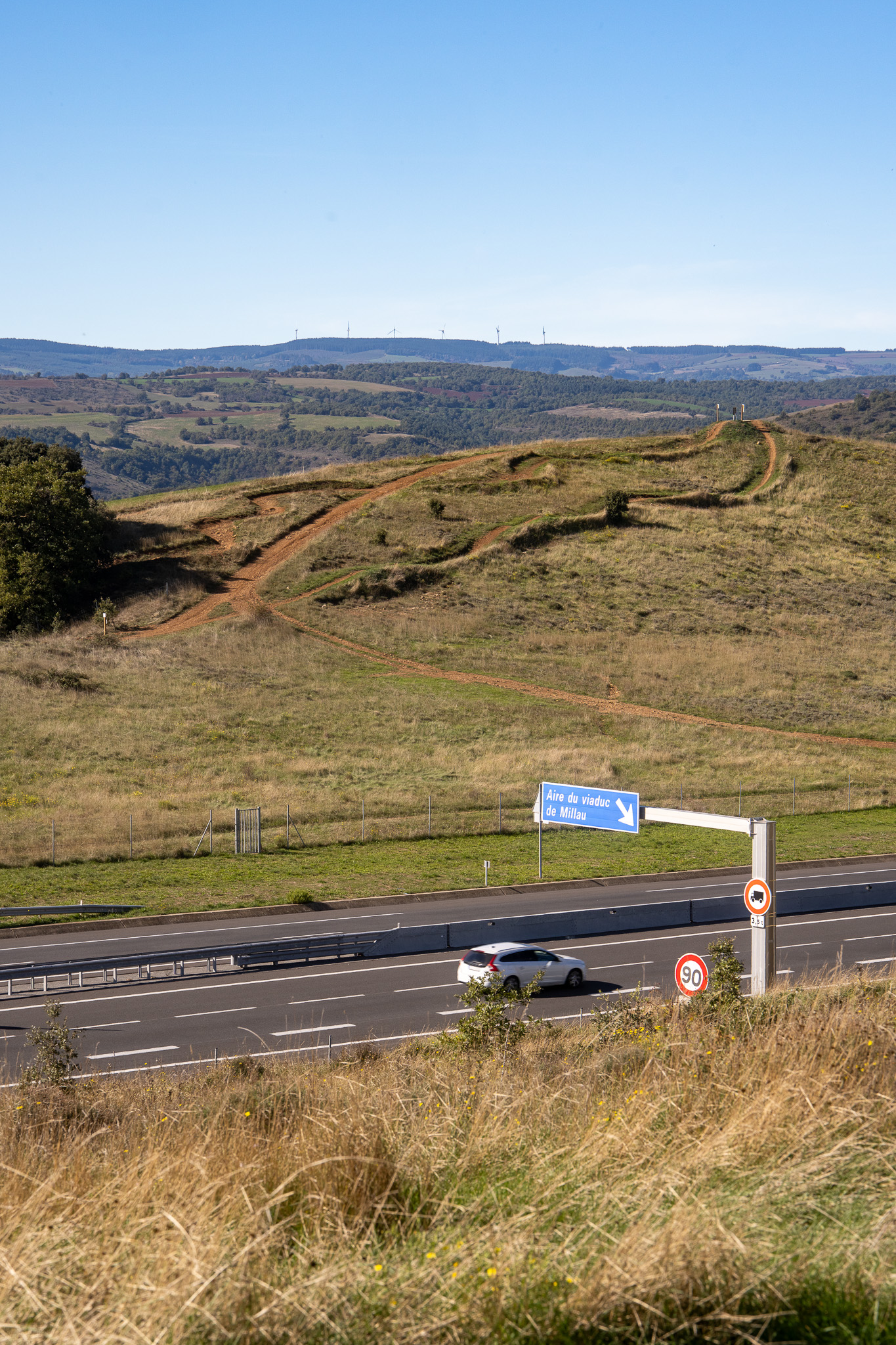
Alternatively, take exit 45 (travelling North-South) to exit the motorway before the toll bridge, and follow the signs. You can also reach the visitors’ area and viewpoints via the free D911 road.
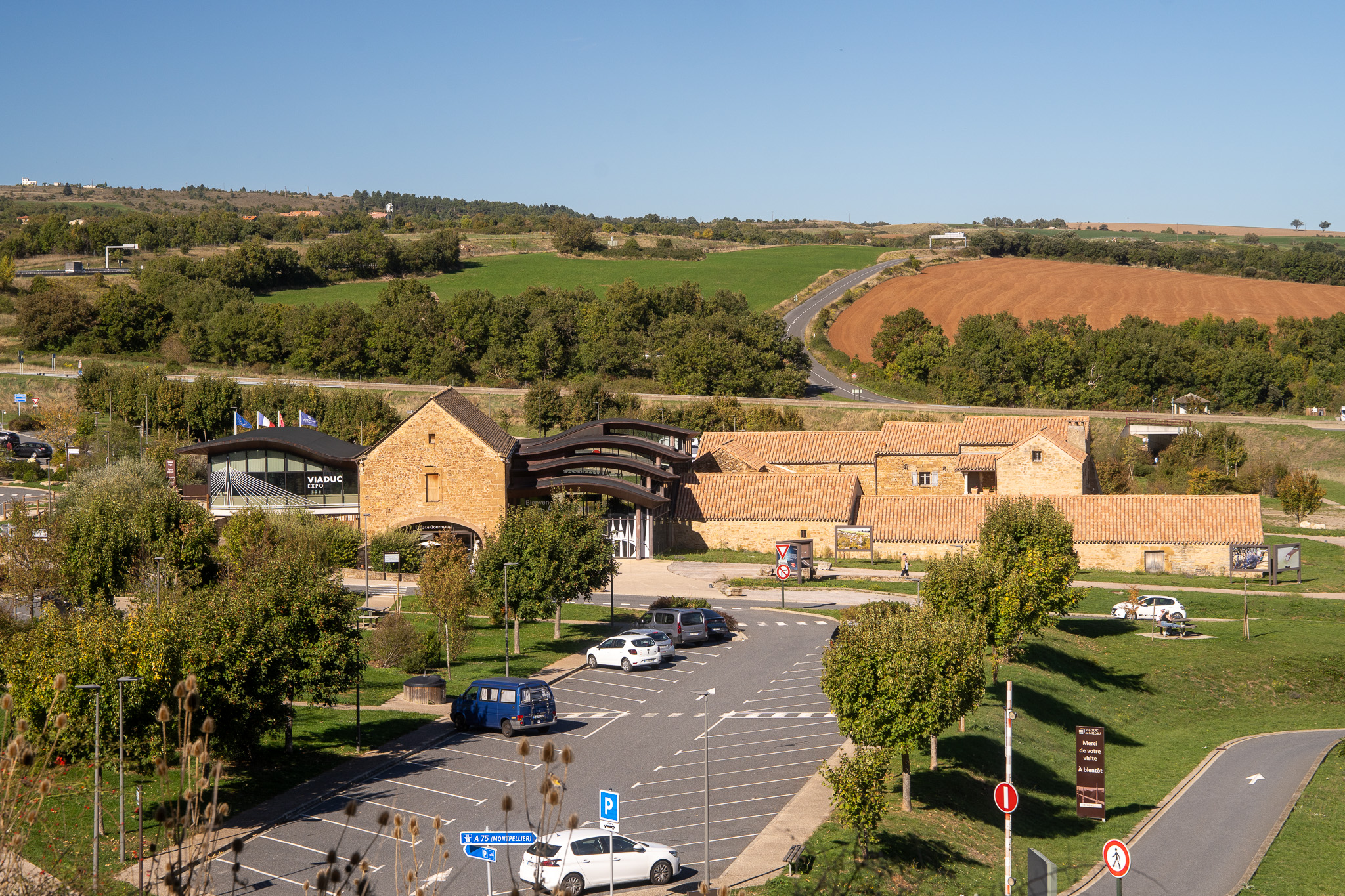
Once you arrive, there is ample free parking.
Experience the Millau Viaduct
You may think a visit to the Millau Viaduct was as simple as, well, parking and viewing it from the rest area. But there’s much more on offer when visiting the tourist information centre.
Visit the Expo Centre
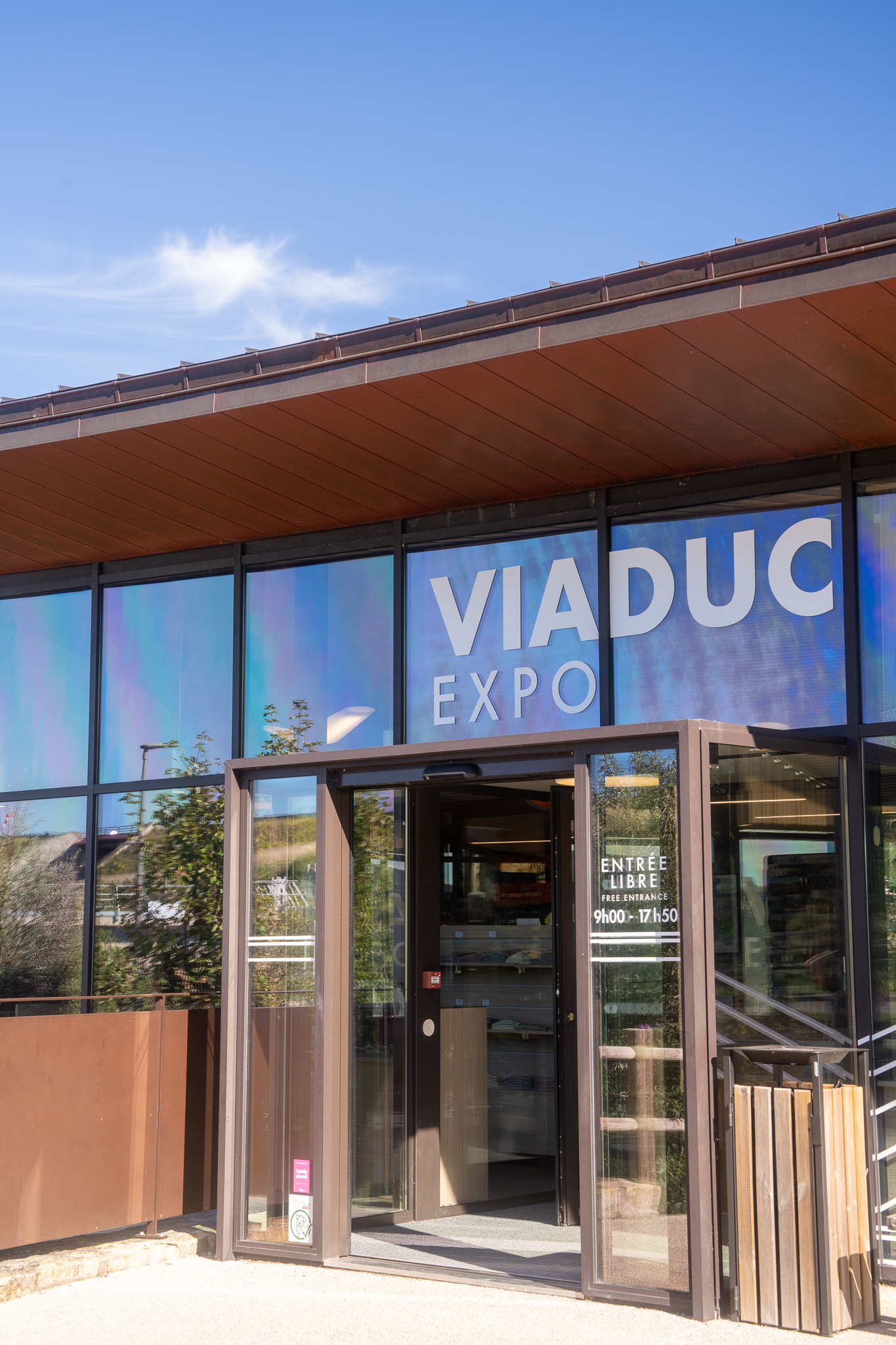
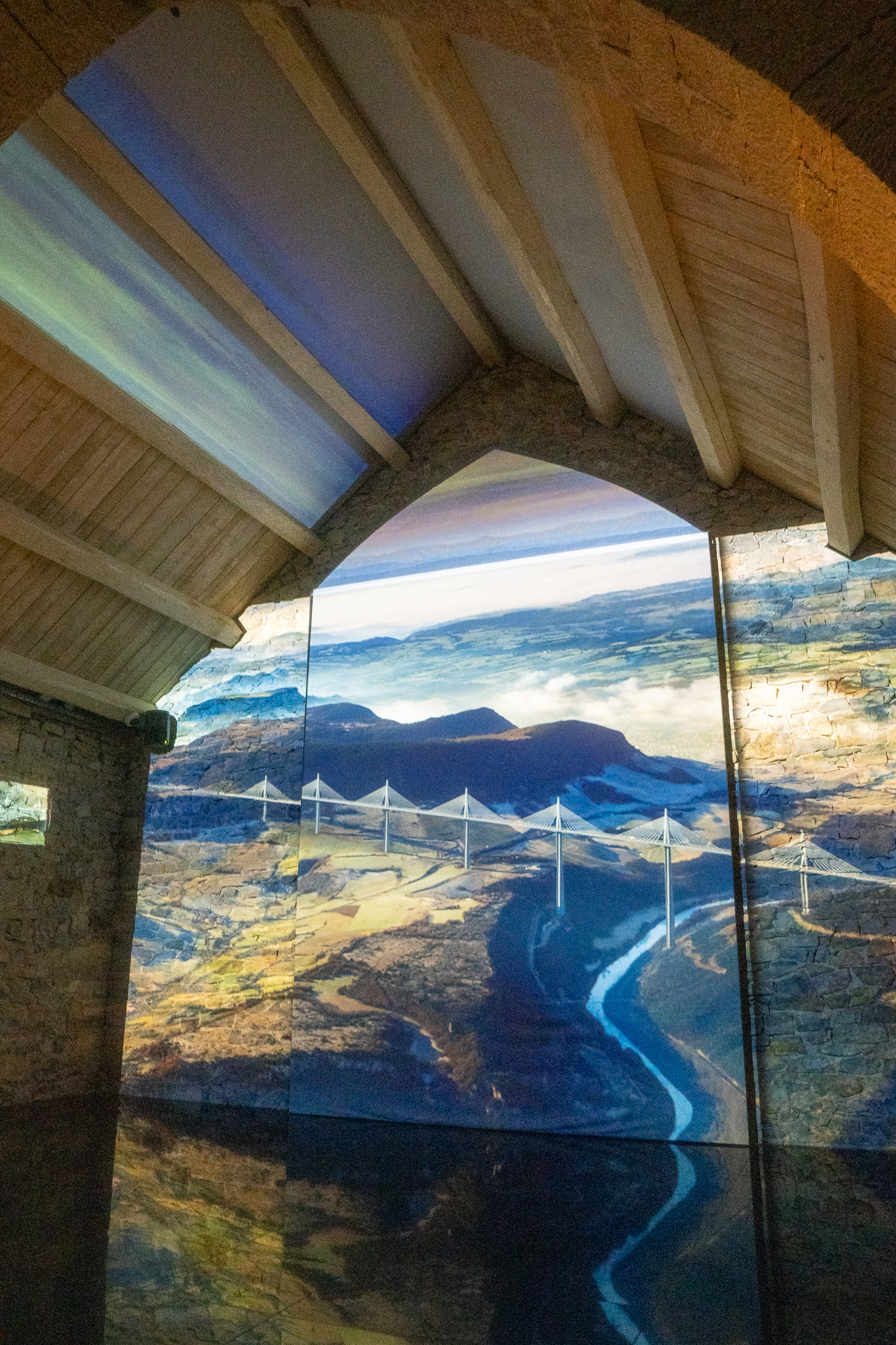
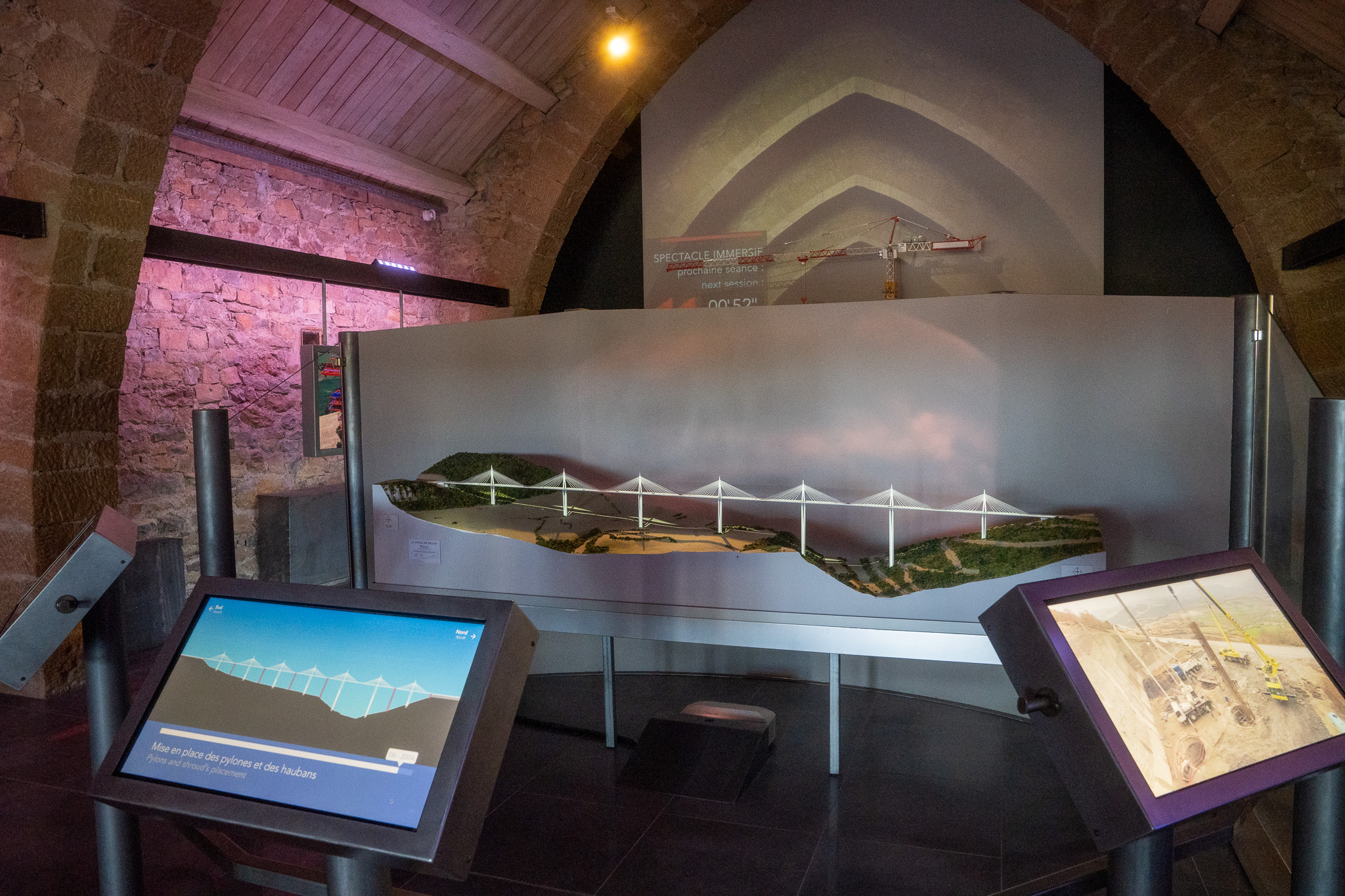
Situated within traditional caussenarde farm buildings, you’ll find the Expo Centre. Here, you can learn about the viaduct’s design and construction through information boards and photos. Then watch the short documentary that’s beautifully presented.
If you plan ahead, you can also book a guided tour, which will take you to exclusive viewpoints. The tour costs €6 per adult, or €14 for families.
Take a Short Walk to the Viewpoint
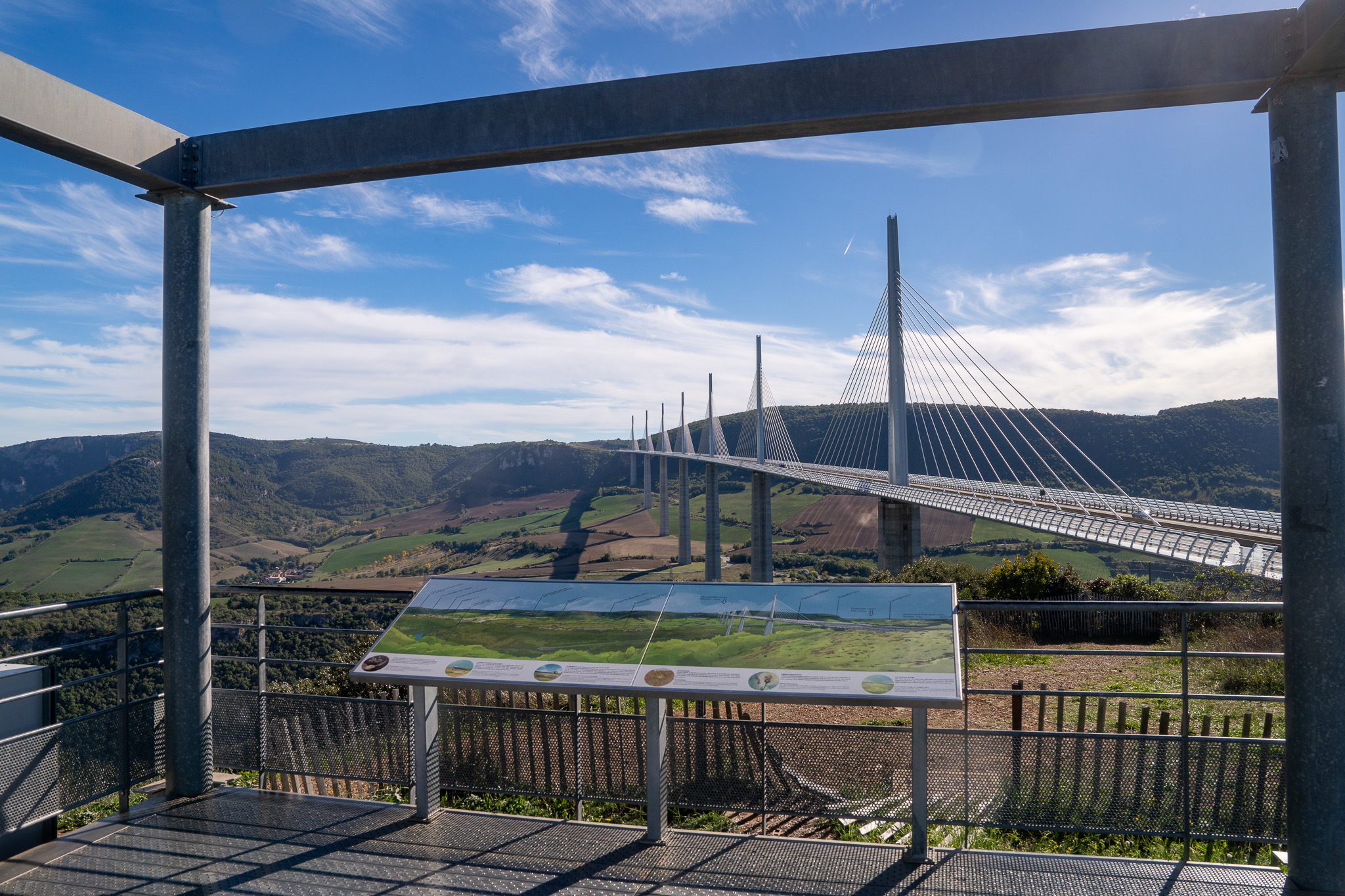
From the car park, a short but steep walk will take you to the belvedere, an elevated platform with a view over the bridge and valley below.
Pause for Lunch at the Cafe
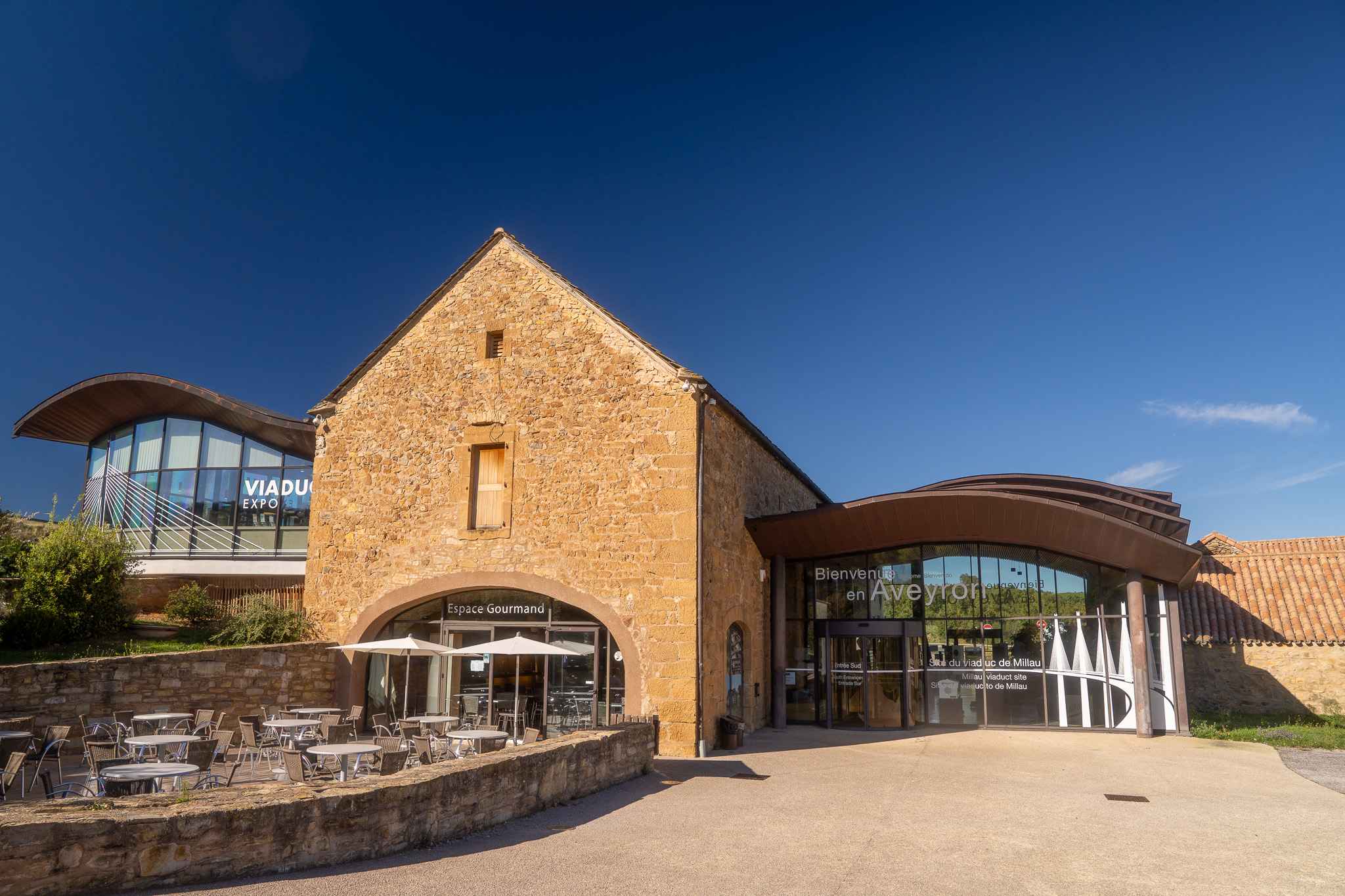
Within the same heritage building as the expo centre, you’ll find the Espace Gourmand, a beautiful cafe where you can try regional delicacies – and even take some home as souvenirs. There’s plenty of seating, both indoors and out, so it’s a great stop in any weather.
Drive across it!
No visit to the Millau Viaduct is complete without the experience of driving across it..
Of course, if you’re the driver, you won’t get to see much past the giant pylons and diagonal cables, but passengers will get a great view of the valley for the short time it takes to cross the viaduct. When there’s low cloud, it can even feel as if you’re driving above them!
Other Viewpoints to Visit
The aire du viaduc is the only stop to view the viaduct if you’re travelling on the A75, but it’s far from the only viewpoint. If you have more time up your sleeve, check out a few of the following for unique vantage points.
Pont Lerouge in Millau. From this bridge, you can see right across the valley to the Millau Viaduct rising above you in the distance. Look behind you, and you’ll also find remnants of the old bridge that was washed away in the floods of 1758.
Millau Belfry. You can’t explore Millau without climbing the famous 42m octagonal bell tower, which dates from the 17th century. From the top, you’ll find 360-degree panoramic views of the entire town, Tarn valley, and of course, the viaduct stretching across the horizon. The observation deck is normally open in the summer, so double-check if visiting in quieter times.
Cap de Costes-Brunas – find it on the map here. Offers elevated views and is a popular jumping-off point for paragliding.
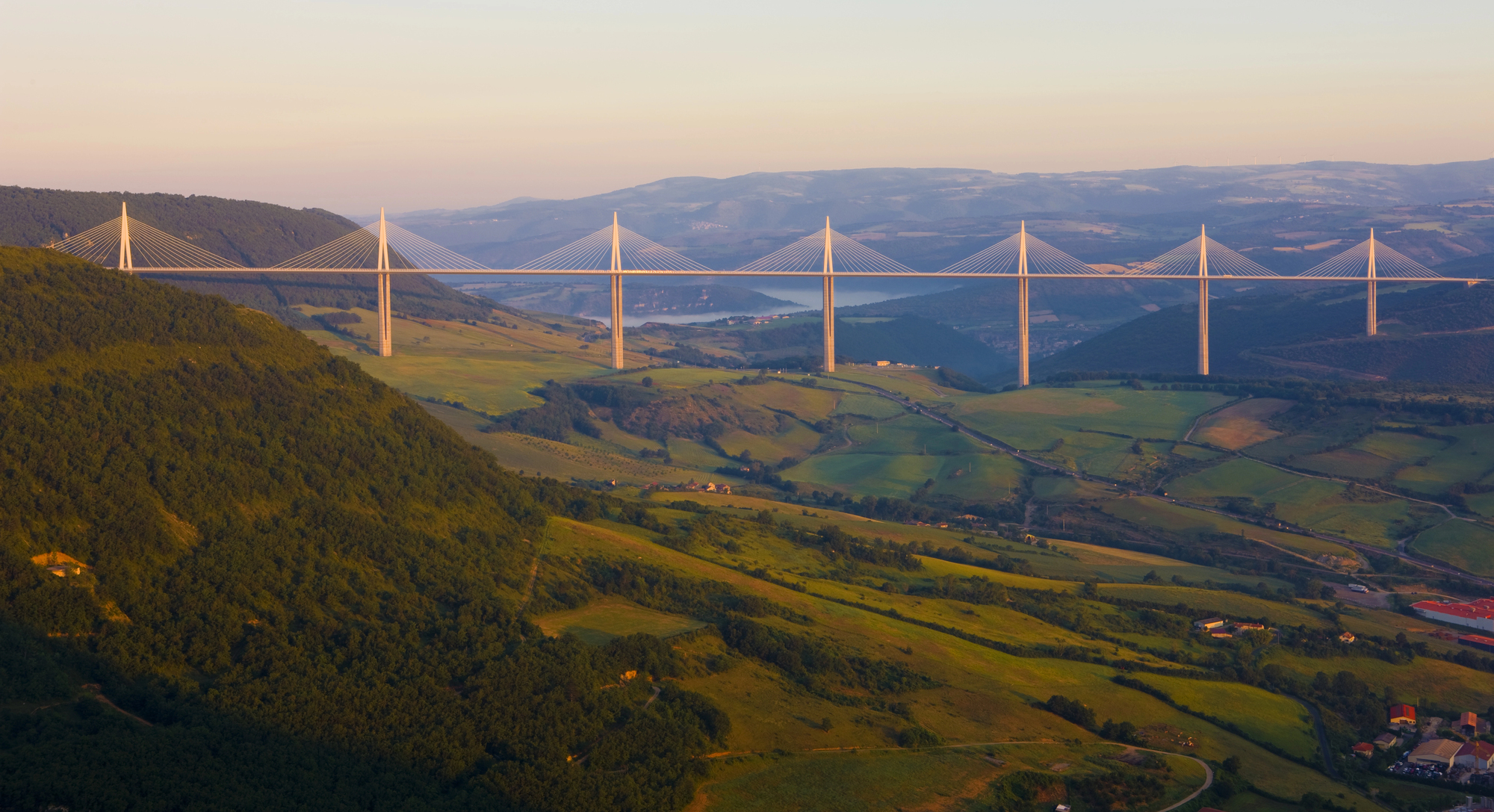
Luzençon belvédère – find it on the map here. A tiny little hamlet with an elevated viewpoint and an orientation table.
The D809 viewpoint. As you approach Millau from the south along the D809, there’s a panoramic viewpoint that offers sweeping views of the town, the Tarn Valley, and the viaduct in the distance – perfect for those who want to capture the full landscape in one go.
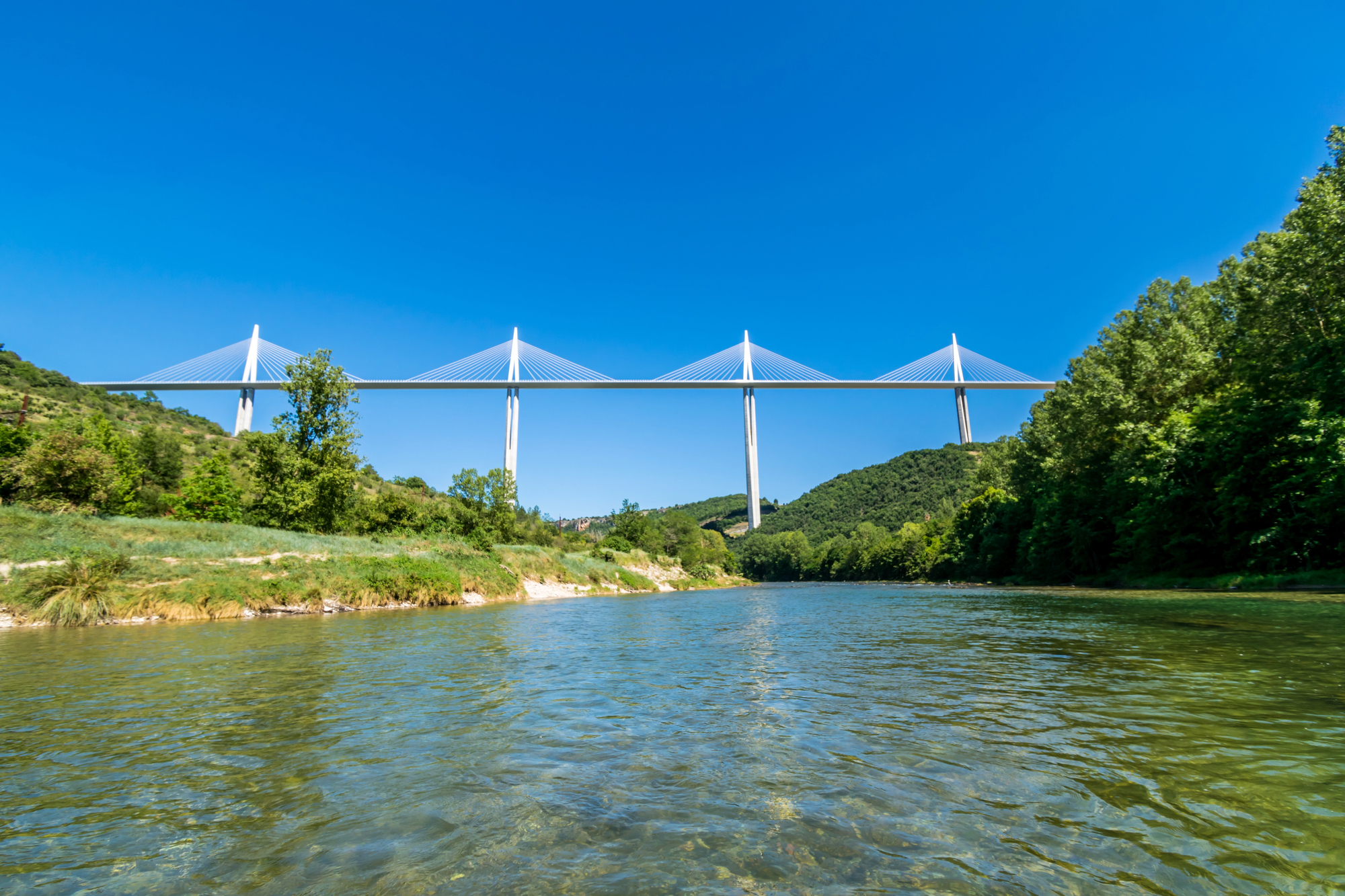
From a canoe on the Tarn River! For a unique perspective, paddle directly beneath the viaduct on a canoe trip down the Tarn. Several local operators (such as Roc & Canyon) offer canoe rental, with preset routes that will take you under the viaduct, and shuttle pick-ups to make it an easy day out.
For those needing a more accessible option, guided boat tours down the river are also available. Les Bateliers du Viaduc offer a tour on flat-bottomed boats, with a boatman at the helm so you can sit back and enjoy the view. The boats accommodate up to 6 guests – perfect for families – and you can even bring your dog!
Places to Visit Nearby
The Millau Viaduct sits in a region rich in natural beauty and cultural heritage. If you’ve got a little more time up your sleeve, these nearby attractions are worthy of a visit while you’re in the area.
Peyre – One of “Les Plus Beaux Villages de France”
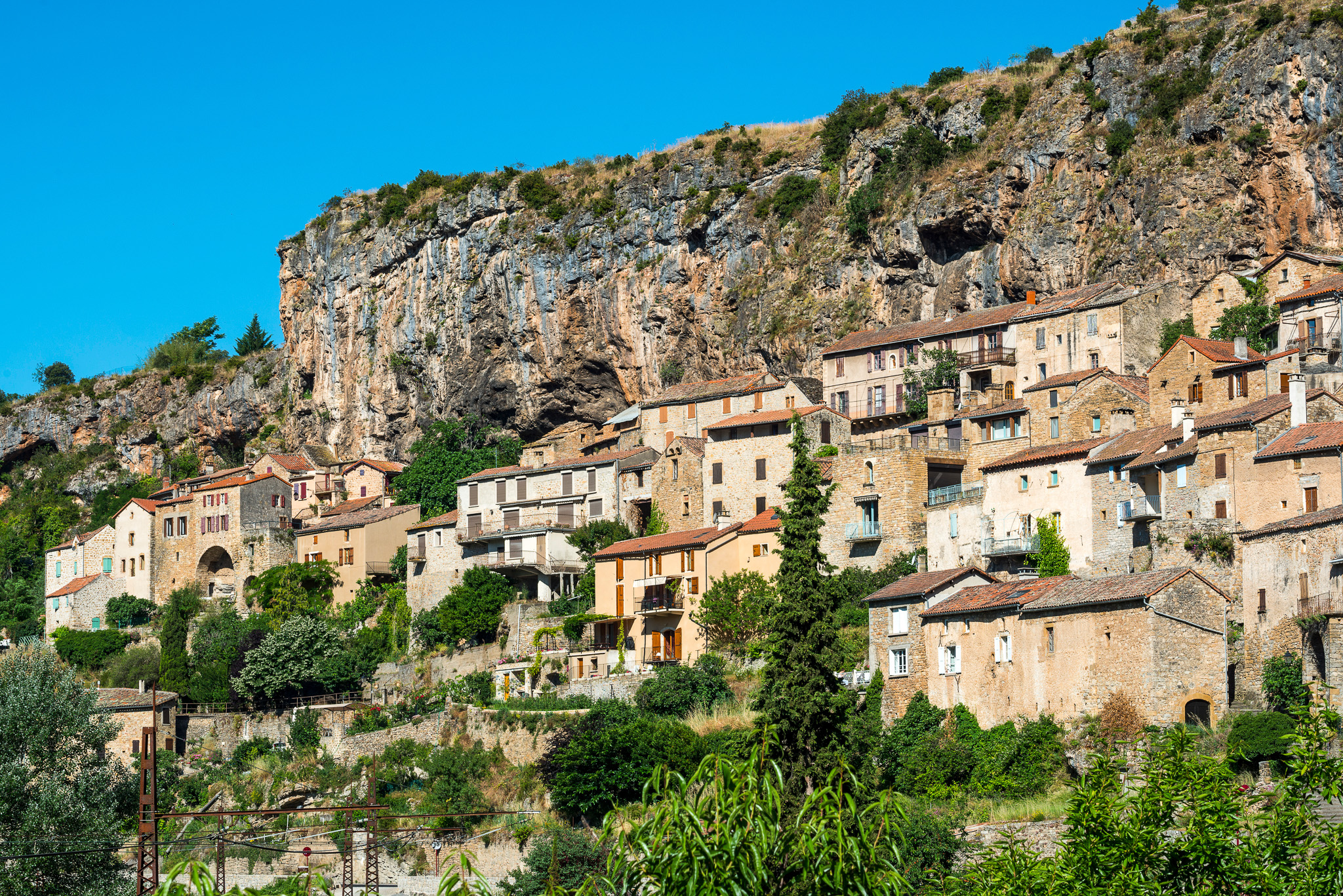
Just 7 km from Millau, Peyre is a semi-troglodyte village built into the cliffs overlooking the Tarn River. Classified as one of France’s Most Beautiful Villages, this tiny hamlet offers narrow cobbled streets, flower-filled terraces, and houses carved directly into the soft tufa rock. The 11th-century Église Saint-Christophe is particularly striking, with its fortified square bell tower rising above the cliff face.
From Peyre, you’ll also get exceptional views of the viaduct rising above the valley – many visitors say it’s one of the best vantage points to appreciate the bridge’s scale.
The Gorges du Tarn
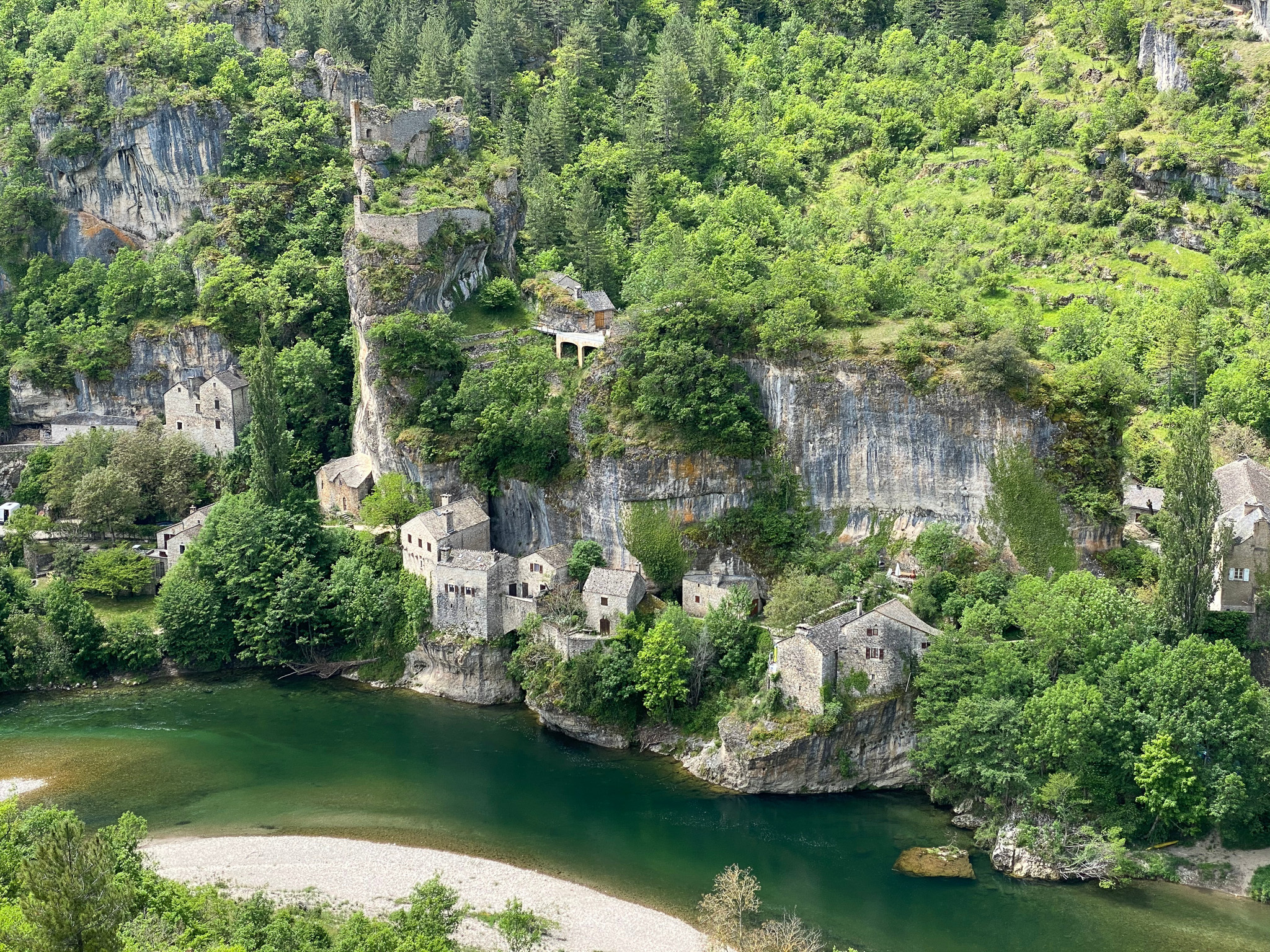
North of Millau, the Tarn River has carved one of Europe’s most spectacular canyons through the limestone plateau. The Gorges du Tarn stretch for about 50 km, with sheer cliffs rising to 500 meters above the turquoise waters.
There’s plenty to do here. Rent a canoe and paddle through the gorges, stopping at riverside beaches for a swim. Drive the scenic route through picturesque villages like Sainte-Énimie (another of France’s Most Beautiful Villages) and La Malène. Adventurous types can tackle via ferratas, go rock climbing on the limestone cliffs, or hike to viewpoints like Point Sublime for breathtaking panoramas.
The gorges are also home to fascinating troglodyte hamlets like Eglazines and Castelbouc, accessible only on foot via narrow goat paths – a rewarding trek for those who don’t mind a bit of vertigo.
Roquefort-sur-Soulzon
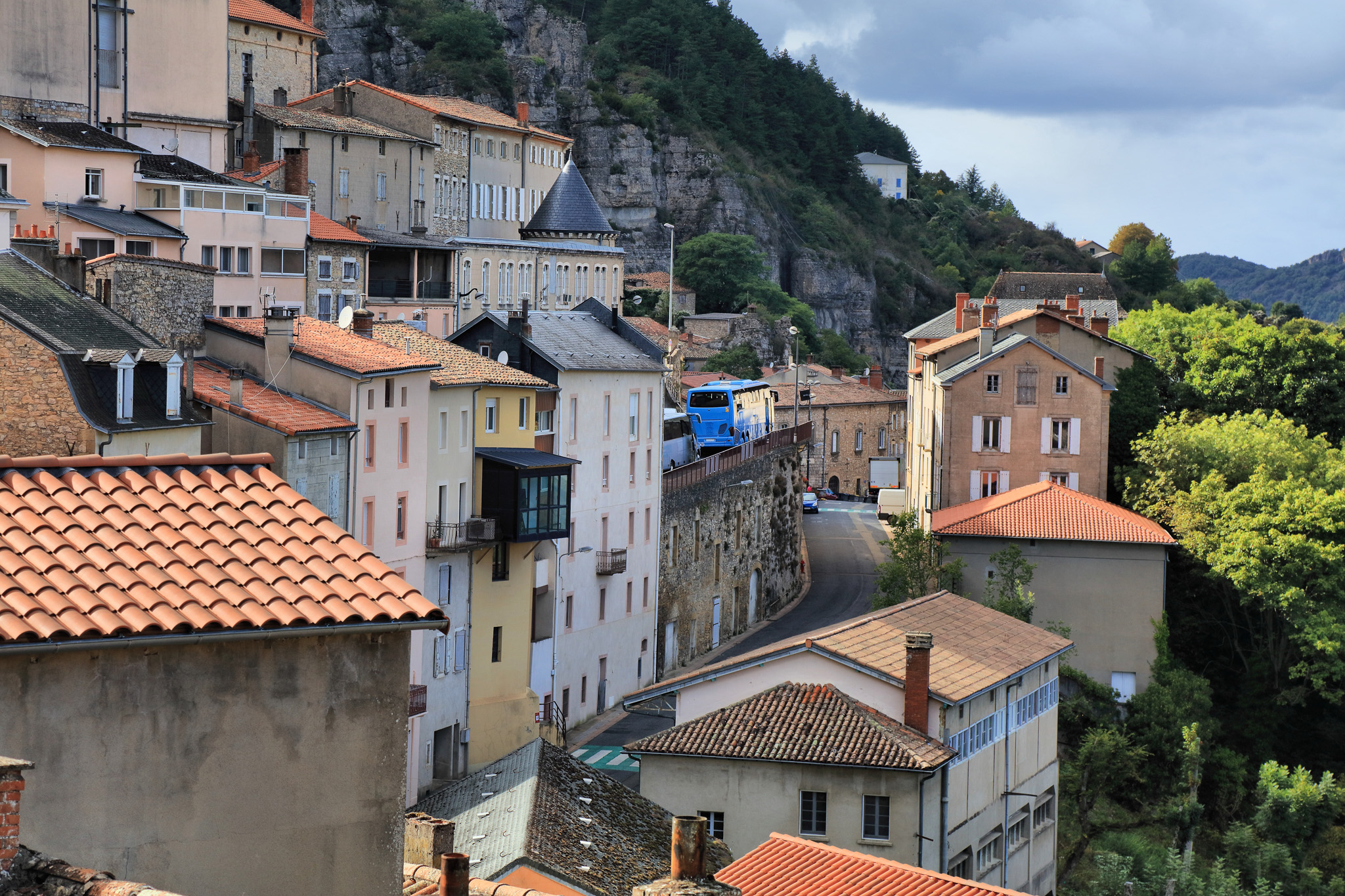
About 25 km south of Millau lies the village of Roquefort-sur-Soulzon, the only place in the world where authentic Roquefort cheese can be produced. Built into the side of Mont Combalou, the village is home to natural caves with the perfect conditions for ageing this famous blue cheese.
Several producers offer guided tours where you can learn about the centuries-old cheese-making process, explore the cool, atmospheric caves with their distinctive “fleurines” (natural ventilation fissures), and, of course, sample different varieties of Roquefort. The caves maintain a constant temperature of around 10°C, so bring a jacket even in summer.
The major producer, Roquefort Société, offers daily tours and tastings year-round, though you’ll only see actual cheese maturing in the caves between January and July. After your visit, enjoy lunch at one of the village restaurants featuring local Roquefort specialities.
The Gorges de la Jonte
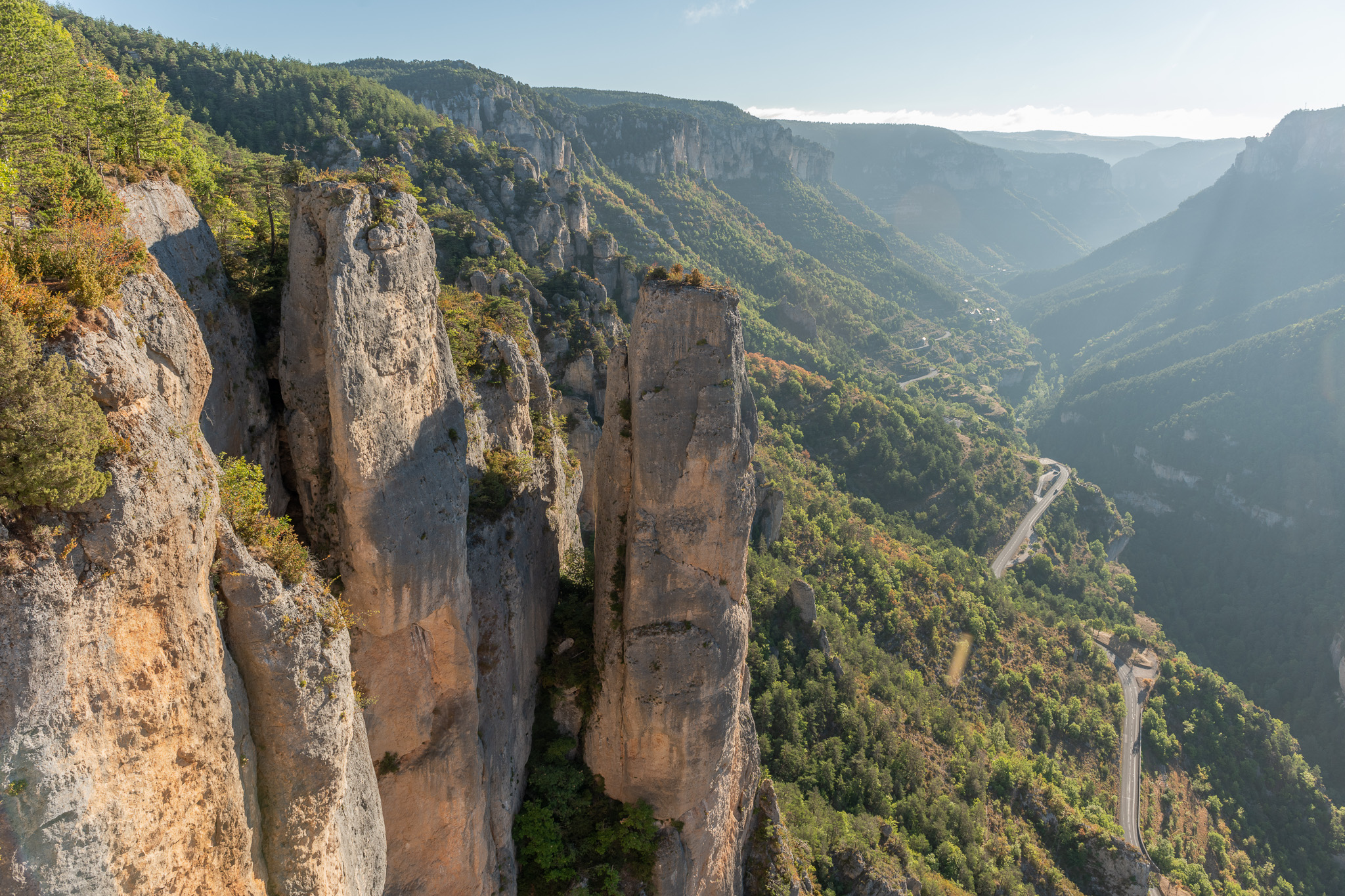
Often overlooked in favour of their more famous neighbour, the Gorges de la Jonte offer equally stunning scenery in a quieter setting. The winding road between Le Rozier and Meyrueis passes dramatic rock formations like the Vases de Sèvres and Vases de Chine – turrets of rock that seem to defy gravity.
Stop at the Maison des Vautours to observe the impressive colonies of griffon and monk vultures that nest in the cliffs. With binoculars, you might spot these magnificent birds soaring above the gorges. The area is also excellent for hiking, with trails offering views across wild, unspoiled landscapes.
Millau Town Centre
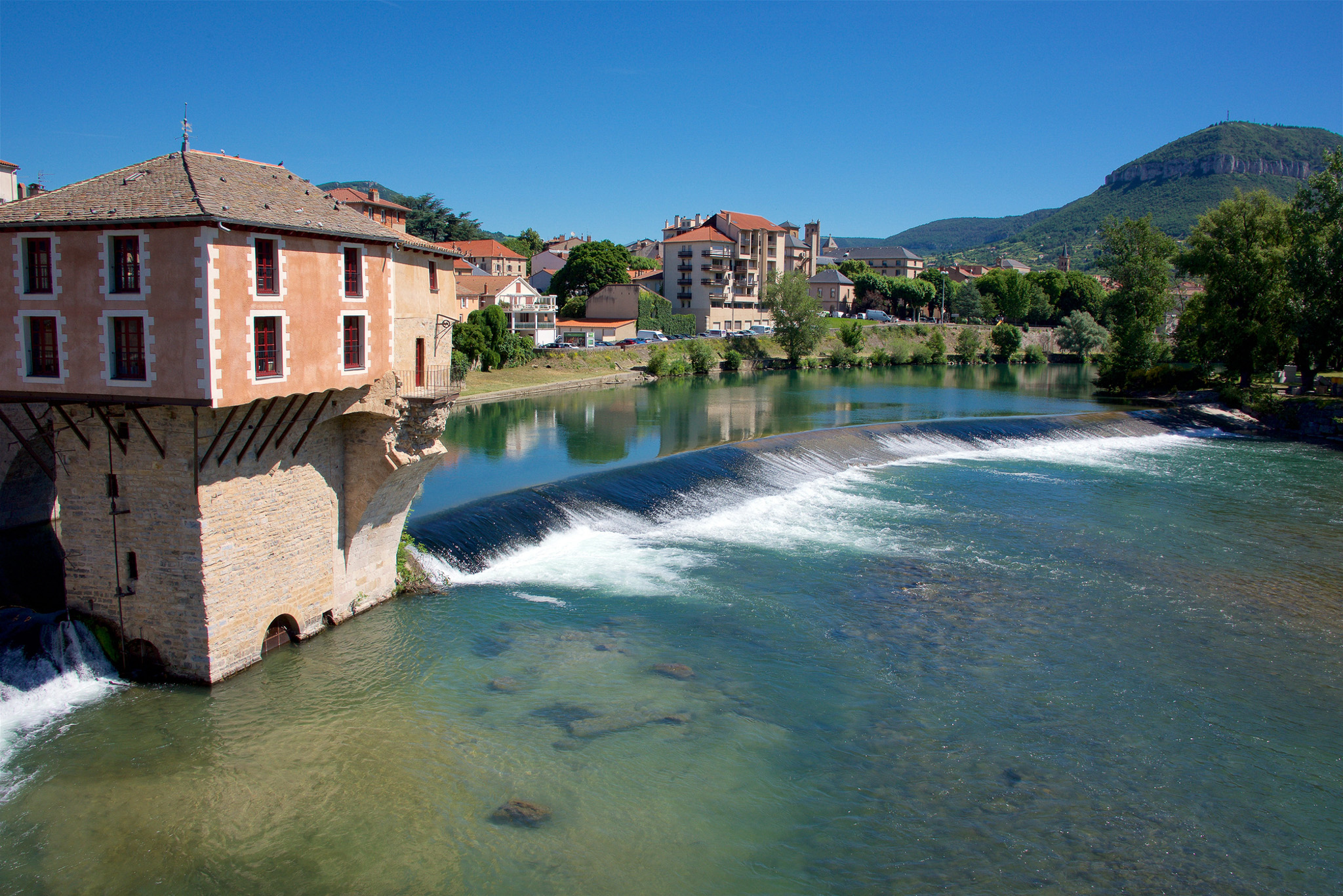
Don’t overlook the town of Millau itself. This lively town sits at the confluence of the Tarn and Dourbie rivers, with a historic centre worth exploring. Stroll through medieval streets, browse the twice-weekly market, and stop for coffee at one of the many terrace cafes.
Millau has a long history of leather glove-making, and you can learn about this heritage at the local museum. The town is also considered an outdoor sports capital, serving as a base for activities like paragliding, rock climbing, and canyoning.
The Millau Viaduct is more than just a bridge – it’s a gateway to one of France’s most beautiful and unspoiled regions. Whether you’re simply passing through on the A75 or planning a longer stay, the combination of cutting-edge architecture, dramatic natural landscapes, and authentic French villages makes this corner of the Aveyron unforgettable.
I’d recommend allowing at least half a day to properly experience the viaduct and its surroundings, though you could easily fill two or three days exploring the gorges, villages, and cheese caves nearby.