
Experiencing the Magic of Les Goudes, Marseille
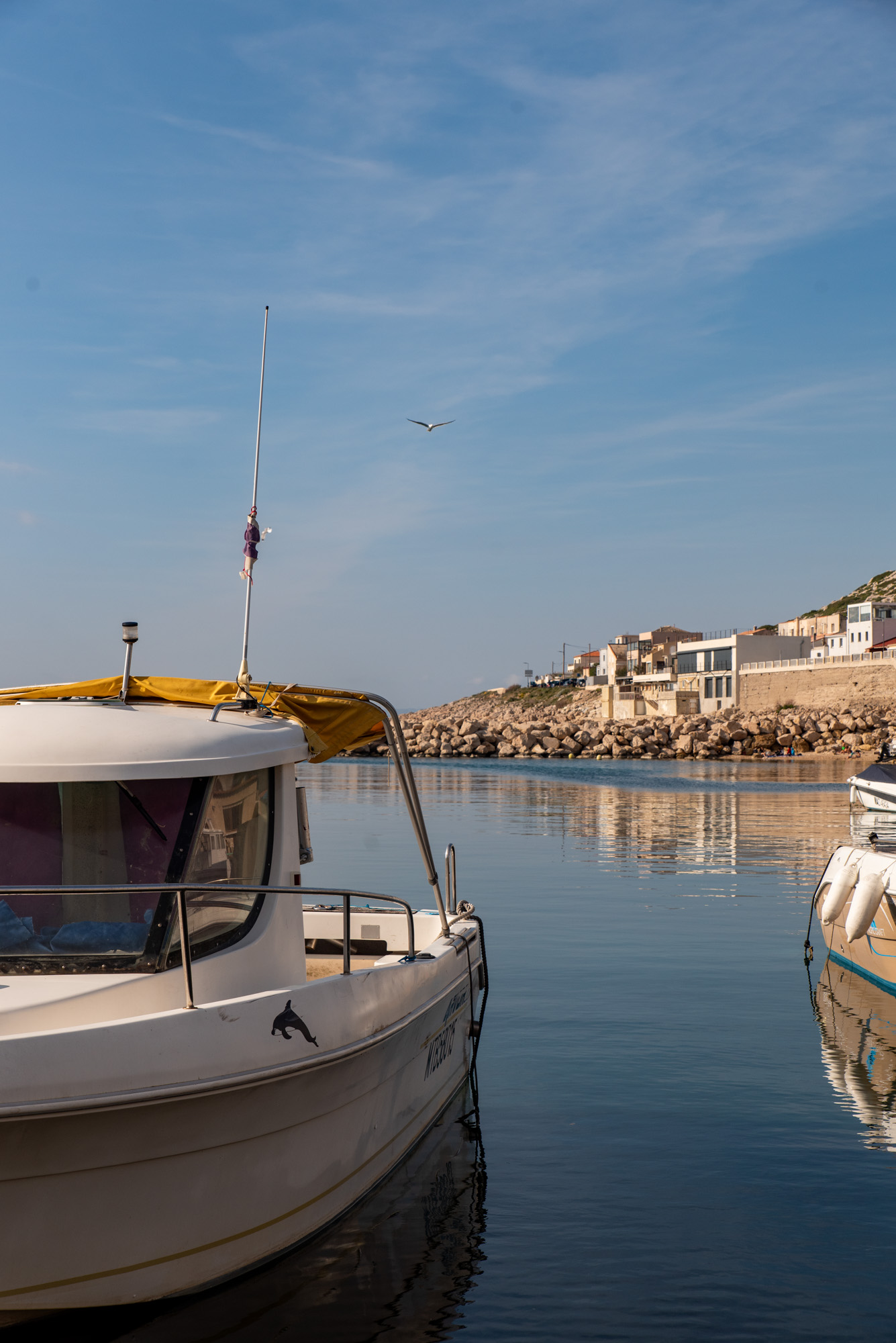
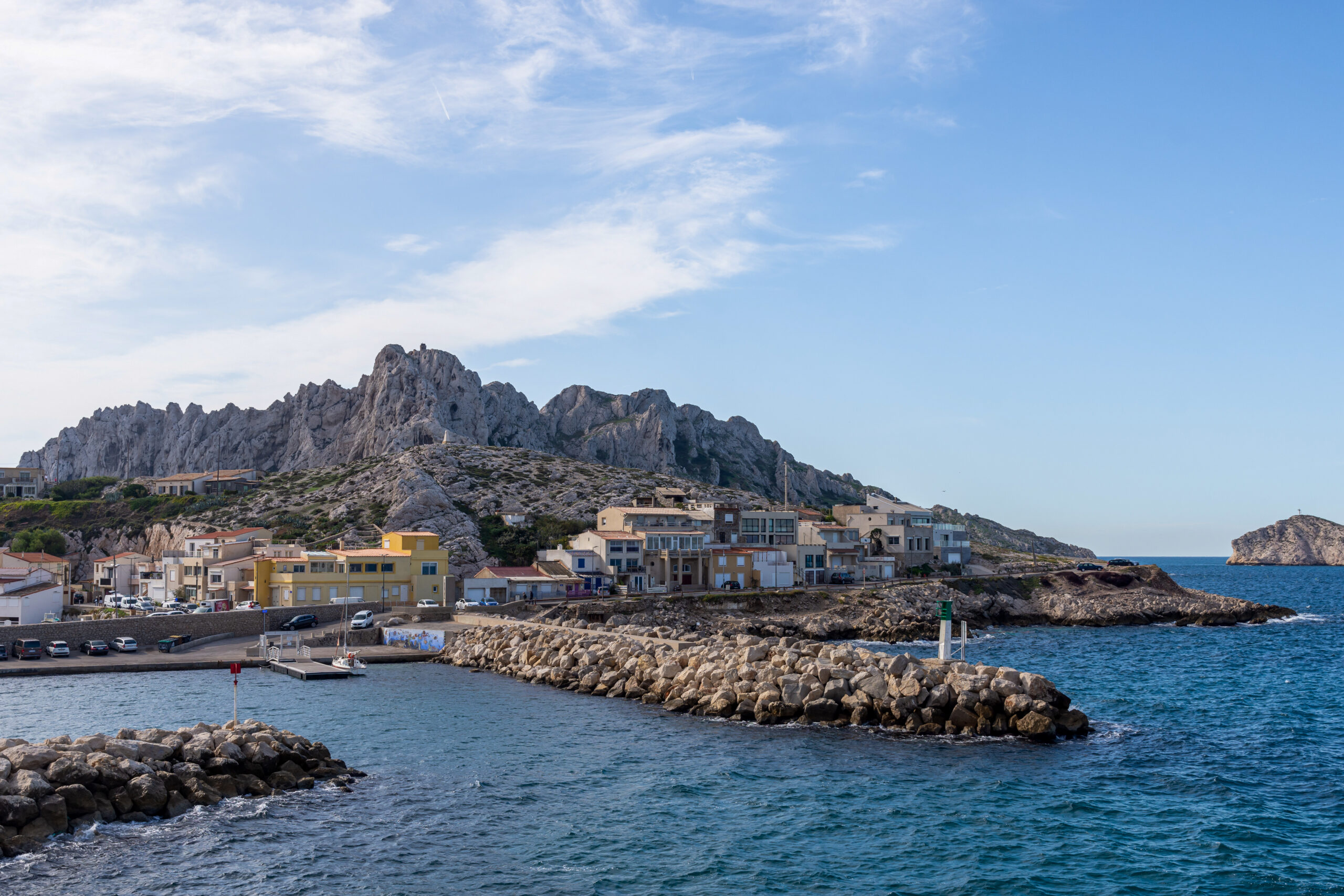
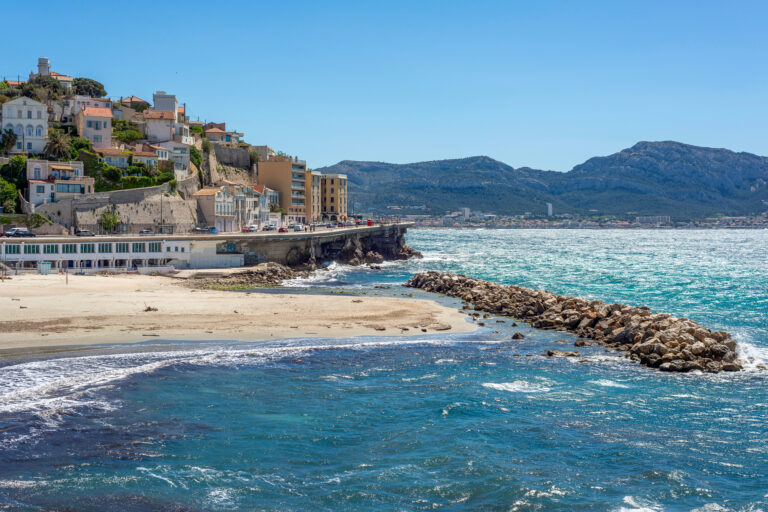
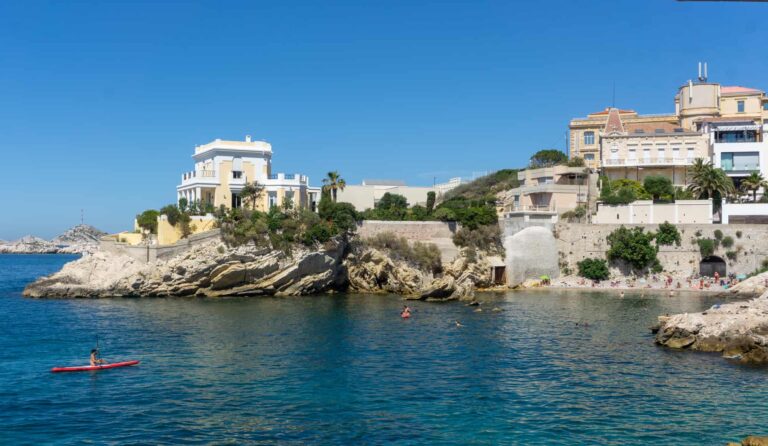
Like stepping into a photograph, Les Goudes is one of those places that almost look too good to be true. The small fishing village on the outskirts of Marseille seems a world away from the bustling metropolis. Yet its proximity to France’s second-largest city adds to its appeal with both locals and visitors to the south.
Les Goudes’ privileged position within the Calanques National Park means the village has resisted the overdevelopment that much of the coast suffers from. It remains wholly authentic, like a little moment in time that has been perfectly preserved. A place where you can still find ramshackle beach houses and locals happy to have a yarn about their garden with a stranger.
But that doesn’t equate to the village being sleepy. Come weekends, Les Goudes is brimming with trendy young Marseillais and is clearly a popular place on a warm day.
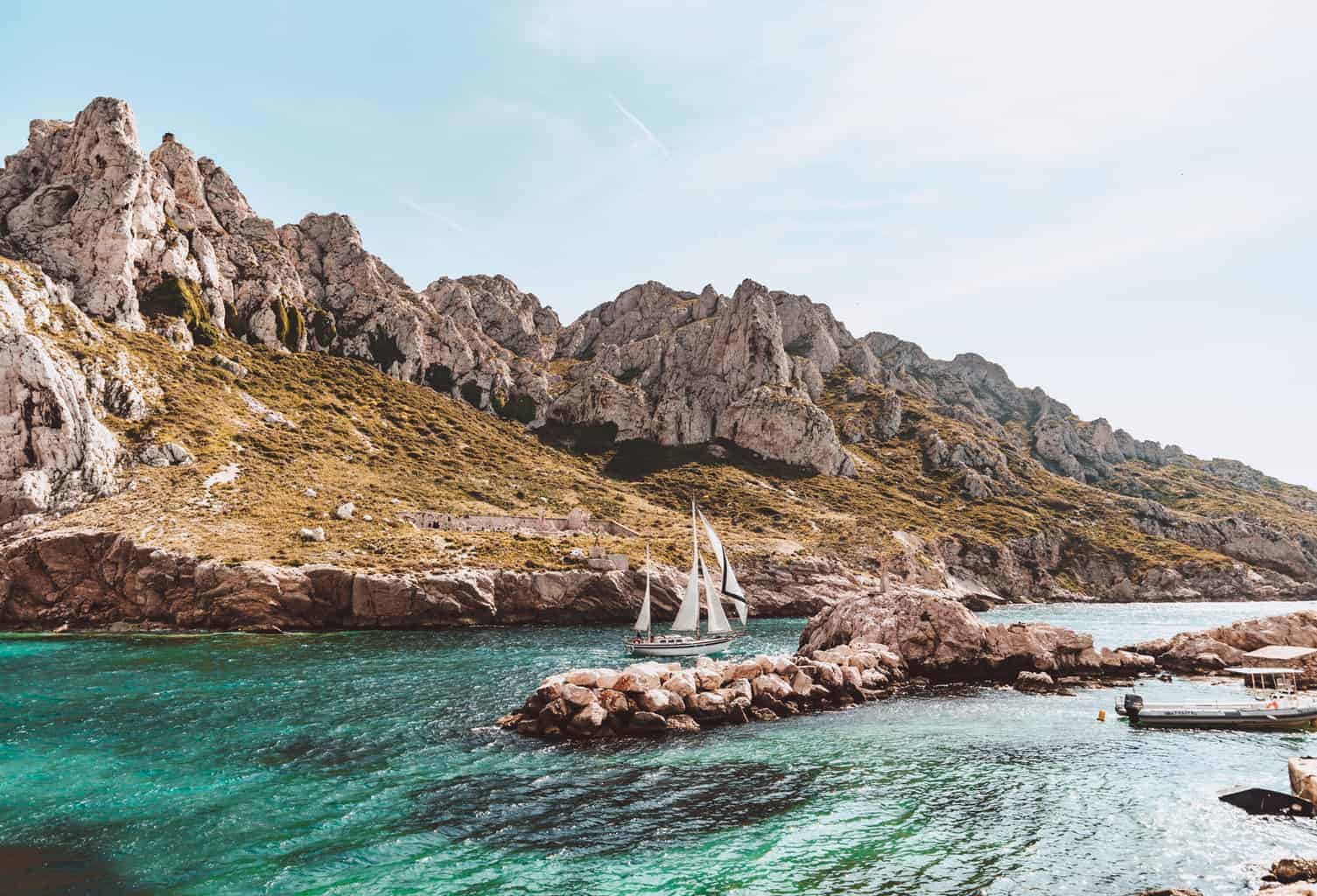
Les Goudes – The End of The World
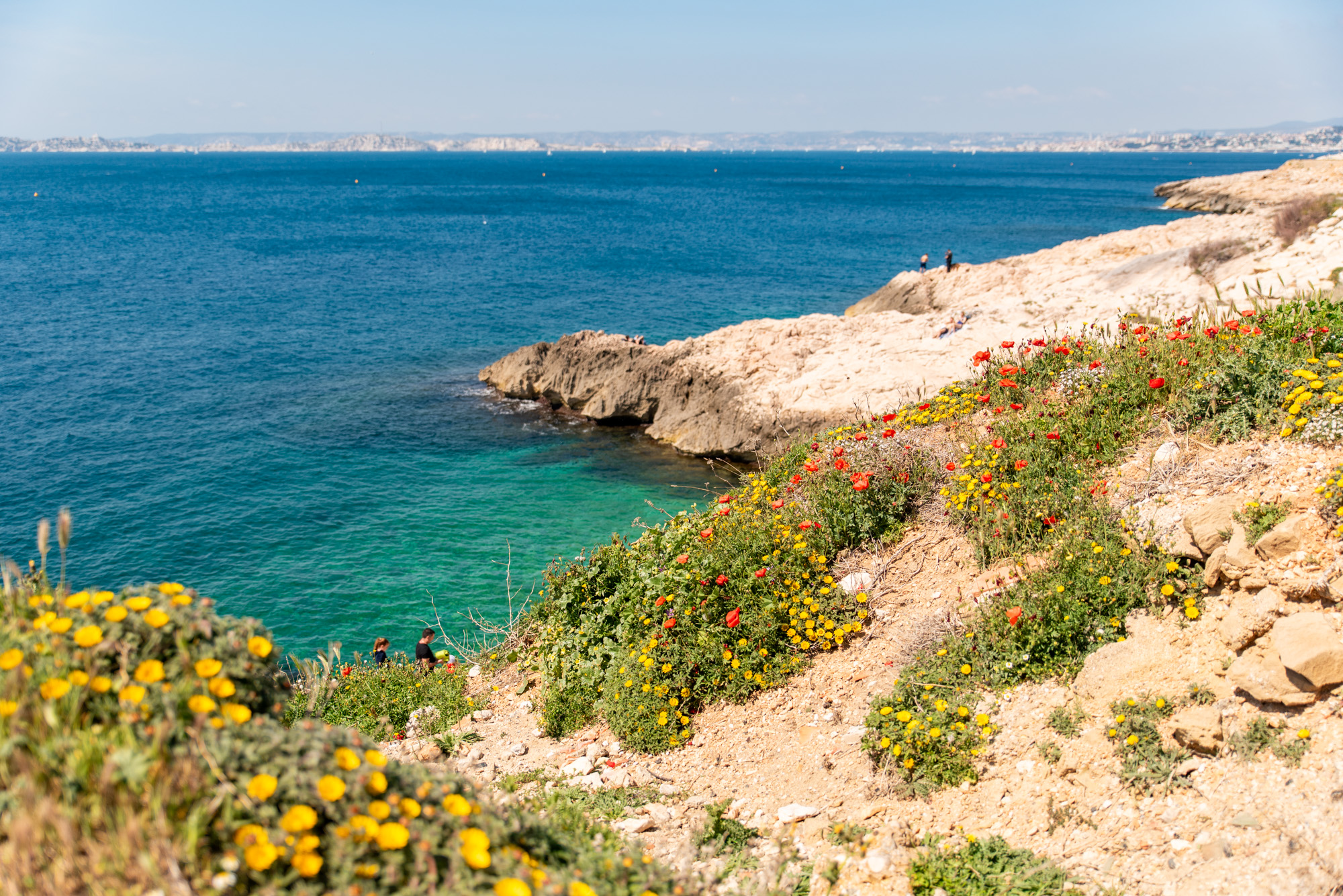
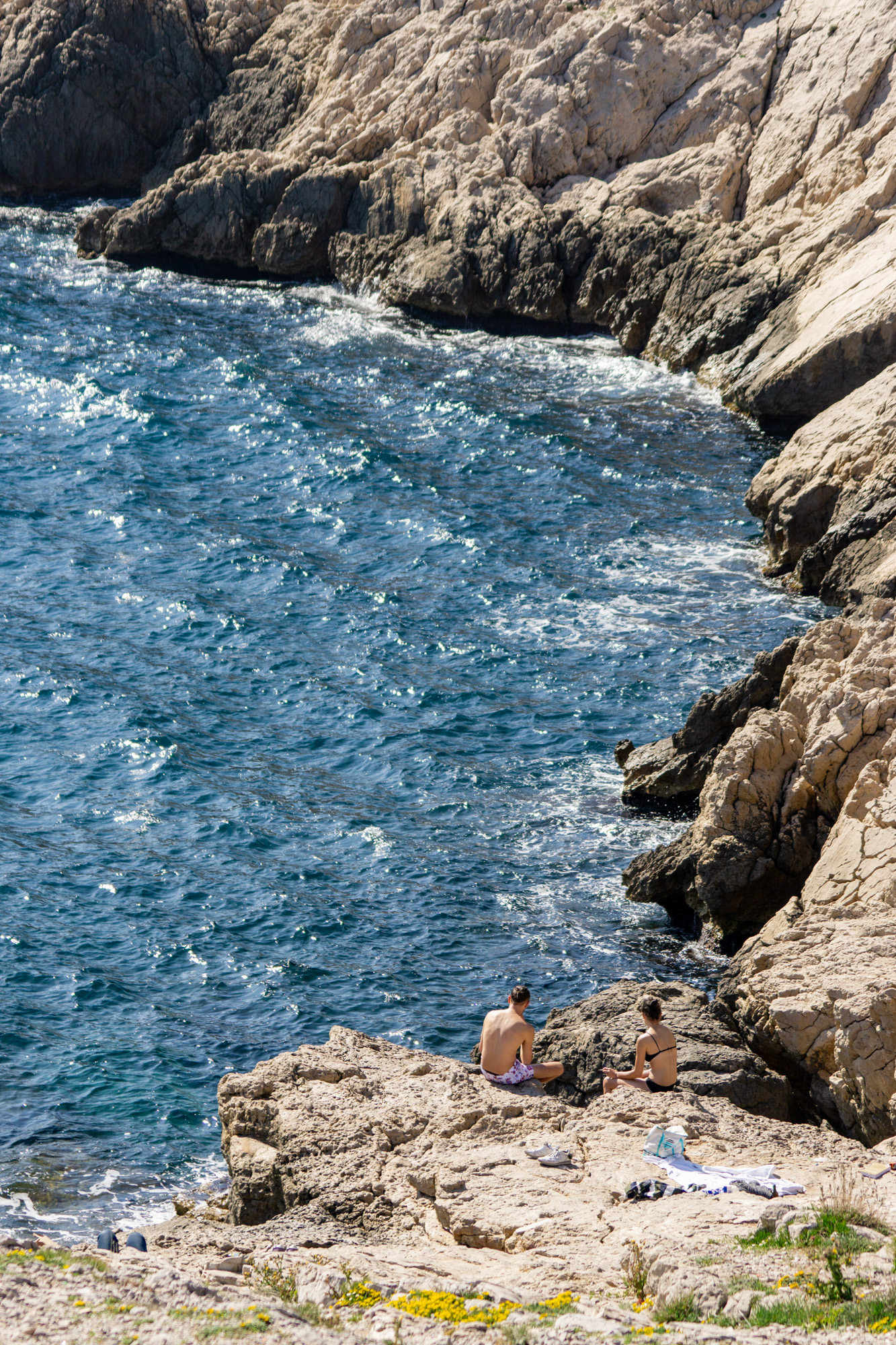
As you enter the Calanques National Park, the city falls away, and nature takes over. Craggy inlets are converted into sheltered swimming spots, and beach towels are scattered around the rocky cliffs.
There’s nothing here but the sea, the hills, and the sail ships on the horizon. It’s this tranquillity that most likely led to the French expression “va te jeter aux Goudes” (roughly translated as go throw yourself at Goudes / get lost in Goudes) – referring to the feeling of being at the end of the world.
And while this feeling may be misguided, it is, if not the end of the world, the end of the road. Boulevard Alexandre Delabre continues only briefly past Les Goudes, up and over the hill to the petite Port de Callelongue before the hiking trails take over as your only route through the rugged National Park.
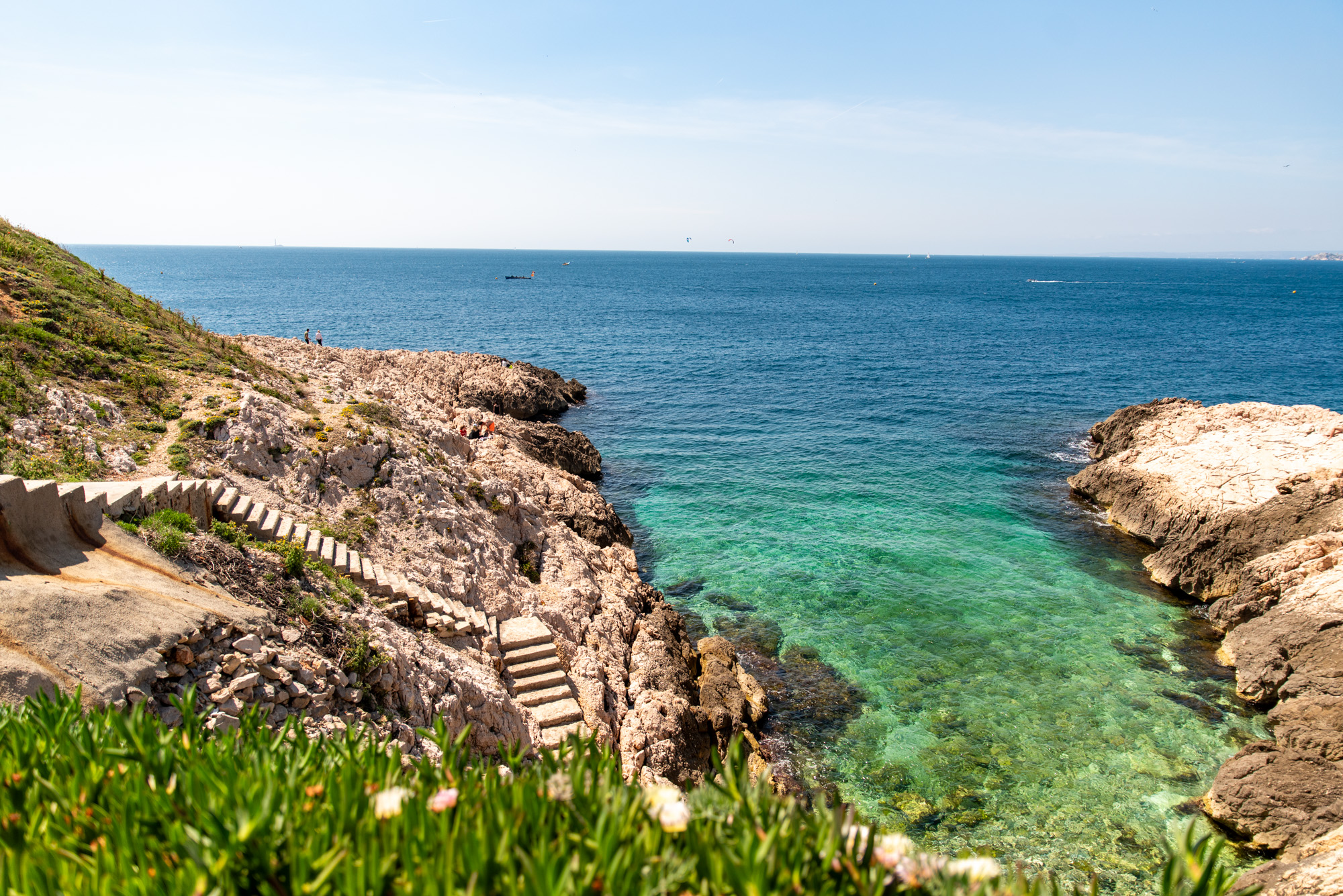
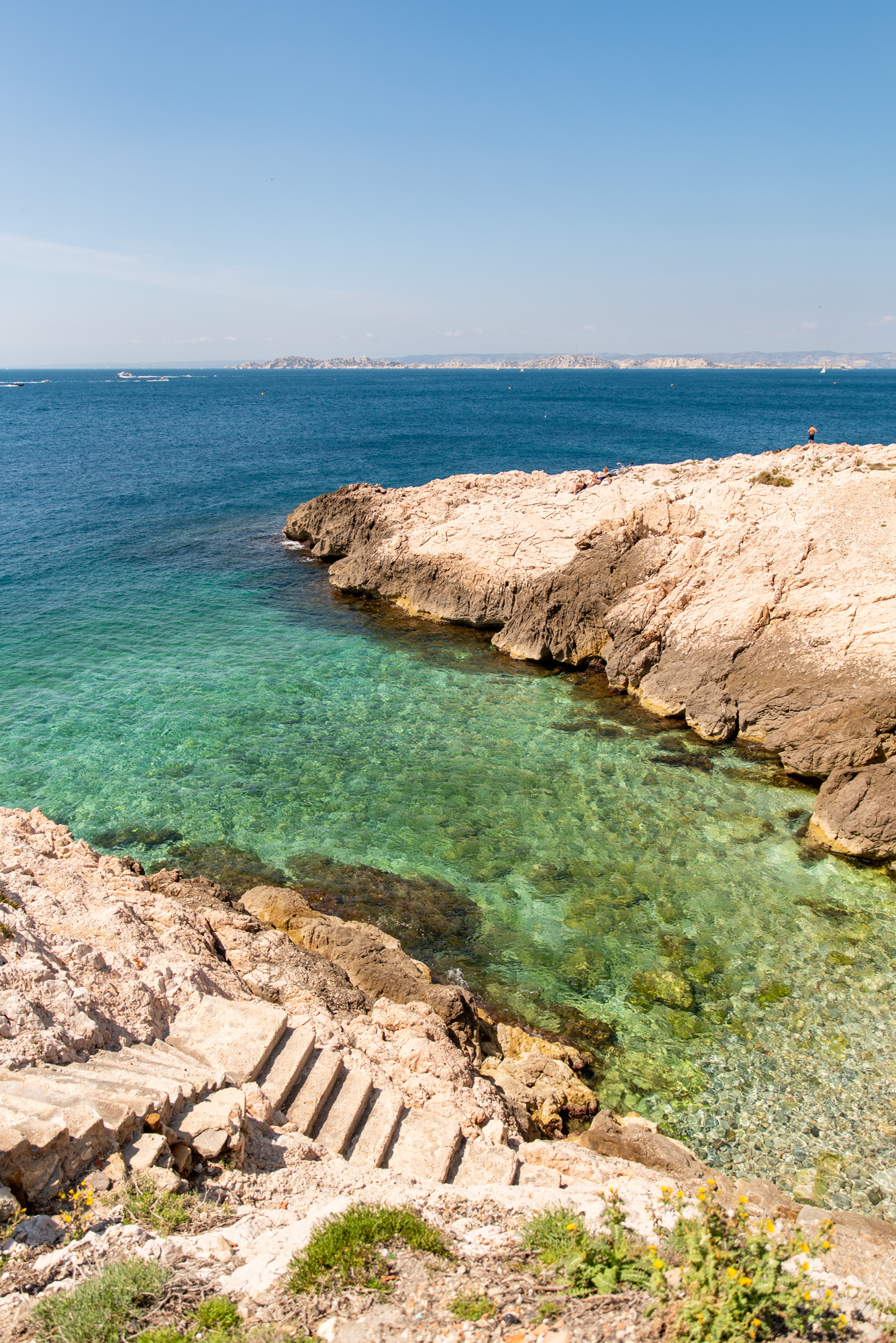
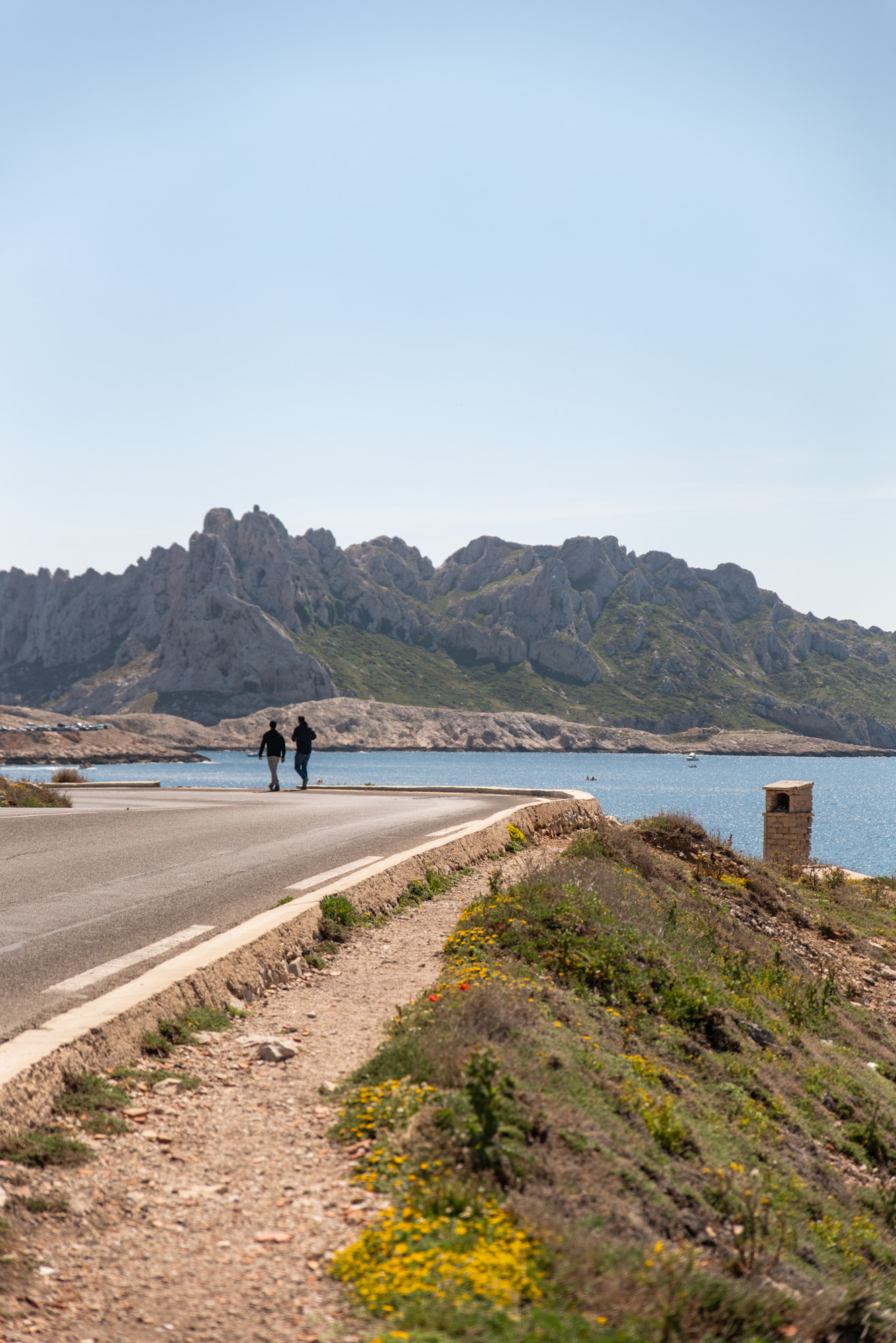
Getting to Les Goudes is half the fun, however you travel (options explained below). By road, the scenes change with every bend. And by sea, you’ll get to appreciate how the landscape changes along the way.
Once you arrive in the village, set off on foot. You may like to wander up to the hill behind the village, which is pockmarked with bunkers and other remnants of the Second World War, for sweeping views of Les Goudes, Monkey Bay, and the towering Île Maire (Mayor Island).
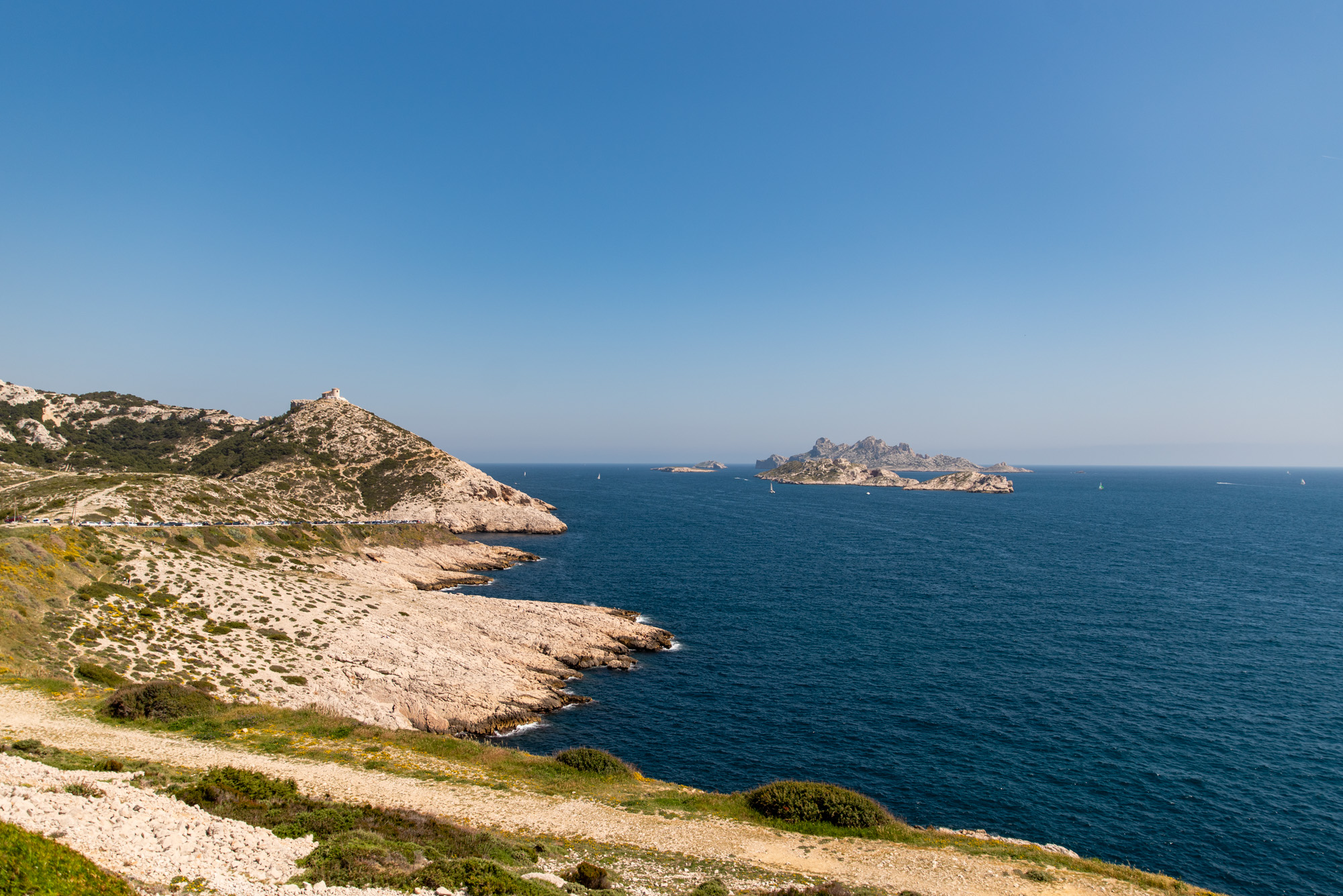
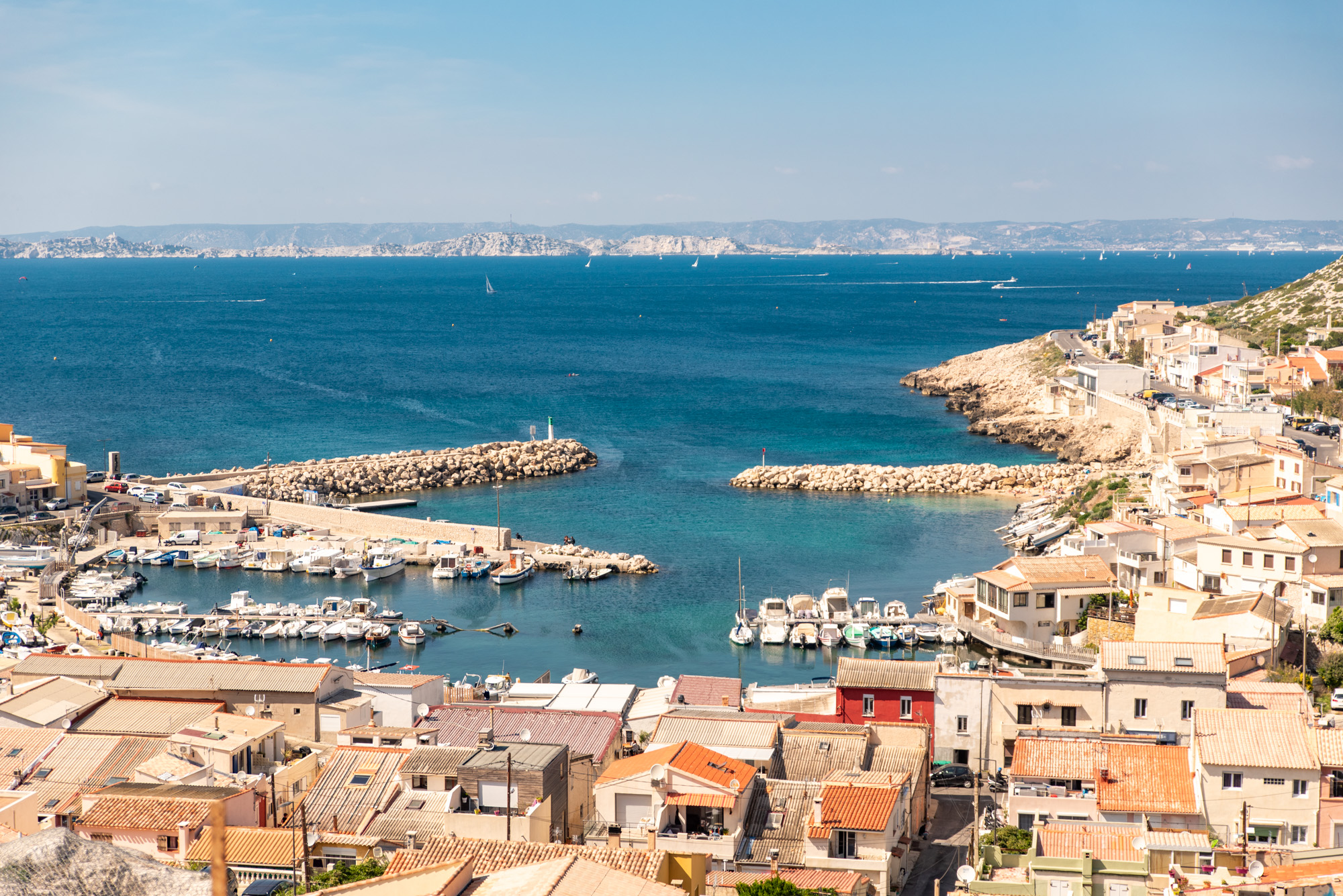
Baie des Singes (Monkey Bay)
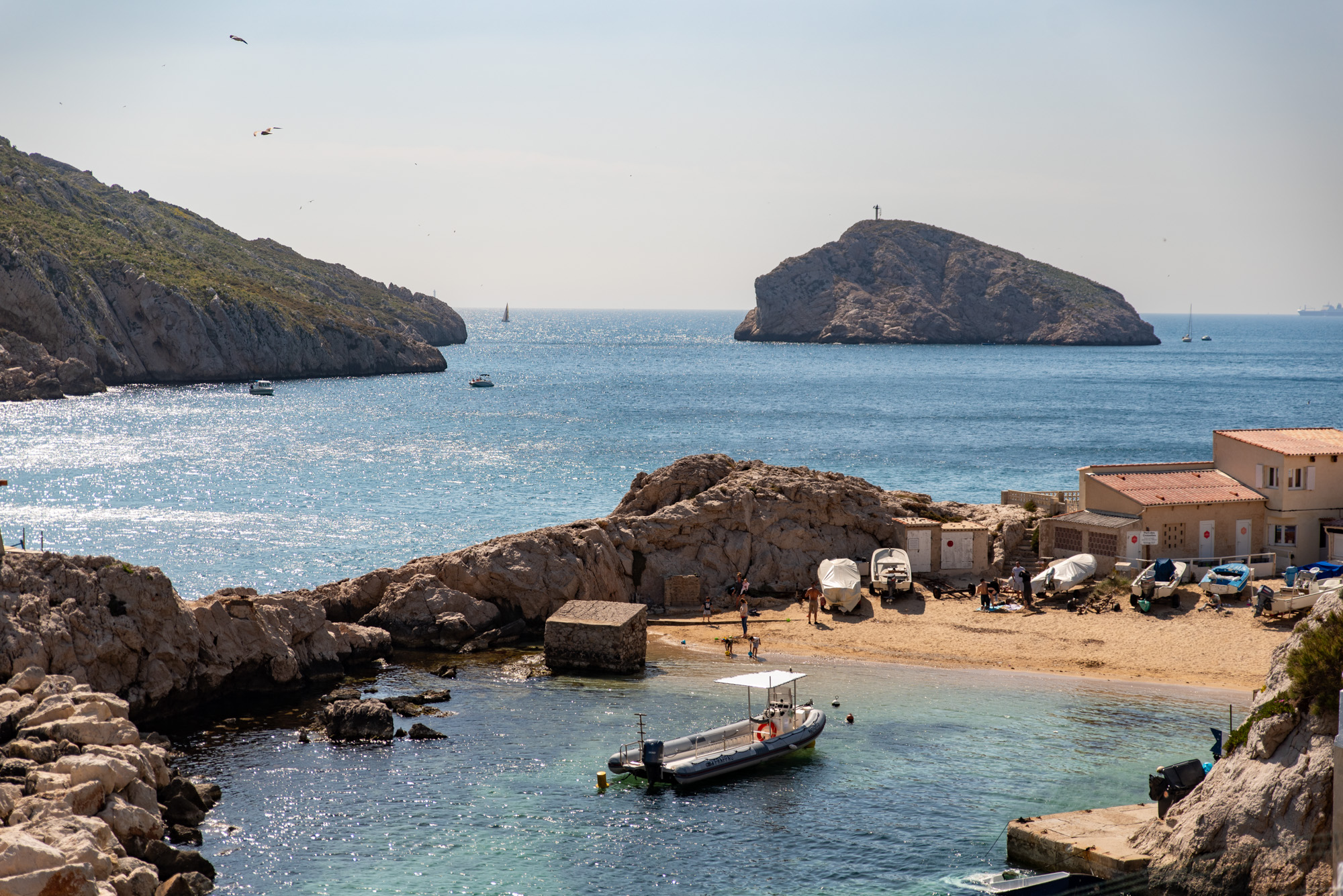
From the hill, you can continue along the ridge and out across Cap Croisette to the Baie des Singes (Monkey Bay). Apparently, it earned this odd name as it was once a smuggling port, and the local children needed to be as “quiet as monkeys”.
A well-trodden walkway has been etched into the rock and will take you to the bay. Near the end of the path, it splits in two, and you can proceed to the Baie des Singes Restaurant, or carry on over the rocks to the small sandy bay. I’d recommend stopping in at the restaurant – if only briefly – for the views alone.
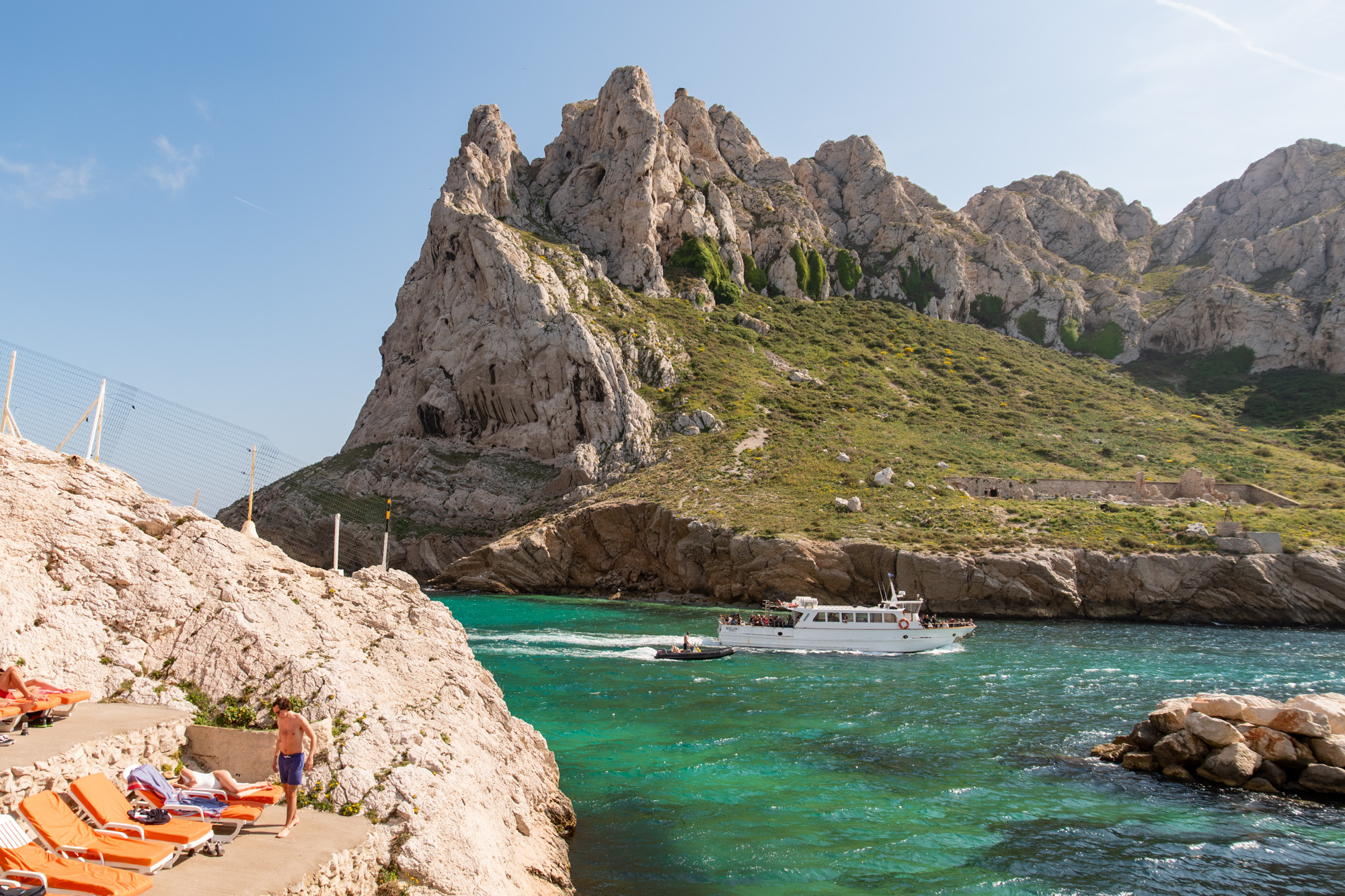
Food is served throughout the day, but be warned, if you only want a drink, you’ll be relegated to the tables in the back. We ordered a citron sorbet, which was pricey but allowed us front row seats with a view over the bay and islands.
To the side of the restaurant is a tiered hill with sun loungers for hire, which would make an ideal base for an afternoon in this idyllic bay.
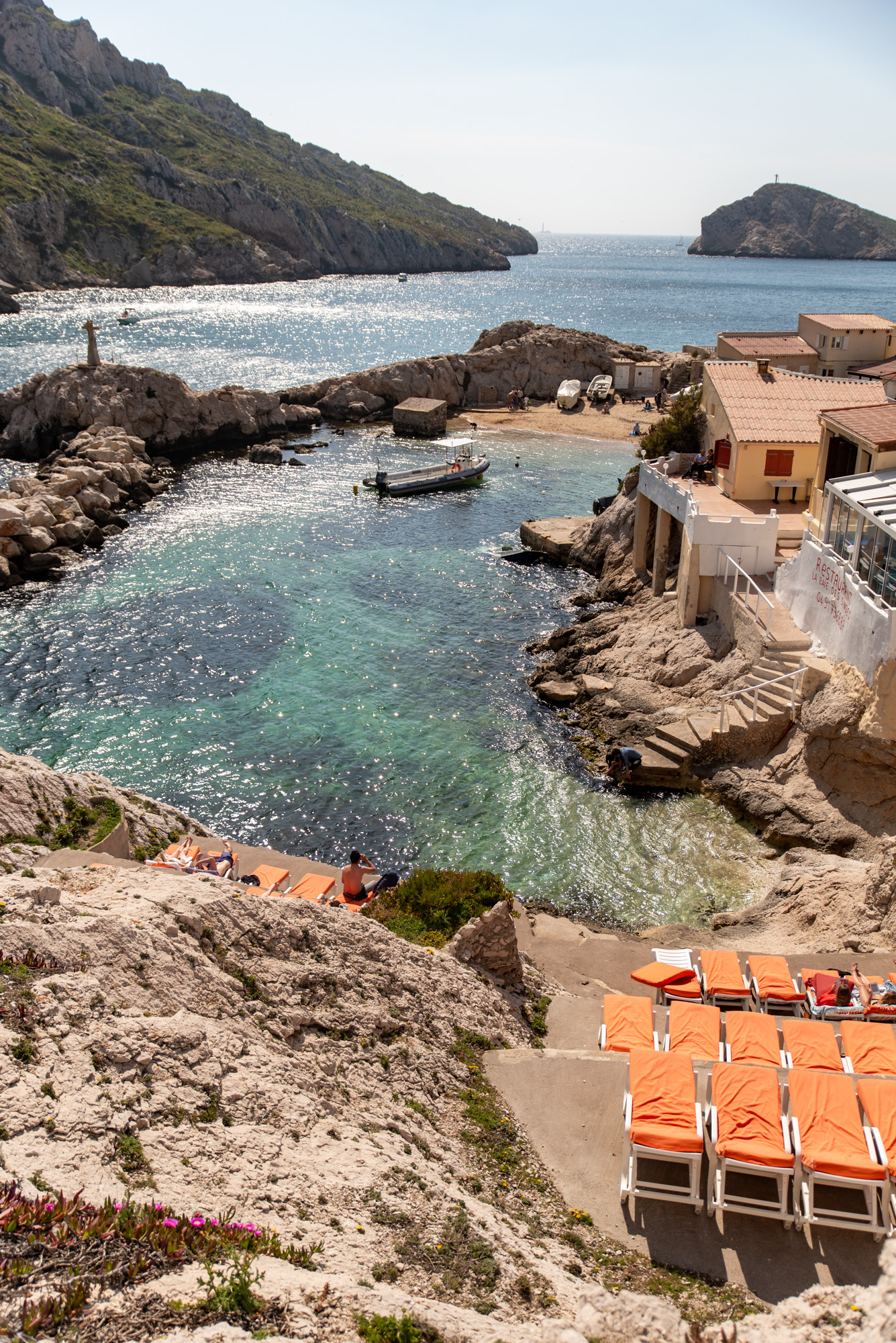
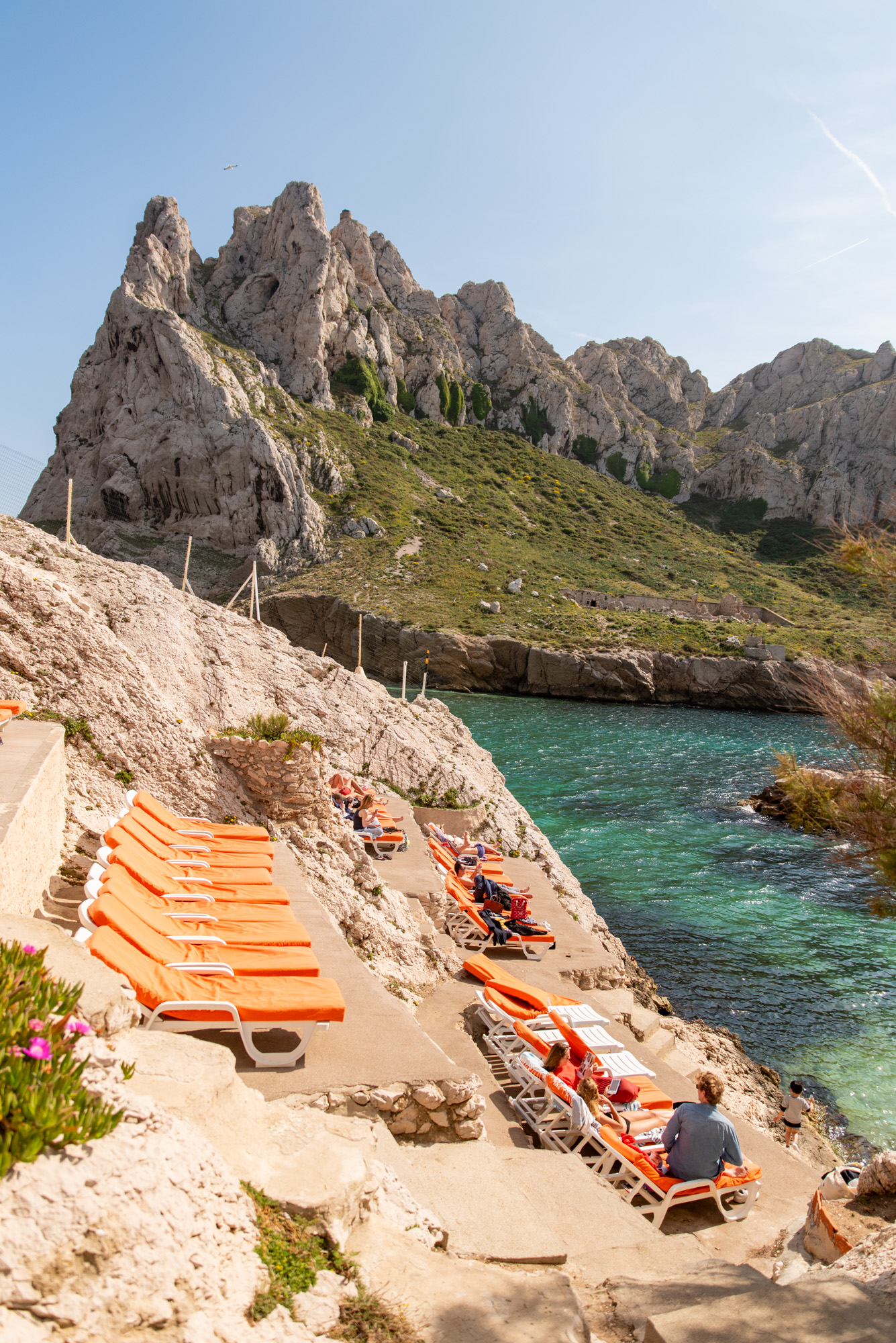
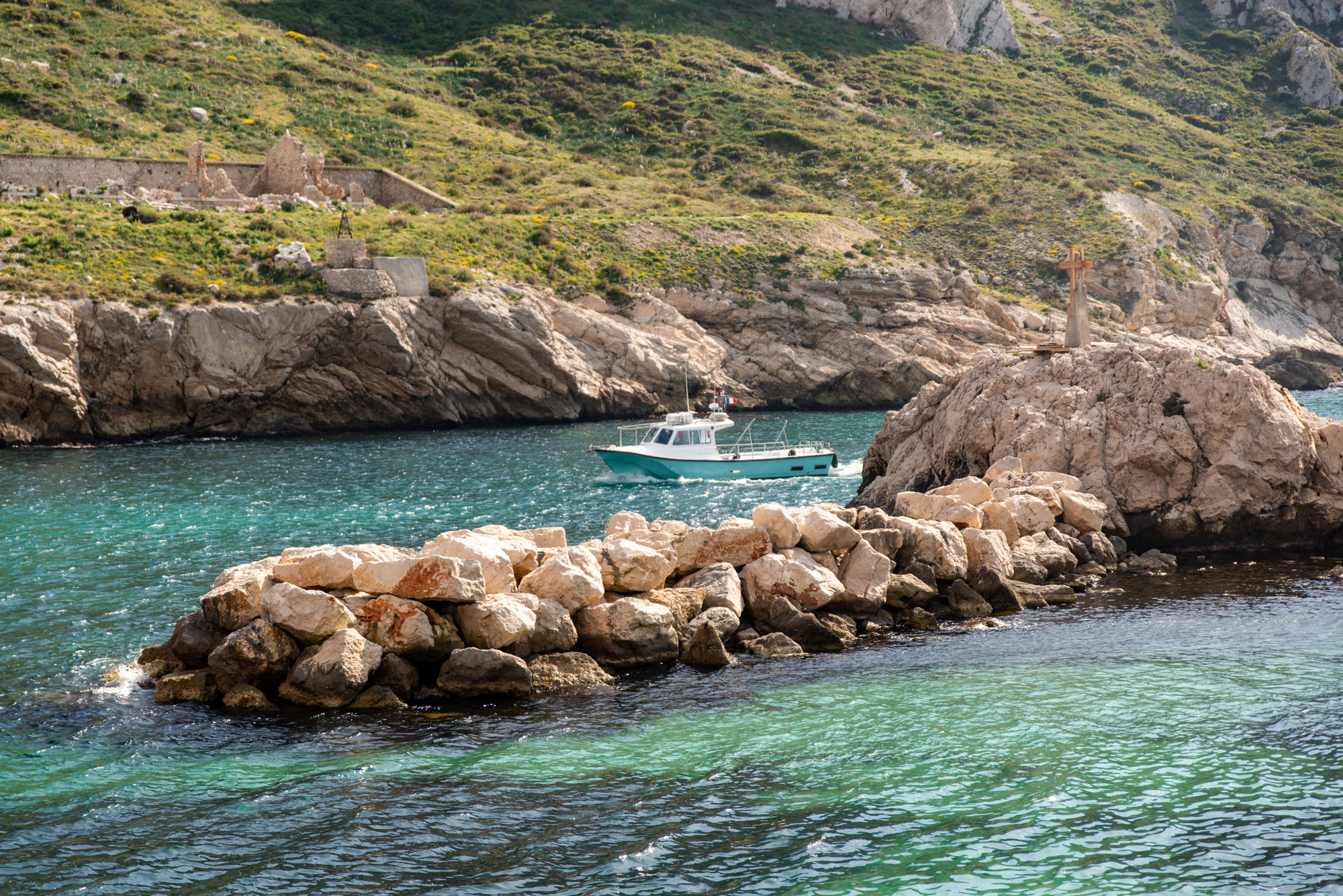
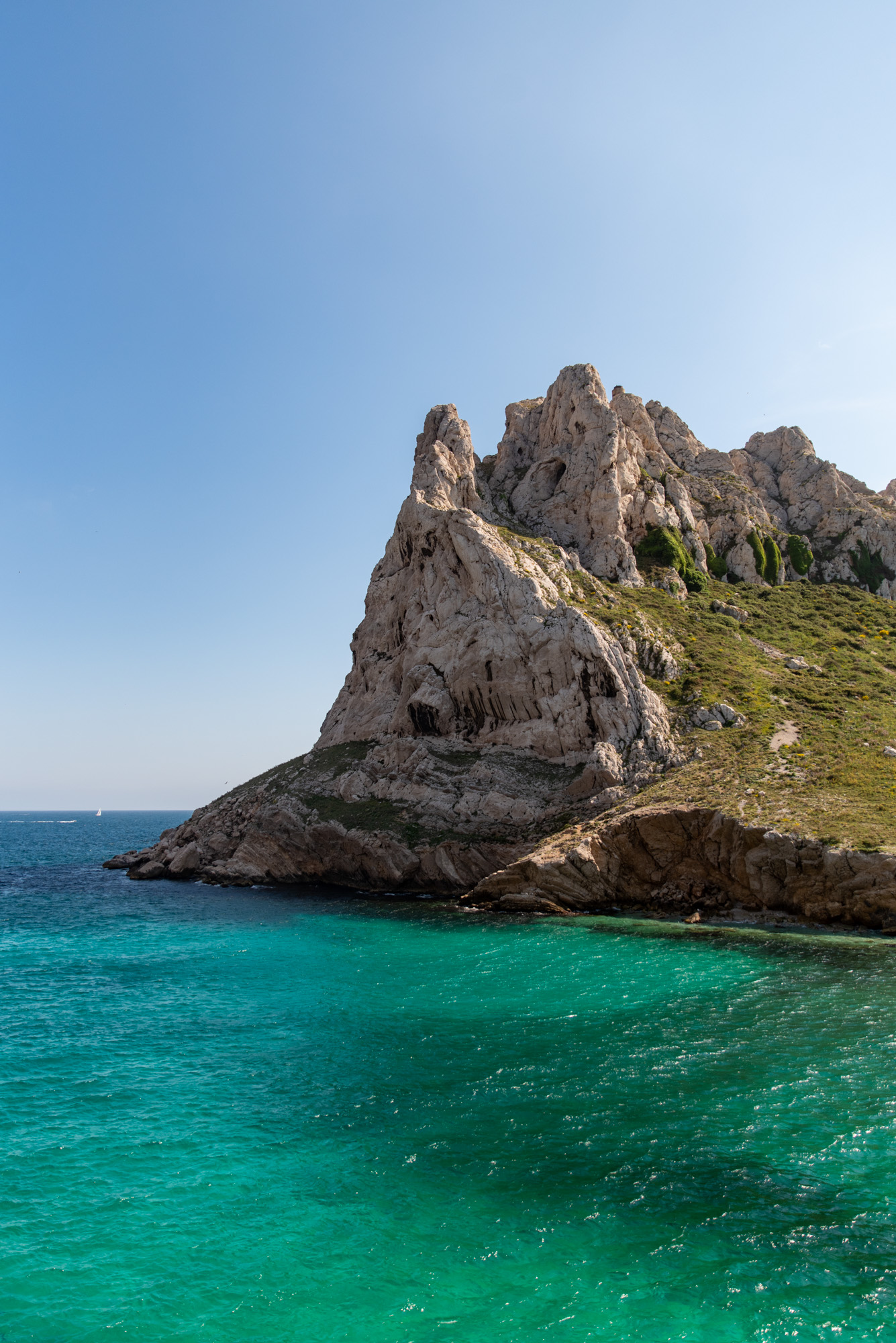
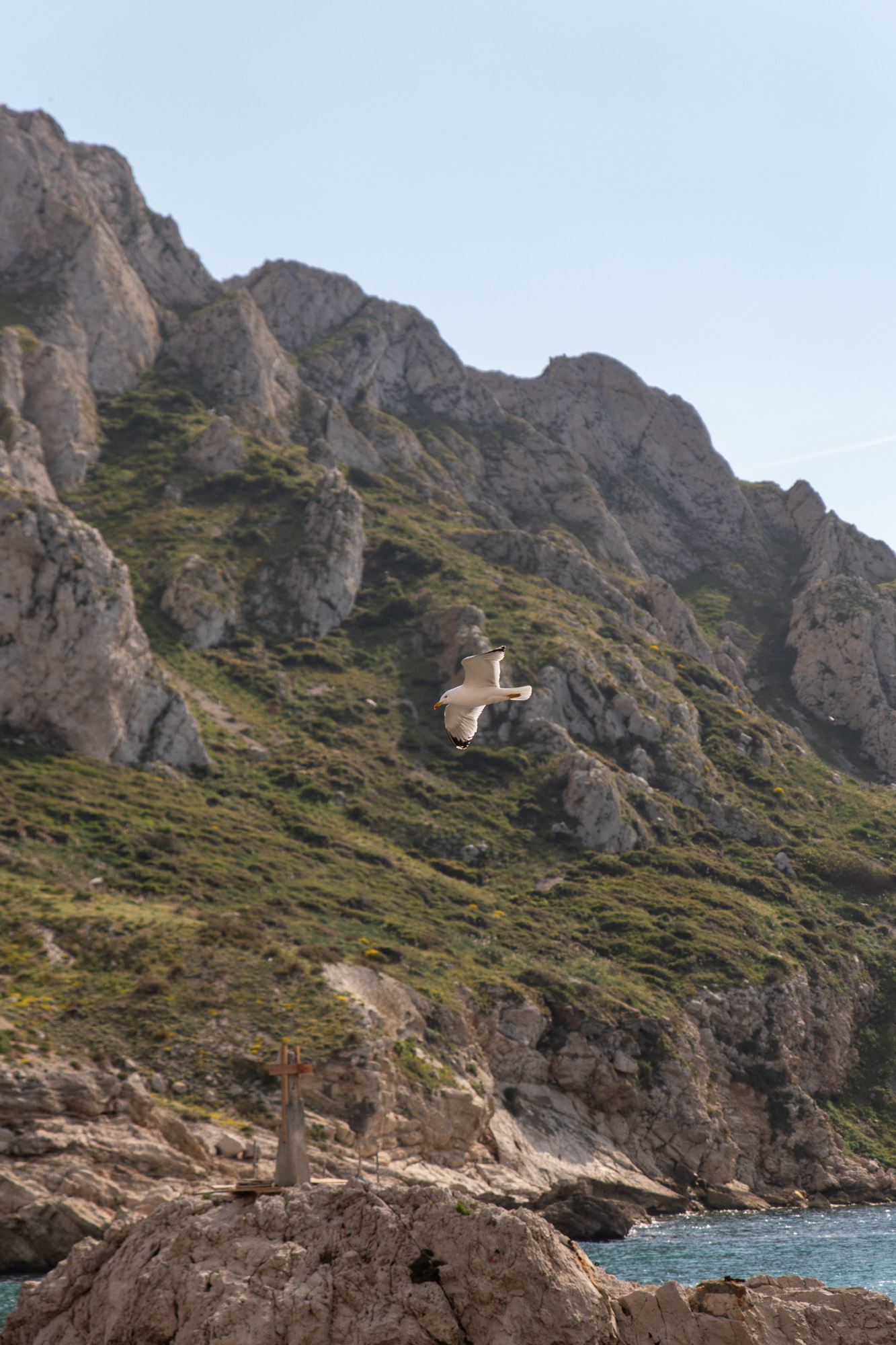
If you don’t want to shell out for a lounger, continue around the headland to reach the bay, and enjoy the incredible scenery on offer. This is a better option if you have kids with you too, as the beach is sandy and is wedged between rocks that provide shelter from the wind.
Anse de la Maronaise
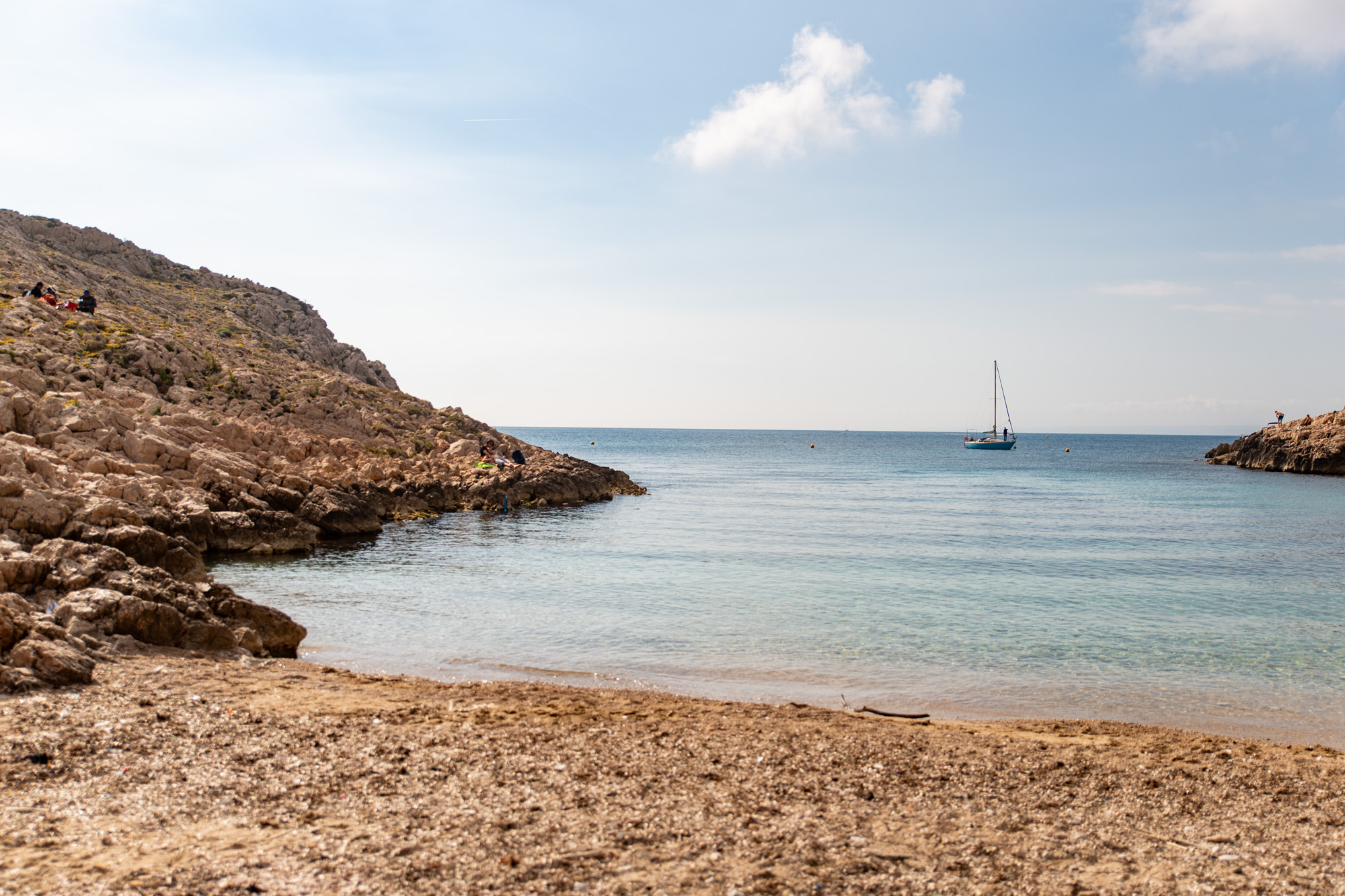
Walking back towards Les Goudes, follow the road, and you’ll come across Anse de la Maronaise, a larger (albeit still small) sandy beach tucked in a semi-sheltered cove.
Anse de la Maronaise used to house a large and unsightly nightclub, but in 2010, it was demolished. You would be none the wiser apart from the telltale piece of tile or coloured brick being unearthed in the sand.
Les Goudes Village
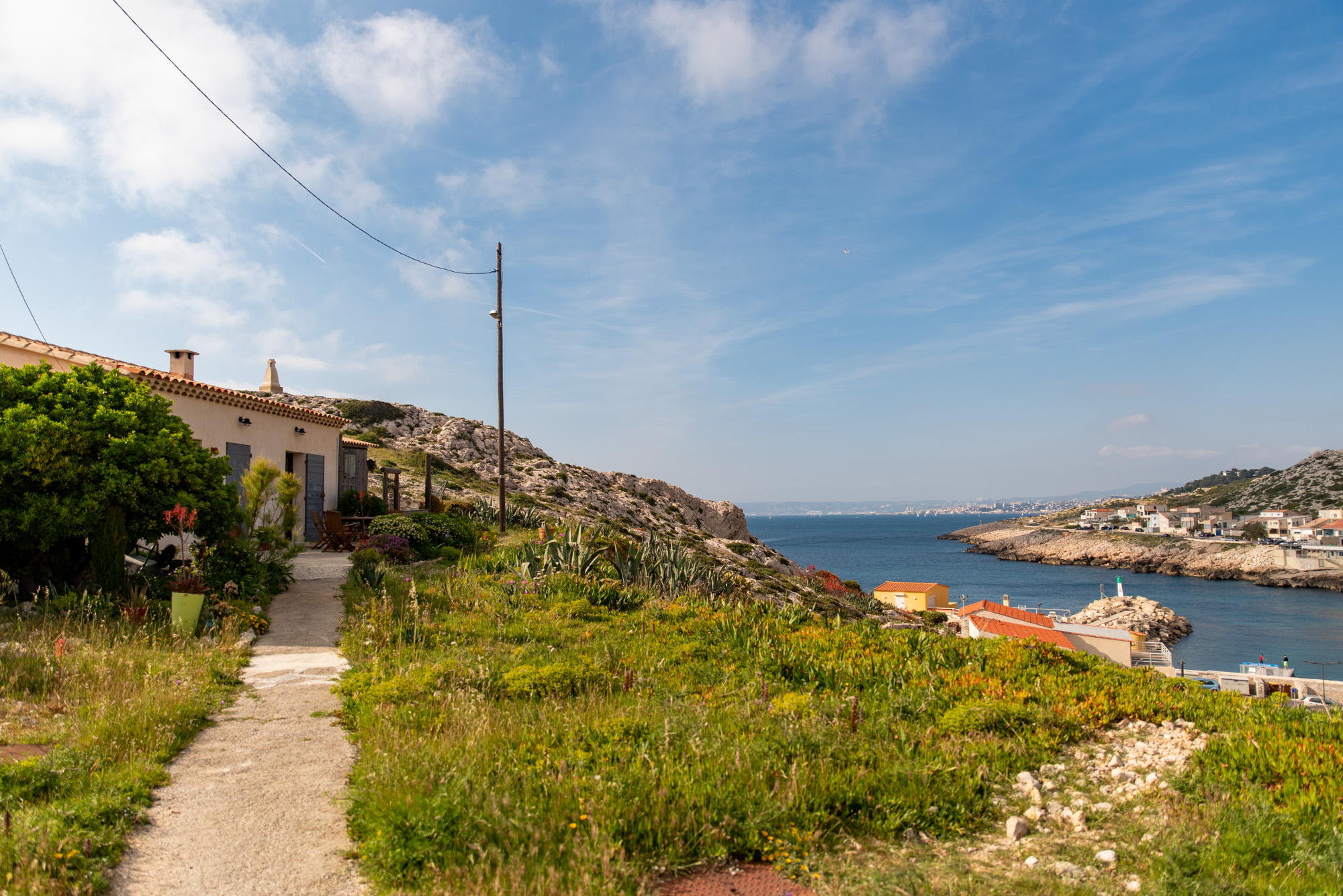
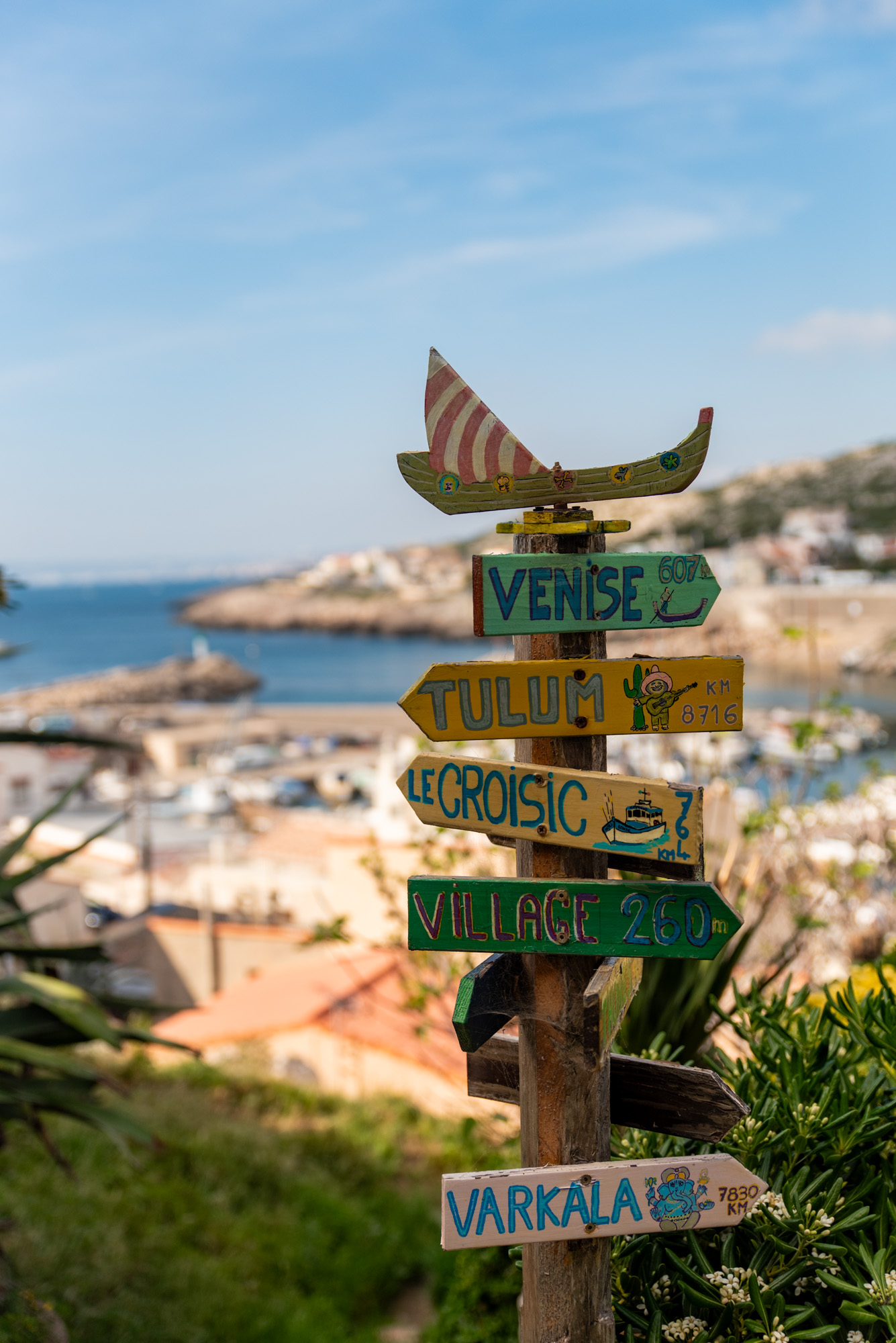
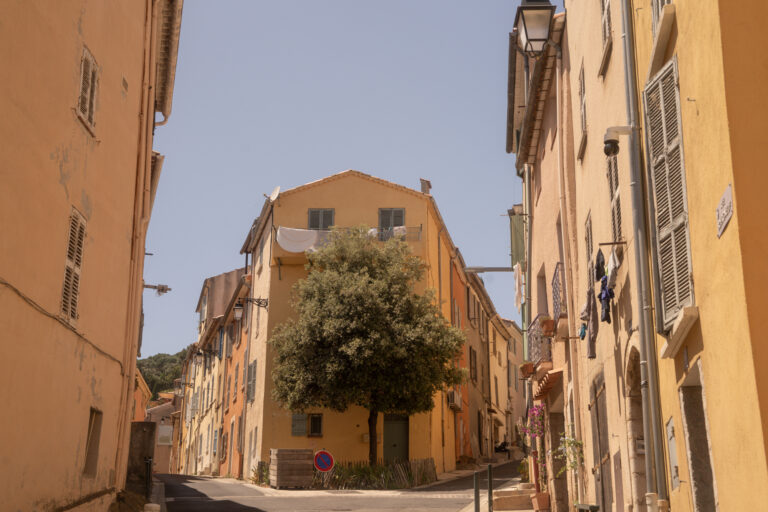
From Anse de la Maronaise, you can continue to follow the road or take the steeper shortcut over the hill. Choose the latter, which will lead you to a bucolic lane lined with colourful beach houses and fragrant pittosporum flowers.
You’ll be rewarded with a beautiful view over the port, and can continue to follow the lane down into the heart of the village, where you can quench your thirst at one of the many bars in the bay.
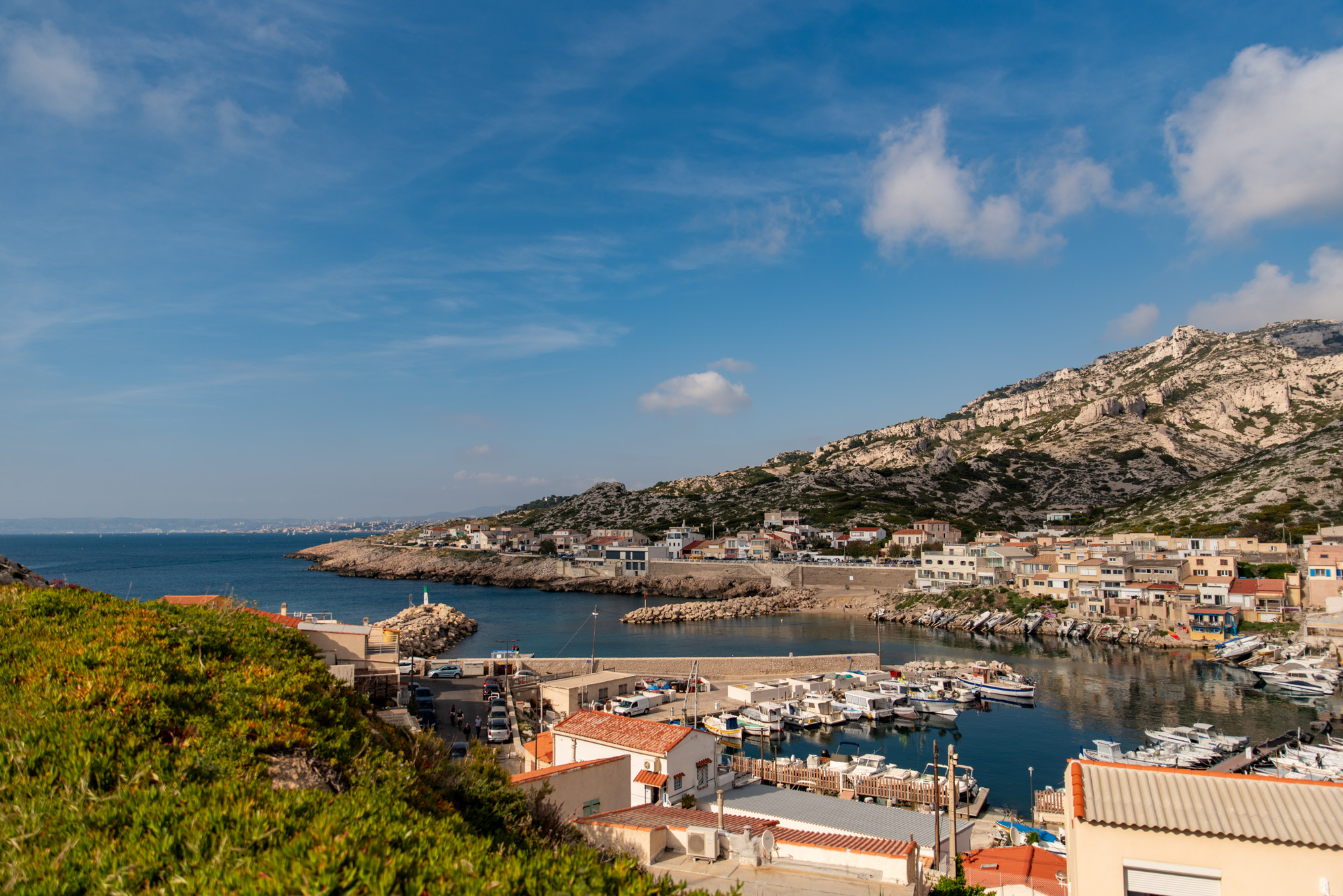
If you haven’t had enough of the sea, there’s another small beach on the right of the bay. Again, it’s not as picturesque as the secluded beaches tucked around the coastline, but it’s a good place to unwind at the end of the day or to grab a quick pizza or pastis at the neighbouring pub as the sun goes down.
Calanque de Callelongue
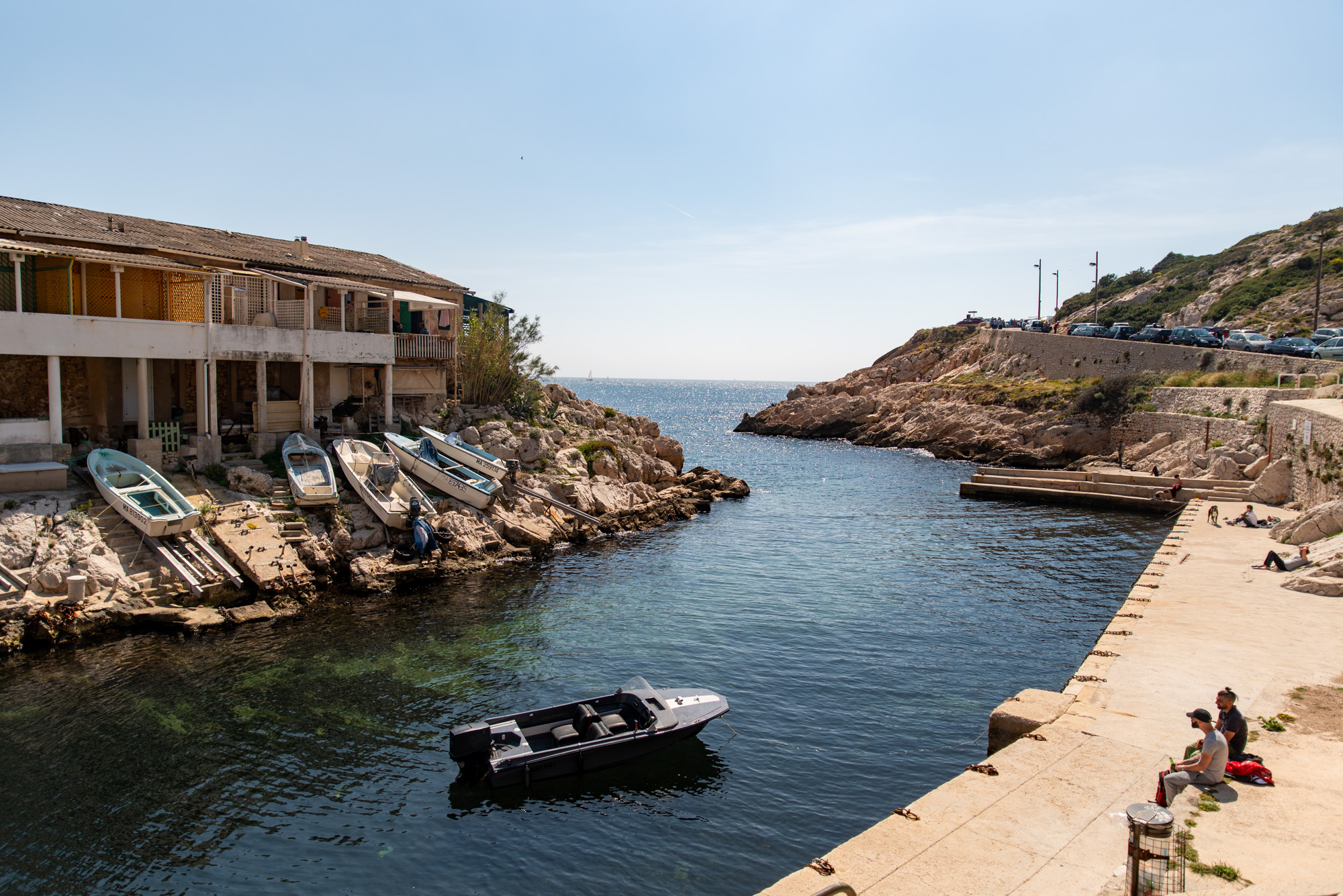
Over the hill, and the last stop on the road from Marseille is la Calanque de Callelongue. The drive, or short walk over the hill, to reach the calanque is certainly worth the effort, for the views alone.
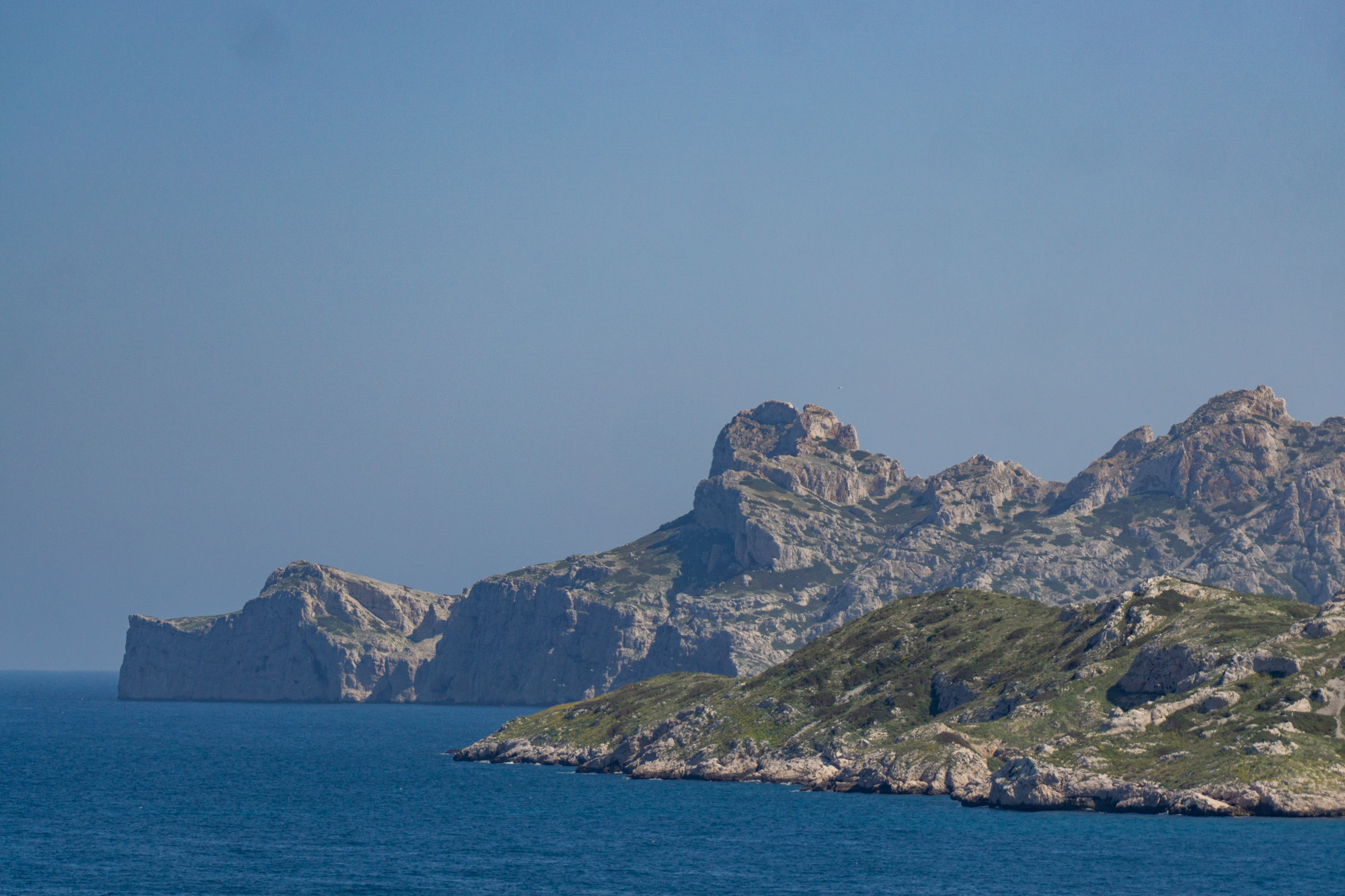
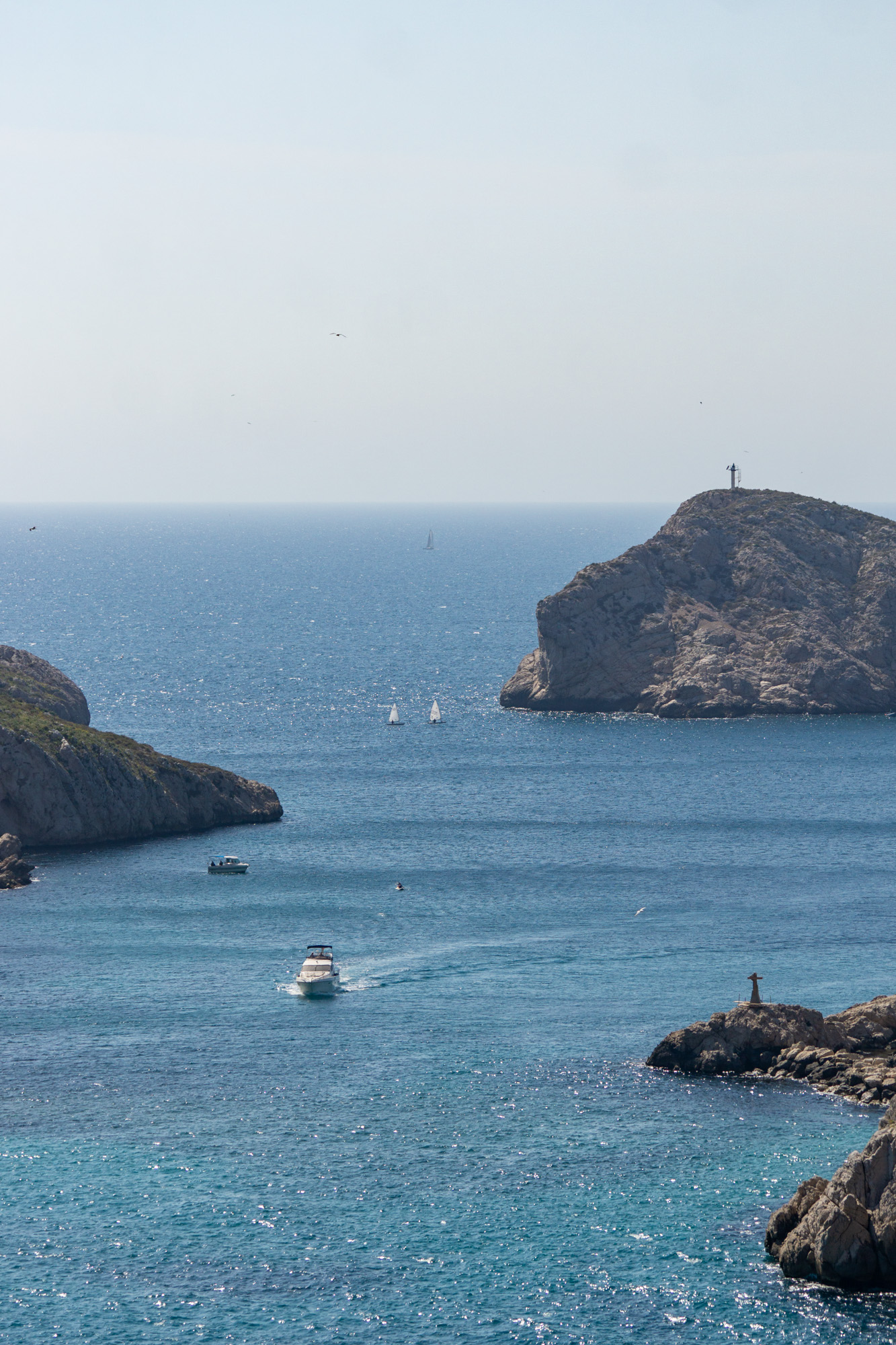
You’ll see the uninhabited Île de Jarron and Île de Jarre that appear to be one and the same, but are actually separated by a thin 1m-wide channel. And buried beneath the innocent-looking sea is the wreck of the Grand Saint Antoine – a sailing ship that brought the plague to Marseille before being burned and buried.
These days, the quiet fishing port is home to only a handful of houses, a popular and lively restaurant, and a tiny sandy beach. Pop by if you can, but note that vehicle access to the calanque is now restricted in the summer months. Instead, you can walk from Les Goudes, or take the #20 bus.
Practical information for visiting Les Goudes
Find out when to visit Les Goudes, how to get there and what to take with you below.
When to go
Les Goudes is busiest in summer and on weekends and public holidays year-round, when the crowds descend on this small pocket of coast. For a calmer visit, come on a weekday and aim for early morning or late afternoon – you’ll skip the worst of the crowds and the midday heat. Spring and autumn are arguably the sweet spot when it’s still warm enough to swim, but far quieter than peak season.
One note that I also pointed out in my guide to the Calanques National Park is that between 1 June and 30 September, access to the Calanques massif can be restricted or closed to walkers depending on the daily wildfire risk. The level is set each morning, so if a hike is part of your plan, check the official Mes Calanques app (or the Bouches-du-Rhône prefecture map) the day before or the morning of your visit. This isn’t necessary if you’re just visiting Les Goudes and Calanque de Callelongue, though.
How to get to Les Goudes from Marseille
Things have changed in Les Goudes in recent years. As it’s become more popular, they’ve cracked down on roadside parking and reduced the number of car parks available. The upside is that there are now more ways to get there without a car, and honestly, that might be the most enjoyable option anyway.
That said, I’ve flipped this section around to lead with the car-free routes. If you still want to drive, skip to the driving and parking notes at the bottom.
Sea Shuttle to Les Goudes
If you’re a visitor to Marseille, I’d suggest the shuttle boat is the easiest and most enjoyable way to reach Les Goudes. Think of it as a cheap boat tour!
LaNavette departs the Vieux-Port and arrives at Pointe Rouge, where you’ll change to a smaller boat to Les Goudes. The trip costs €8 each way, and you buy your ticket on the boat.
There’s also the option of jumping on the boat at Pointe Rouge, in which case, the single-leg journey to Les Goudes will cost €5.
Do keep in mind though that the Les Goudes shuttle is seasonal and typically resumes from late April through to late September, so it’s a warm-months option rather than a year-round one. Check the timetable here.
Bus to Les Goudes
There are a few ways to get there by bus, but the following is what I’d recommend for the views.
From the central city, jump on the 83 from the Quai de Rive Neuve (almost opposite where the little ferry docks). Get off when the bus starts to head inland, at Parc Borély. Cross the road and hop on the 19, which takes you as far as the Madrague de Montredon.
From the Madrague you’ve got two choices. You could walk the final 2–3 km along the coastal path – a beautiful walk, and honestly one of the nicest parts of the trip. Or catch the 20, which runs the last leg out to Les Goudes and on to Callelongue.
If you’d rather skip the scenic 83, the Park’s official route is metro line 2 to Rond-Point du Prado, then the 19 (it runs every 10 minutes or so) to the Madrague, then the 20.
You can check the bus timetables here.
Bike to Les Goudes
There’s no dedicated cycle path, but the coastal road is now limited to 30 km/h, which makes the ride safer and calmer, and bike racks have been added along the route.
If you don’t have your own wheels, you can find LeVélo e-bike stations at l’Escalette, Les Goudes and Callelongue. They’re open daily, so you can grab one and drop it near the village.
Alternatively, book this e-bike tour from Marseille to the Calanques.
Driving to Les Goudes
You can drive to Les Goudes, but these days I’d think twice, especially on a weekend or holiday, when the single access road clogs up, and legal parking fills fast. There are also speed radars, video surveillance and a 30 km/h limit along the route now, so it’s a slow, patient drive rather than a breezy coastal cruise.
Follow the coast the whole way. Start in the city on Rue des Catalans and stay on the main road as far as it goes. It changes names a few times, but if you hug the coast and follow your nose, you won’t get lost. Just go in with realistic expectations about parking, or in winter!
Parking in Les Goudes
This is where things have changed the most in recent years. Here’s what you need to know:
- Within Les Goudes, parking is only allowed in the marked, designated spaces, and there are very few of them.
- Roadside “wild” parking is strictly forbidden. You risk a flat €135 fine and having your car towed – the tow truck is often on site. The municipal police presence here has been ramped up to enforce it.
- The road out towards the Baie des Singes and Cap Croisette (at the end of Rue Désiré Pelaprat) is now closed to cars.
There is still free car parking at Napoléon car park, on the way out of the village towards Callelongue, which has more capacity than most. But you have to arrive early to nab a coveted spot, as this is the only parking for the calanques hikes that depart nearby too.
Where to eat in Les Goudes
There are several bars and restaurants with sea views where wary beachgoers flock as the sun sets. The slightly old-school Grand Bar des Goudes on the port is the classic choice for a cold beer and a plate of fresh fish.
For something a little more special, Tuba Club is a pocket-sized hotel and restaurant set right on the rocks at the entrance to the village, conceived as a hideout for lovers of idleness. It has become the most talked-about address in Les Goudes, with excellent Mediterranean cuisine and a terrace with a 180° view of the azure sea. But book ahead if you want to eat here..
What to take with you
- Good walking shoes – nothing too serious, just something with a good grip, as the stone walkways can be slippery – even when dry!
- Sun protection – probably not the place for your umbrella, as the beaches are small. But hats, sunnies, & sunscreen will keep you protected.
- Water bottles.
- Food for the day – if you’re not planning on eating out, or you want to hang out at the beaches for longer.
- Water shoes – the beaches are rocky and pebbly, so having a pair makes it more comfortable to get in and out of the water.
I never get tired of discovering new places in Provence, and Les Goudes was an absolute gem of a day trip! Amazing natural scenery, a place where you can still find authenticity and tranquillity, and a fascinating history too… I hope you love it as much as I did!


Thanks – one of my favorite areas of Marseille. Next time you are there eat at L’Espai. Incredible spot for a great bowl of bouillabaisse. Thanks for posting – We will be there in three short weeks.
I’ve been to the Calanques twice and both times it was grey and windy so I didn’t get to see the beautiful turquoise water that features in postcards and your photos! Obviously I’ll just keep on going back until I strike lucky. I’ll definitely make time for Goudes. thanks for linking to #AllAboutFrance