10 Places in the South of France That Don’t Look Like France at All
Often, when we think of the South of France, similar themes come to mind: honey-coloured hilltop villages, rows of vines and lavender, charming seaside fishing villages, and colourful markets spilling over with fresh fruit and flowers. And yes, you will find all of that in spades.
But after many years of living in and extensively exploring southern France, I’ve found that there’s much more diversity in this corner of the country than those postcard-worthy scenes suggest. Dig a little deeper, and you’ll find areas that’ll make you feel like you accidentally stepped into another country… Think red dusty valleys, pink salt flats, prehistoric-looking canyons, and tropical lagoon lookalikes.
Here are ten of my favourites.
The Luberon’s Ochre Massif – Is This Arizona?
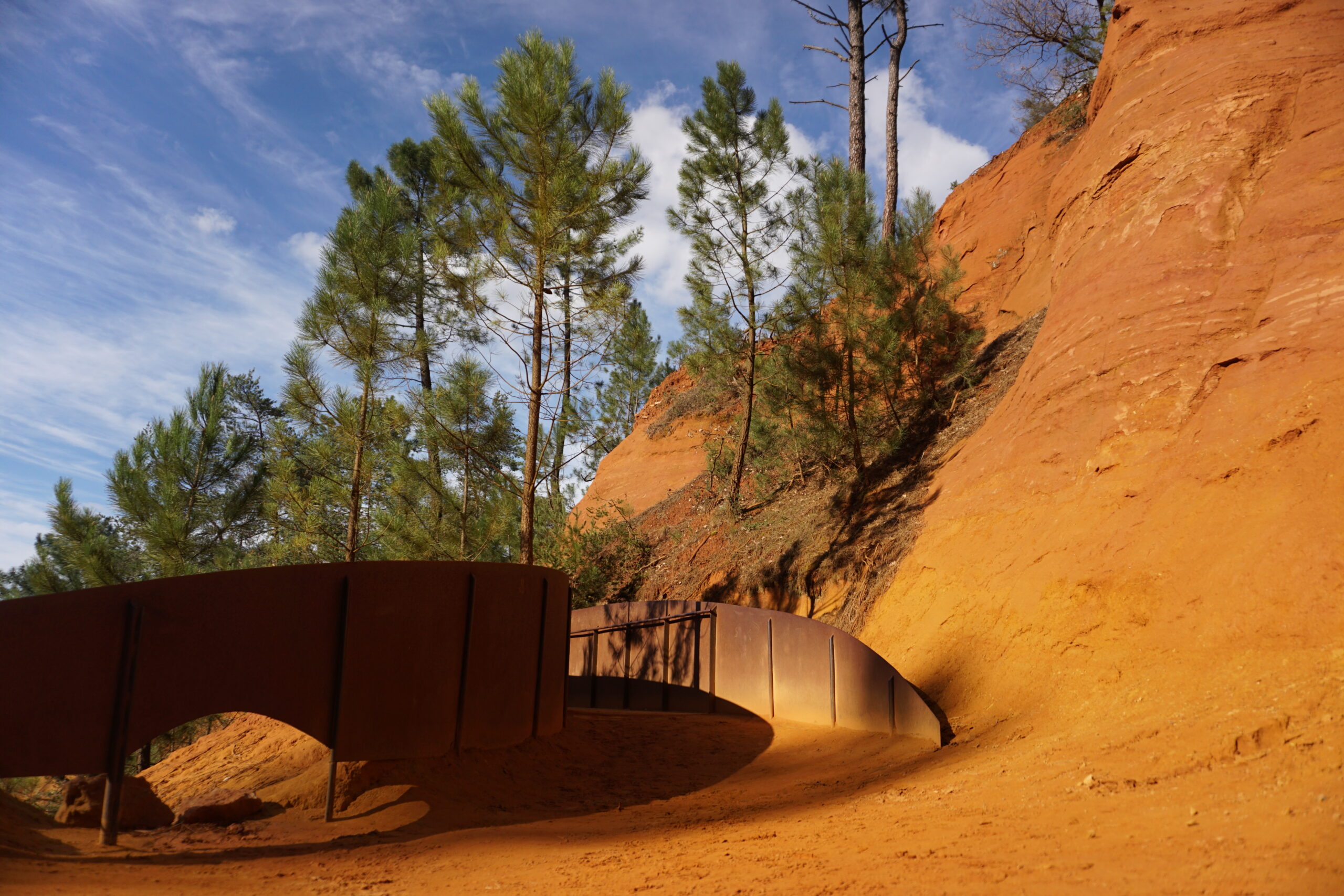
Tucked between some of the Luberon’s most well-known villages lies a landscape of red cliffs, orange gullies and pale hoodoos that wouldn’t look out of place in the American Southwest. This is ochre country, where the earth is so richly pigmented that for years it was mined for paint.
First up is Roussillon, and you’ll know from first glance that there’s ochre nearby from the hues of the houses in this compact village. Whereas most of the Luberon villages sport the same golden stone and earthy tones, Roussillon stands out for its rusty tones ranging from deep red to sunny yellow – with every shade in between.
It’s here you’ll find the famous Sentier des Ocres – the Ochre Trail – which sits just to the side of the village. A short track takes you on a journey through the old ochre mine, where the orange beneath your feet contrasts strikingly with the deep green pines overhead.
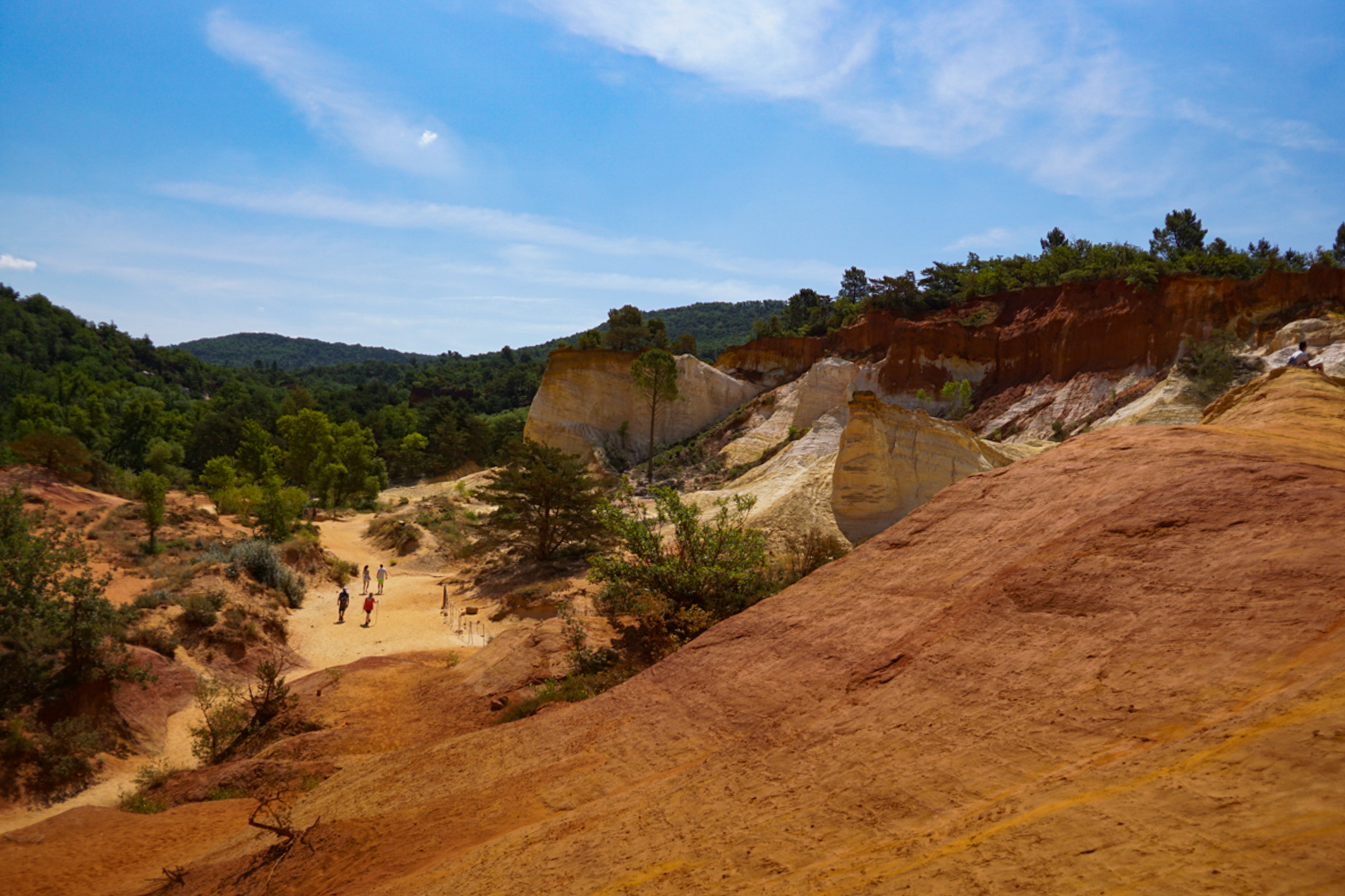
It’s a 20km drive east of Roussillon, where the landscape really changes, though. Near the tiny village of Rustrel, you’ll find the Colorado Provençal, a former open-pit ochre mine that spans over 4km. Here, you can be completely immersed in another world, one with ochre canyons, ravines, and fairy chimneys surrounding you in surprising scale.
The Colorado Provençal is a little more rugged and natural than the Ochre Trail in Roussillon, and offers two dusty trails to explore – the 2.1km Sahara circuit, and the 3.9km Belvedere Trail. The former is the more popular choice, but the latter offers more elevation and a great view over the site.
They’re part of the same Ochre Massif that stretches between Goult and Gignac. Another ochre site along this corridor is the Mines de Bruoux in Gargas – where instead of walking through an open landscape, you can explore a section of the underground mine system.
The Pink Salt Flats of Aigues-Mortes and Gruissan – a Slice of Bolivia
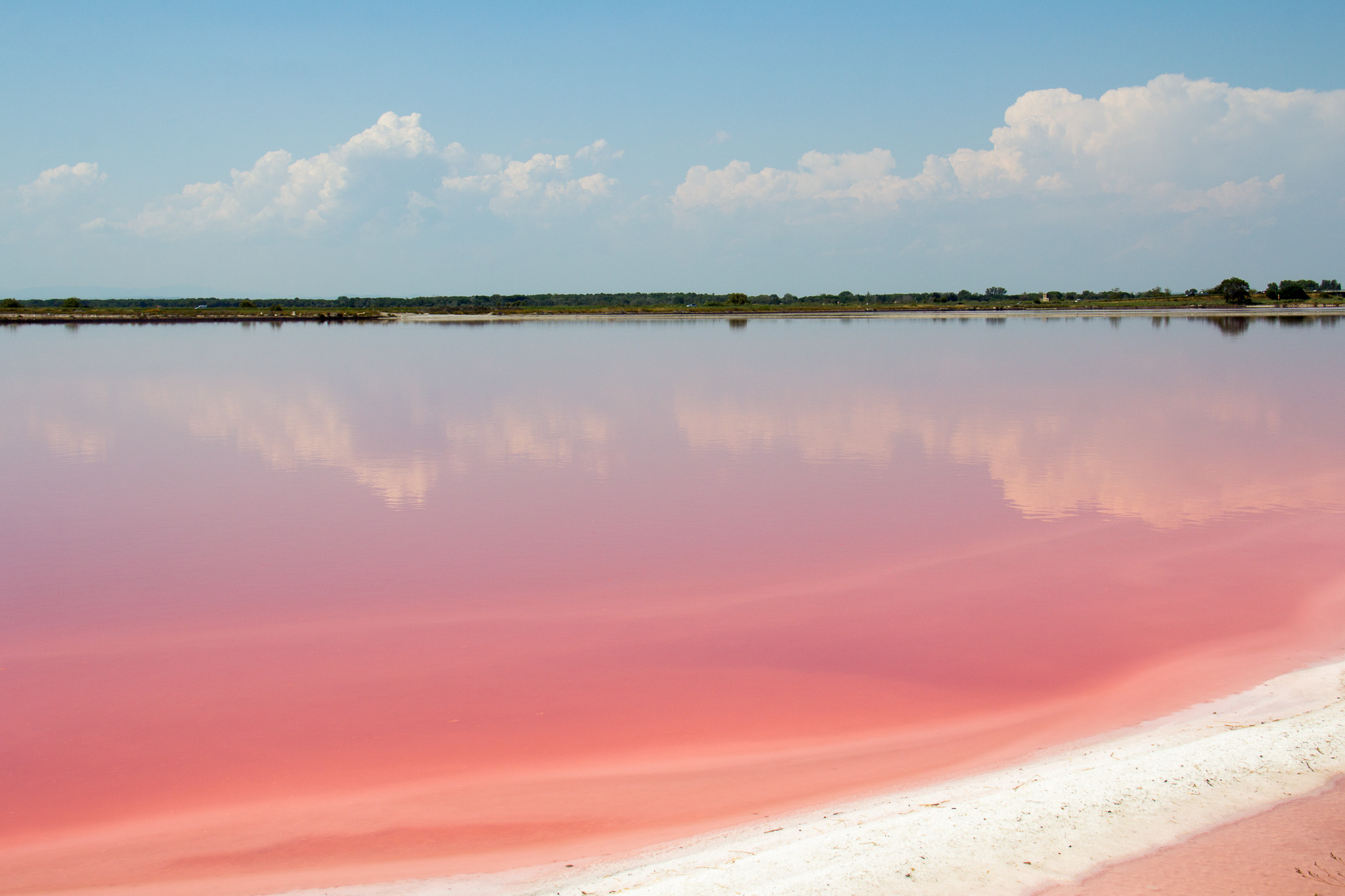
In the height of summer, the salt lagoons of Aigues-Mortes in the Gard, and Gruissan in the Aude department of Southern France turn a beautiful shade of pastel pink. The kind of scene you’d expect in the Bolivian altiplano, and not on a drive along the French Mediterranean.
The colourful hue comes from the tiny algae that thrive in the salty conditions, and becomes pinker as the water warms in summer. Flamingos frequent the marshes to feast on these algae, Dunaliella salina, and brine shrimp in the shallow water, turning their plumage pink in the process.
Both Aigues-Mortes and Gruissan are working salt pans, while also being popular tourist attractions. You can explore Aigues-Mortes on foot, by bike, or by tourist train, whereas the Gruissan salt marshes invite you to walk or hop on an electric scooter to discover the site.
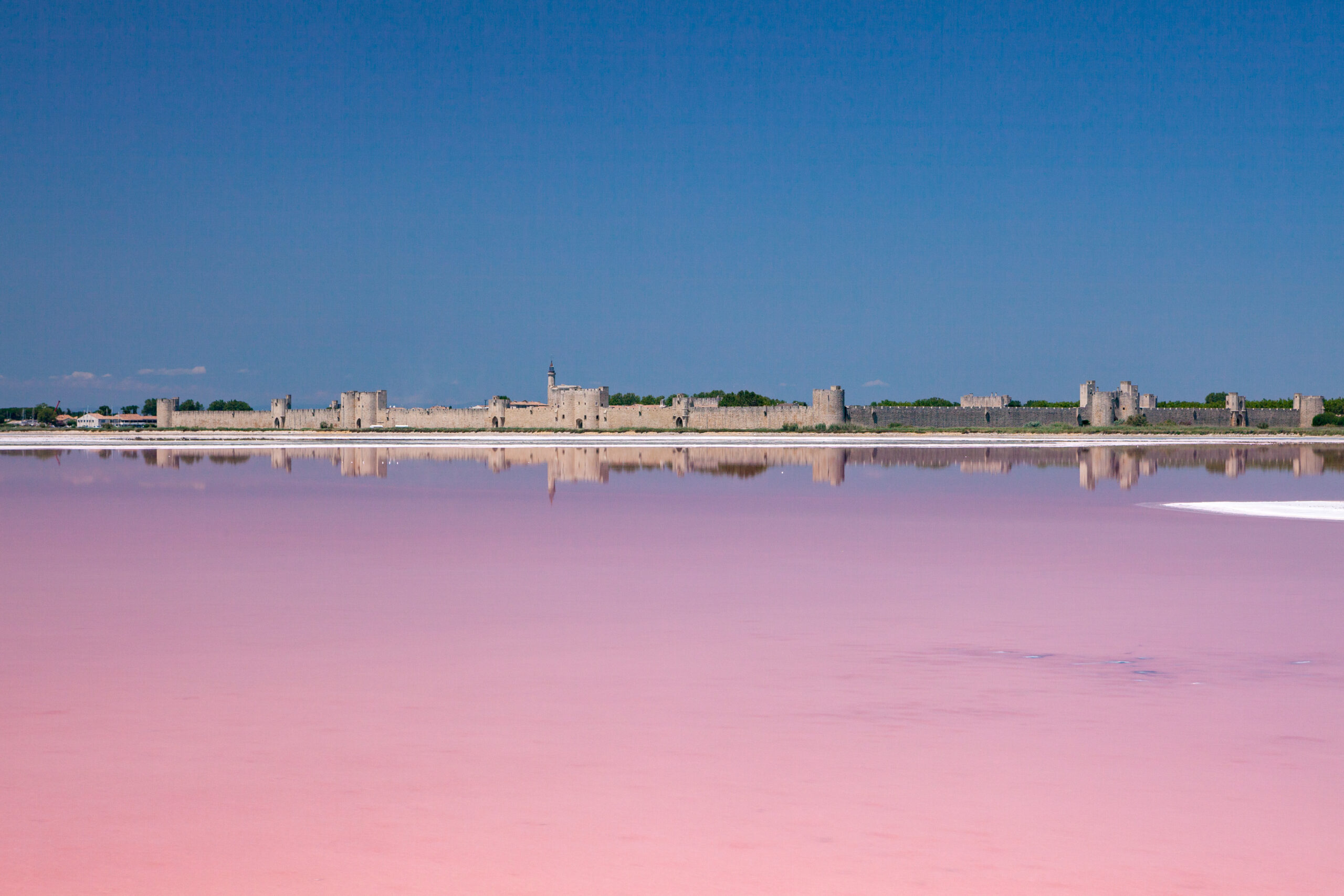
The Aigues-Mortes salt flats sit right beside the medieval walled town, which is a delightful addition to your visit. For a reasonable fee, you can walk the ramparts around the old town, to get an elevated view of the cité and the salt marsh next door. Book this experience here.
Meanwhile, a visit to the Gruissan salt marshes can be combined with a walk around the circular old town that’s adorned with the 13th-century Tour Barberousse sitting on a rocky hill in the middle. Gruissan-Plage, with its stilted beach houses, also makes a fun side trip if you’re in the area.
Les Pénitents des Mées – the Fairy Chimneys of Cappadocia
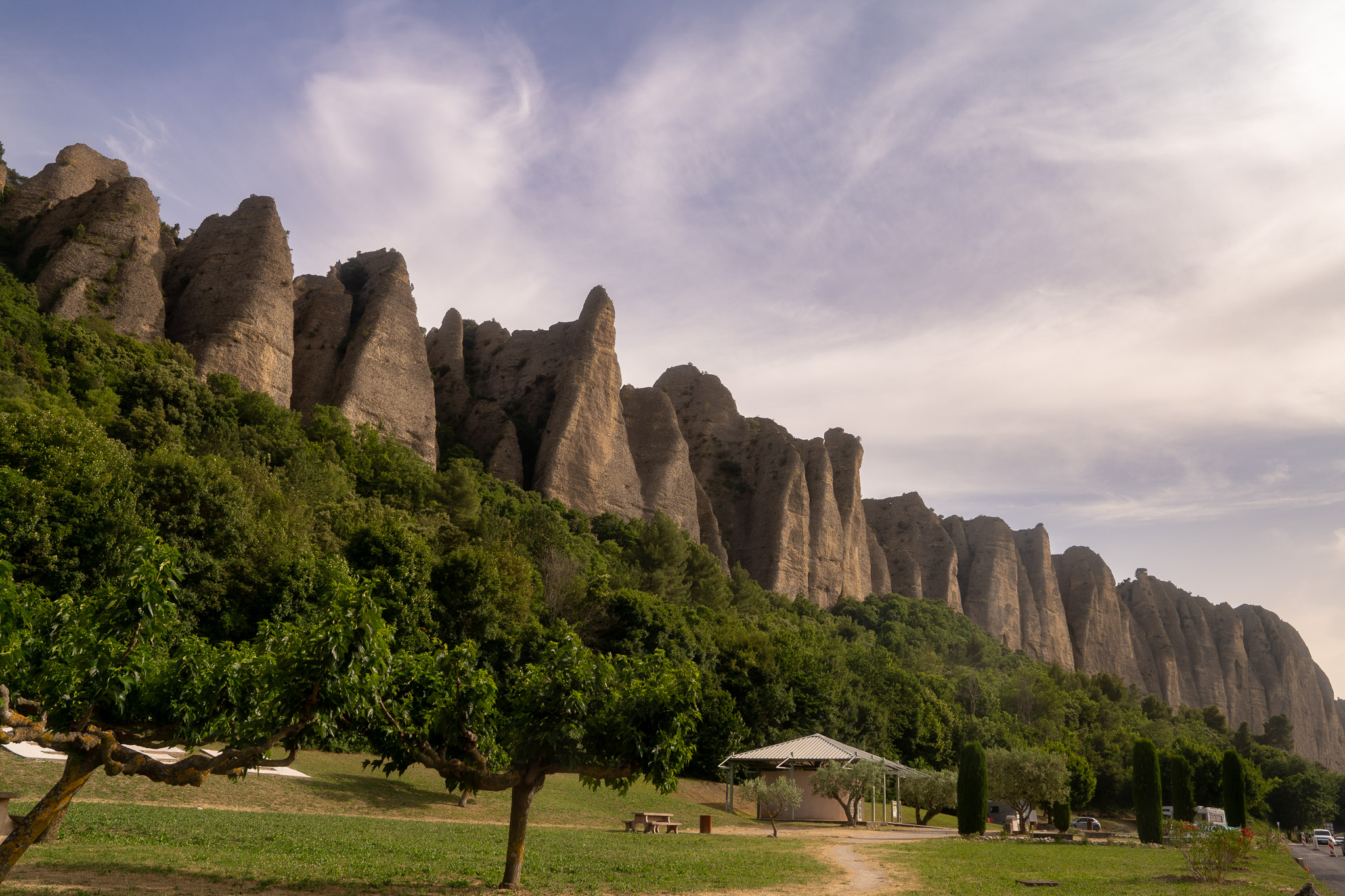
Above the tiny village of Les Mées in the Alpes-de-Haute-Provence, stands one of the most surprising sights in the region.. A long procession of towering rock columns rises up above the village and marches down the ridge for more than 2km. The tall spires resemble the fairy chimneys of Turkey’s Cappadocia and were, in fact, formed through the same natural processes.
The geological explanation is fairly simple in that they’re carved from poudingue, a sedimentary rock made of pebbles naturally cemented together, and have been slowly sculpted into spires over millions of years of erosion. But the legendary explanation is far more interesting. It is said that monks from the nearby Lure Mountain were turned to stone by Saint Donat as punishment for lusting over a group of beautiful Moorish women who were being held captive in the village.
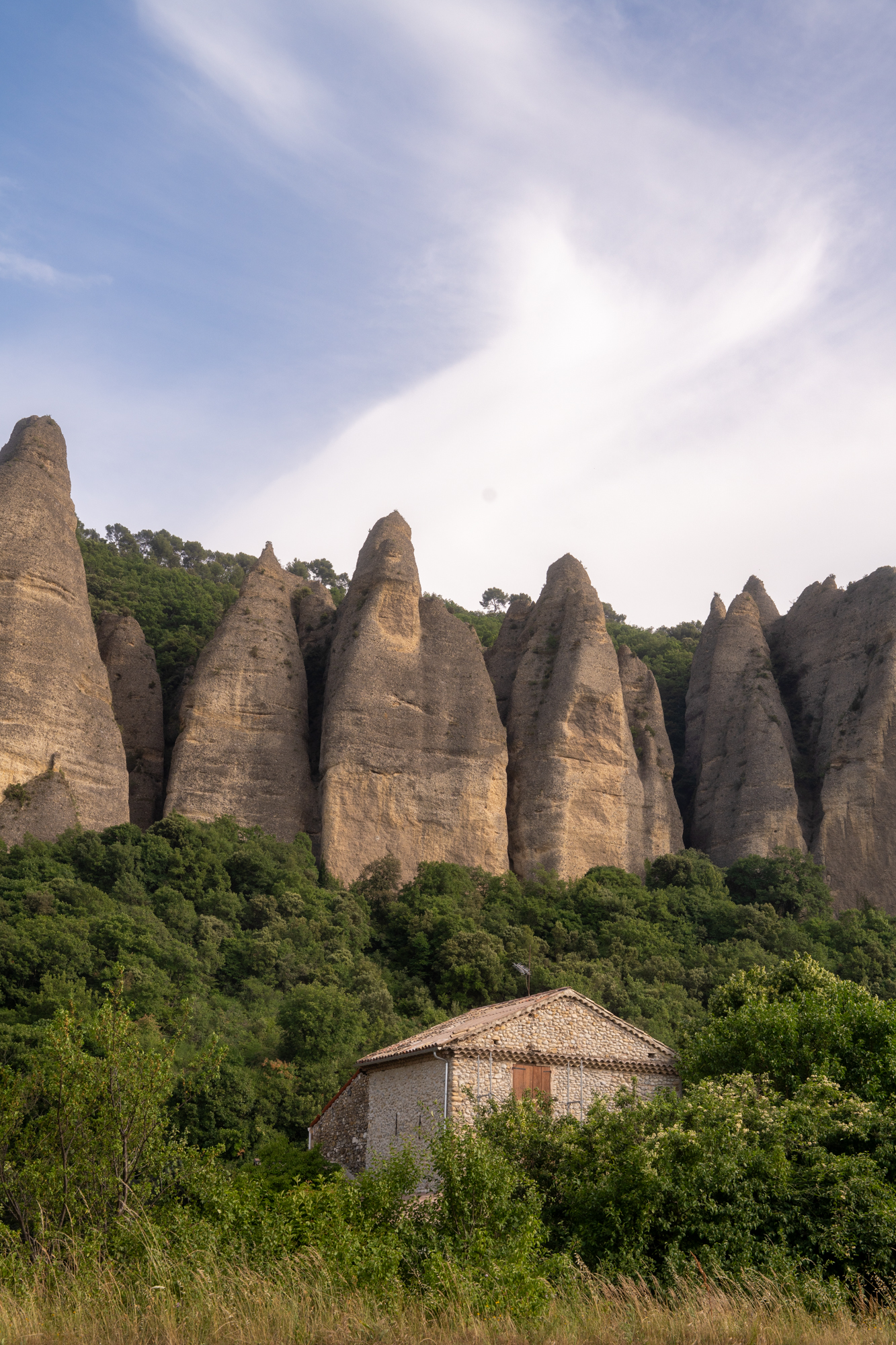
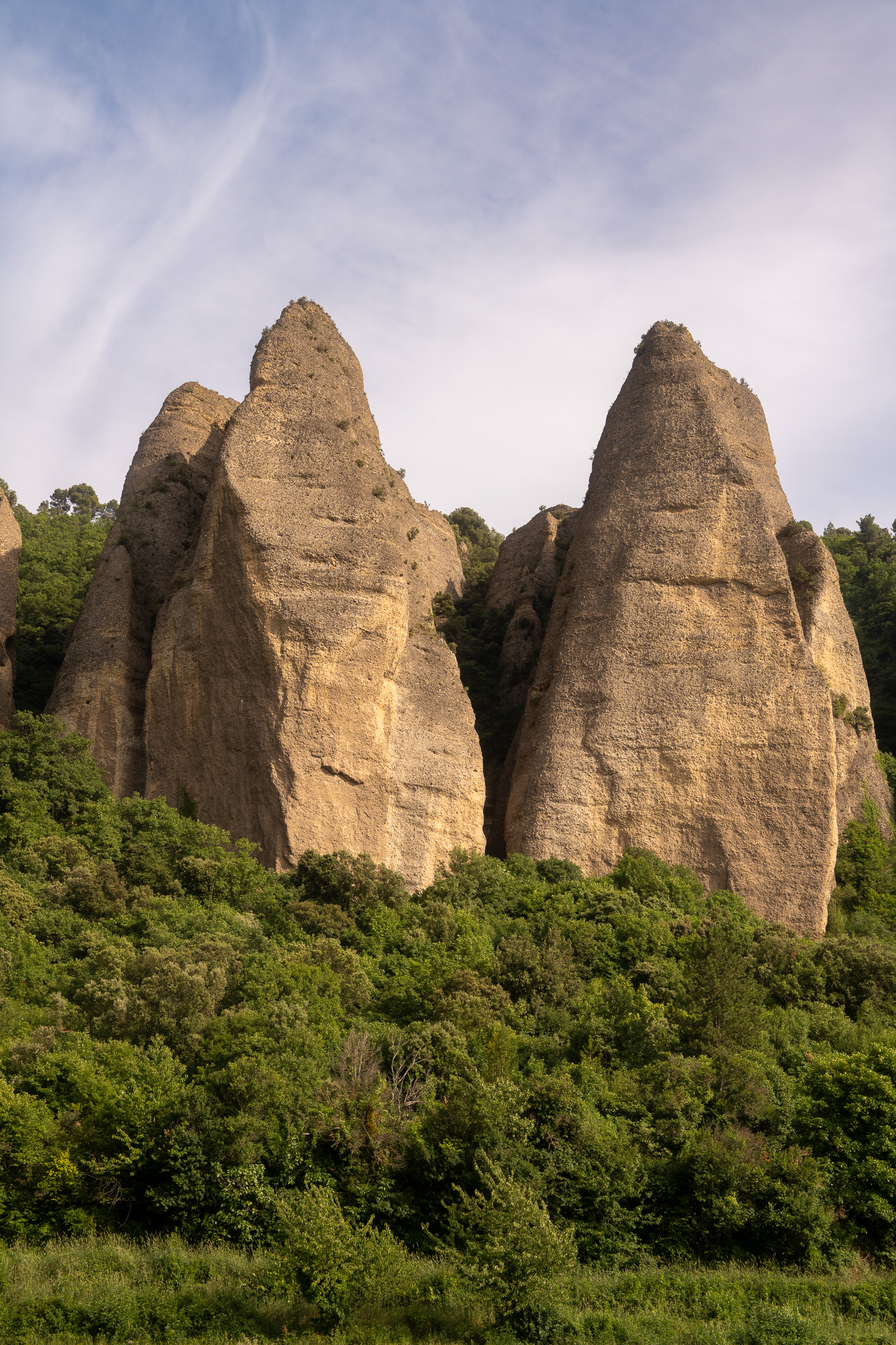
You can view the pénitents from the plains in front of the village, or embark on the Sentier des Pénitents for a closer look. A footpath climbs from the heart of the old village toward the Saint-Roch Chapel. It then follows the ridge to offer a close-up view of the rocky spires, as well as a view over the valley and the Lure Mountain in the distance.
Gorges du Verdon – is this France or Thailand?
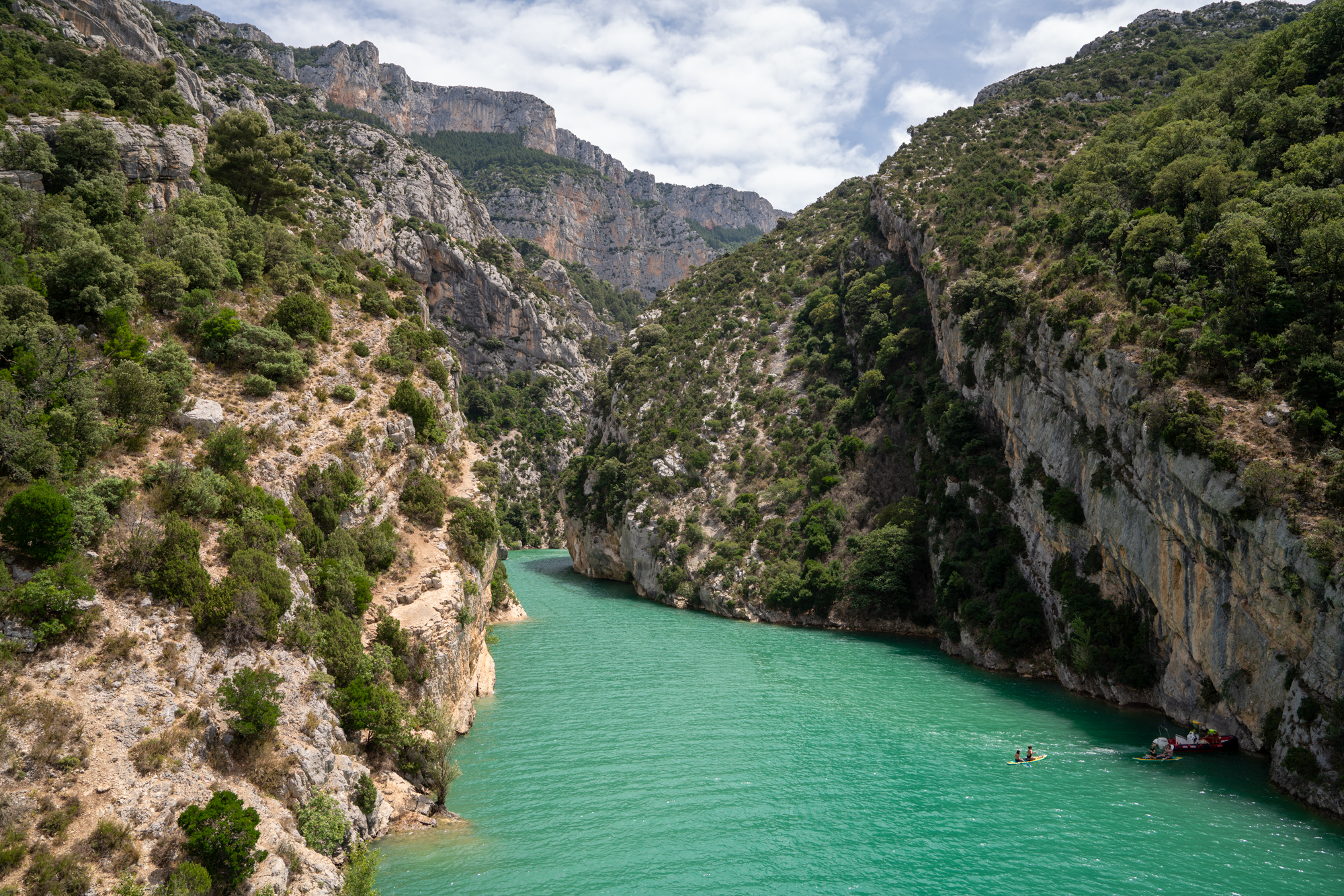
Nobody quite believes the colour of the Verdon River is real until they see it in person. The kind of tropical turquoise you’d expect in Thailand perhaps, and not inland Provence. It’s spent millions of years carving Europe’s deepest canyon down through the limestone hills of the Verdon Regional Natural Park.
Stretching around 25km between the village of Castellane and the Lac de Sainte-Croix, it reaches depths of up to 700m. The cloudy turquoise colour is a natural result of the fine mineral sediment and micro-algae floating in pure mountain water. If you’ve ever seen the limestone cliffs and aquamarine water of Pileh Lagoon on Koh Phi Phi, you’ll recognize this exact shade.
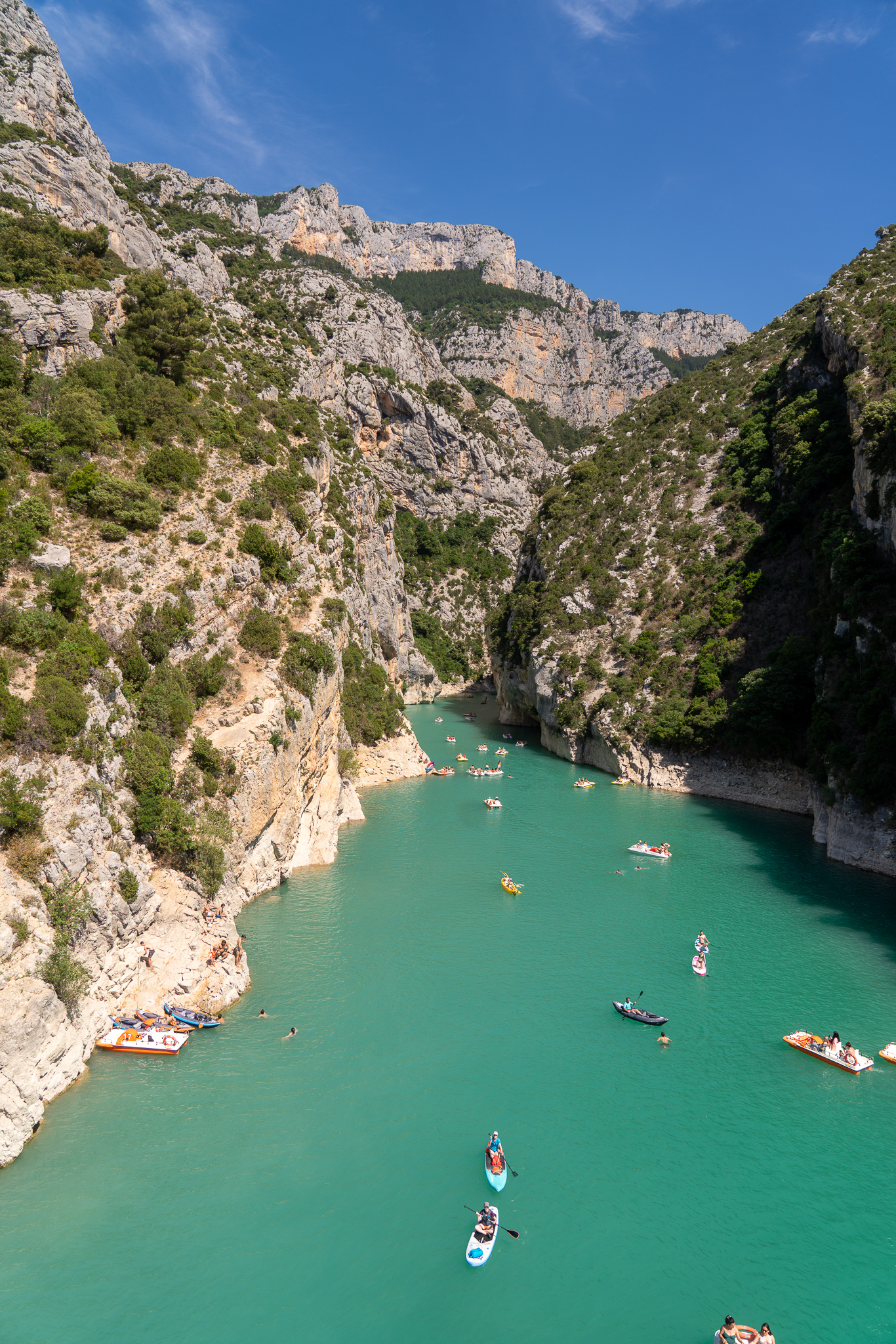
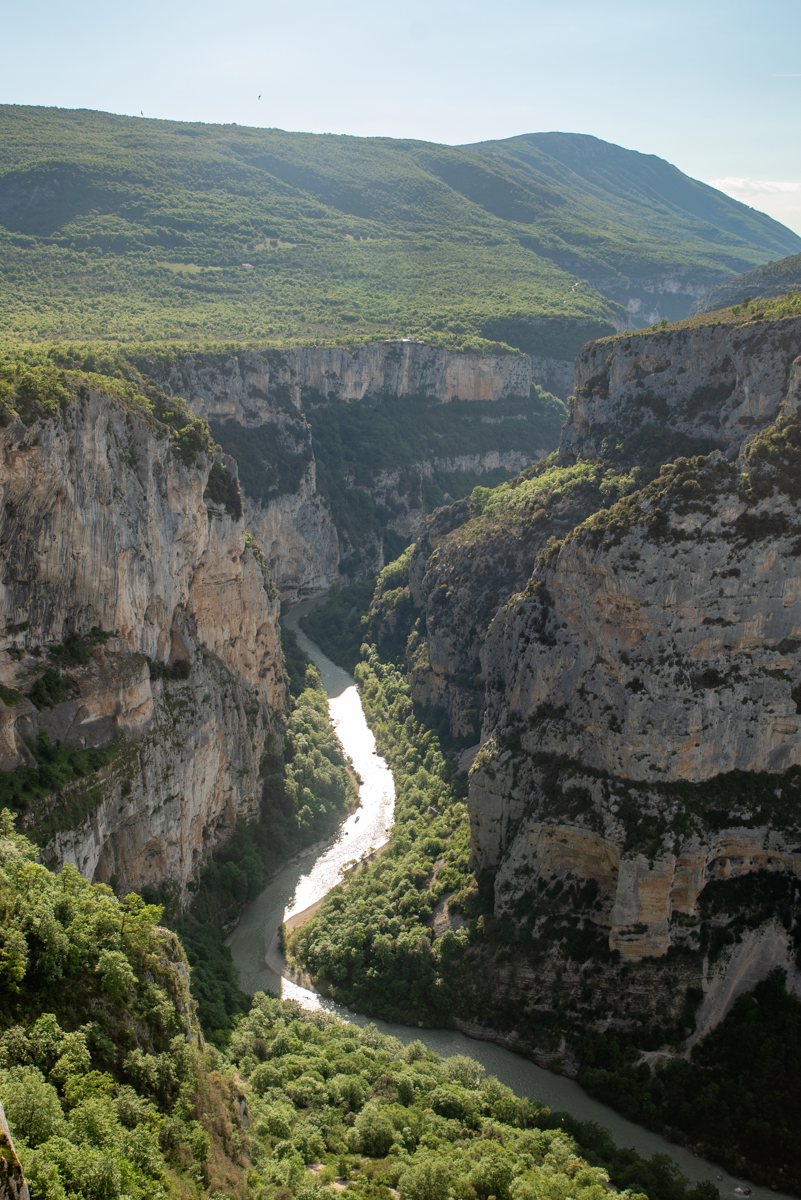
To appreciate it fully, drive the length of the upper rim – either via the D952 or the D71 to take in the dramatic views from the top, then drop down to the Pont du Galetas to see where it starts to widen before meeting the Lac de Sainte-Croix.
It’s near here that you can hire pedal boats and electric boats to explore both the gorge and the lake. The accessible part of the gorge isn’t super long, but it’s enough to impress upon you the sense of scale, and it’s a lot of fun! That said, if you’re not a fan of crowds, skip July & August when the gorge is a medley of watercraft, cliff jumpers, and spectators.
You can read my full Verdon Gorge guide here.
Mont Ventoux – the Surface of the Moon
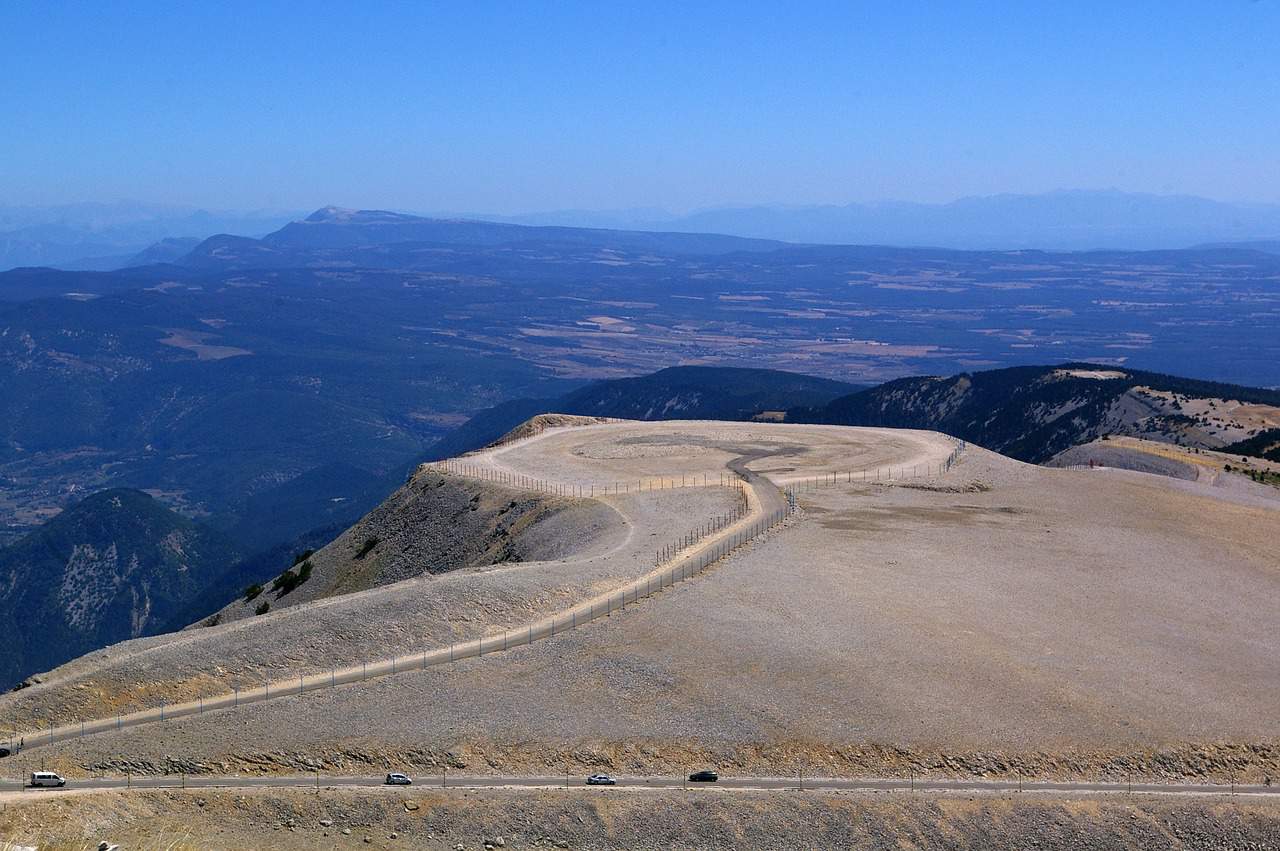
You climb the Giant of Provence through native forest, past cyclists grinding their way up one of the most famous ascents in the Tour de France, when quite abruptly the landscape turns from green to white. The final stretch to the summit of Mont Ventoux is a barren expanse of limestone scree.
It’s so stark and lunar-like that people have compared it to the surface of the moon for as long as anyone’s been climbing it. Rising to 1910 meters, it’s the highest peak in the region, and on a clear day rewards visitors with all-encompassing views, from the coast to the Alps.
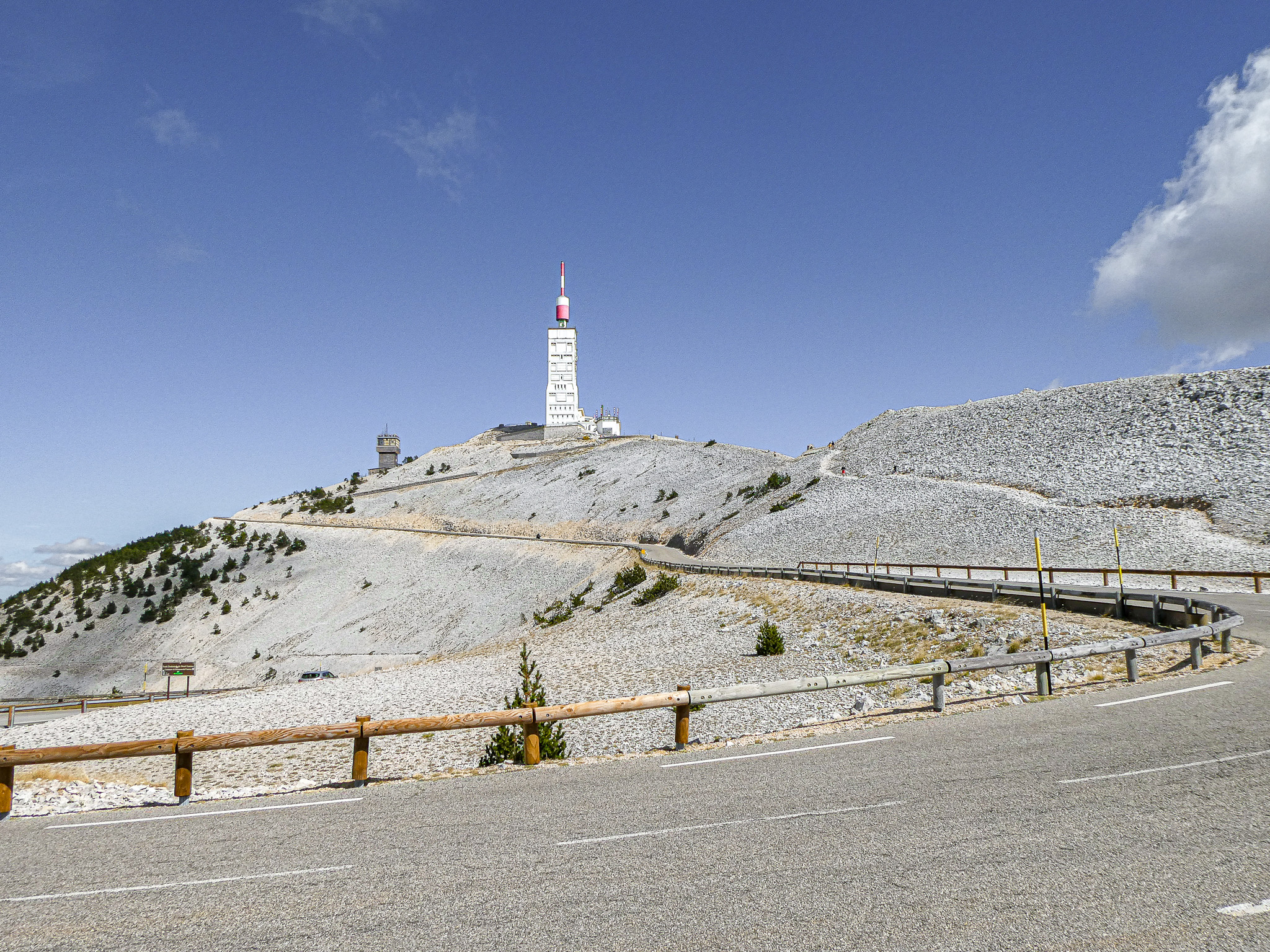
It’s a hive of activity year-round, with hikers, cyclists, and Sunday drivers summiting the mountain in the summer months, and skiers taking over in the winter. The upper roads close during the colder months (typically mid-November to mid-April), when you can only access Chalet Reynard on the Bédoin side and Mont Serein on the Malaucène side. Mont Serein is the more casual, family-friendly ski area, with sledding areas, a magic carpet lift, and a kids’ ski garden. We’ve also taken our dog here for some snow zoomies!
Whichever season you visit, take an extra layer with you for the cooler temps, and be aware that the road can close due to severe wind in any season.
The Camargue – France’s Wild West
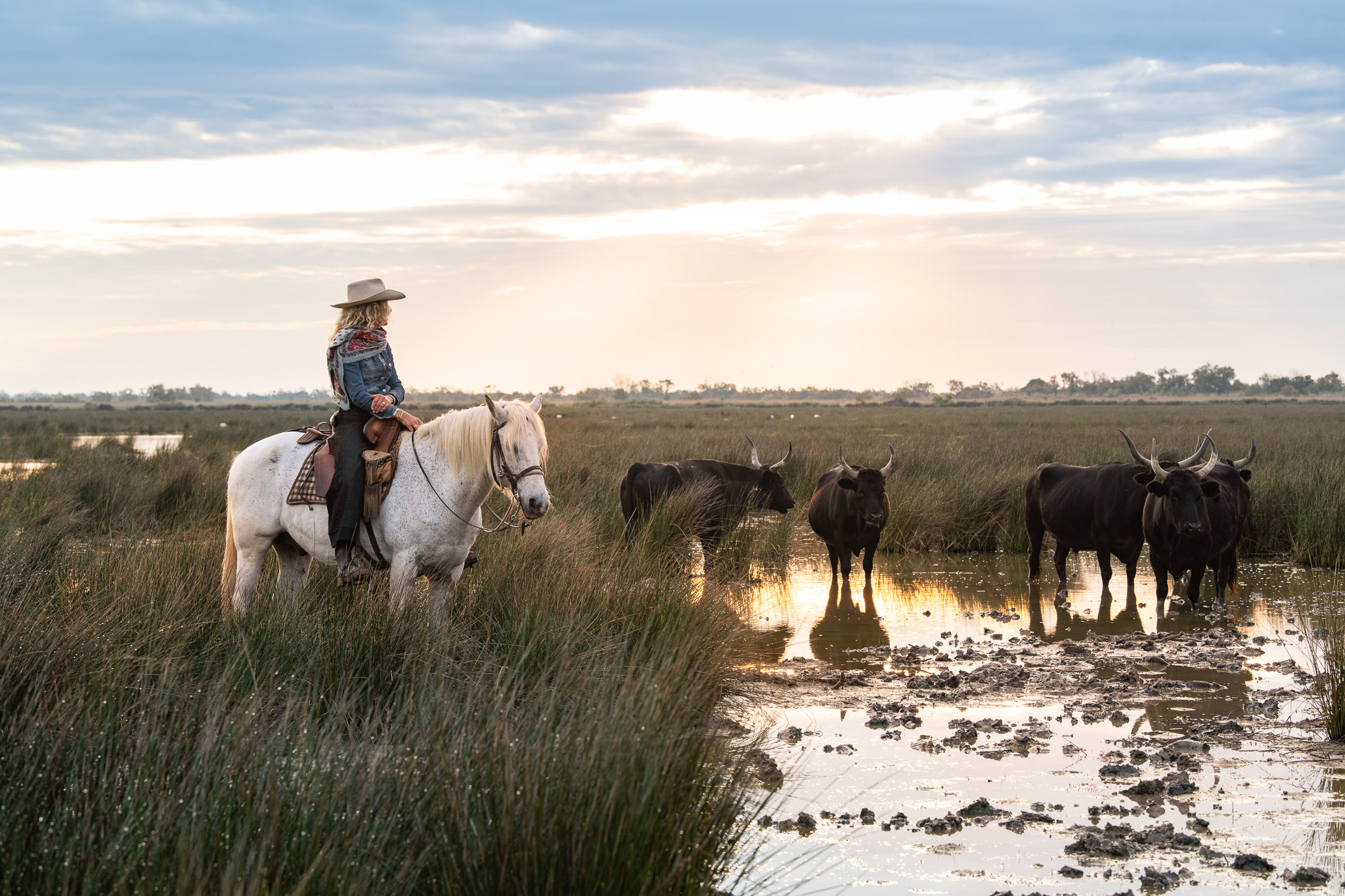
Where the Rhône River splits in two before meeting the Mediterranean, Provence gives way to the Camargue – a vast, flat area of lagoons, salt marshes and reed beds that feels remarkably different from the rest of the region. It’s one of Western Europe’s largest river deltas, and some of it is protected as a regional nature park.
It’s also, rather improbably, France’s own Wild West. The Camargue is home to its own breed of semi-wild horses – the cheval de Camargue starts out dark brown or black, before becoming the distinctive white adult horses you’ll see in the region today. It’s also home to Camargue cattle – another semi-wild breed that is unique to this region. Both the horses and cattle are worked by France’s cowboys, the gardians, who herd them across the marshes much as they have done for centuries.
If you want to experience this wild side of the Camargue, several safari-type tours are available from neighbouring towns, such as this half-day Safari and Herd Tour.
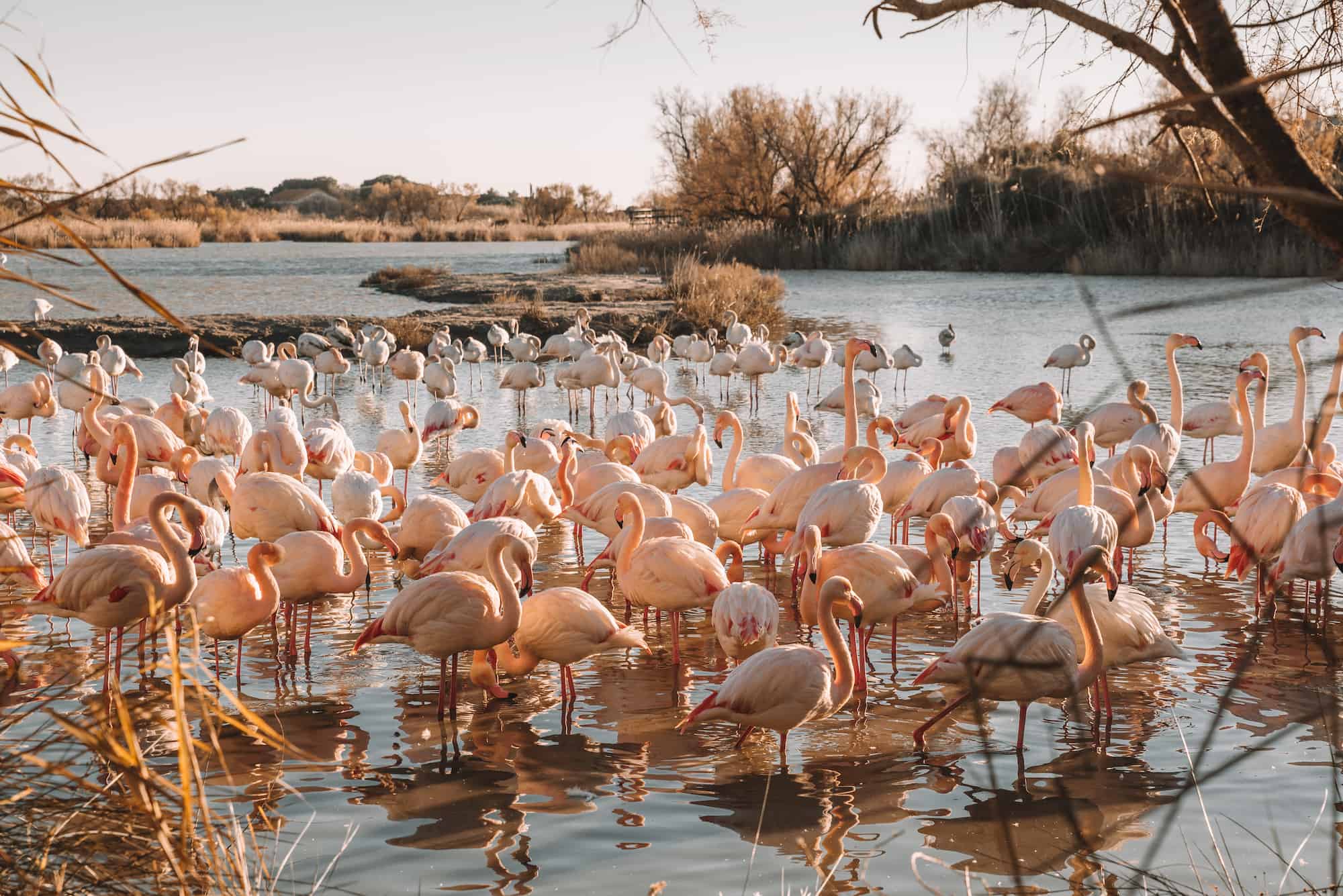
For many though, one of the real highlights of this region is the thousands of greater flamingos that wade through the shallow waters of the marshland. This is the only place in France where they breed, and the Parc Ornithologique du Pont de Gau, just outside Sainte-Maries-de-la-Mer, is the best place to see them up close. The purpose-made park features boardwalks, birdwatching huts, and information boards so you can observe and learn about these wild birds in their natural habitat. You’ll also find herons, egrets, and plenty of migratory birds that pause here on their travels.
The Cirque de Navacelles – a Prehistoric Lost World
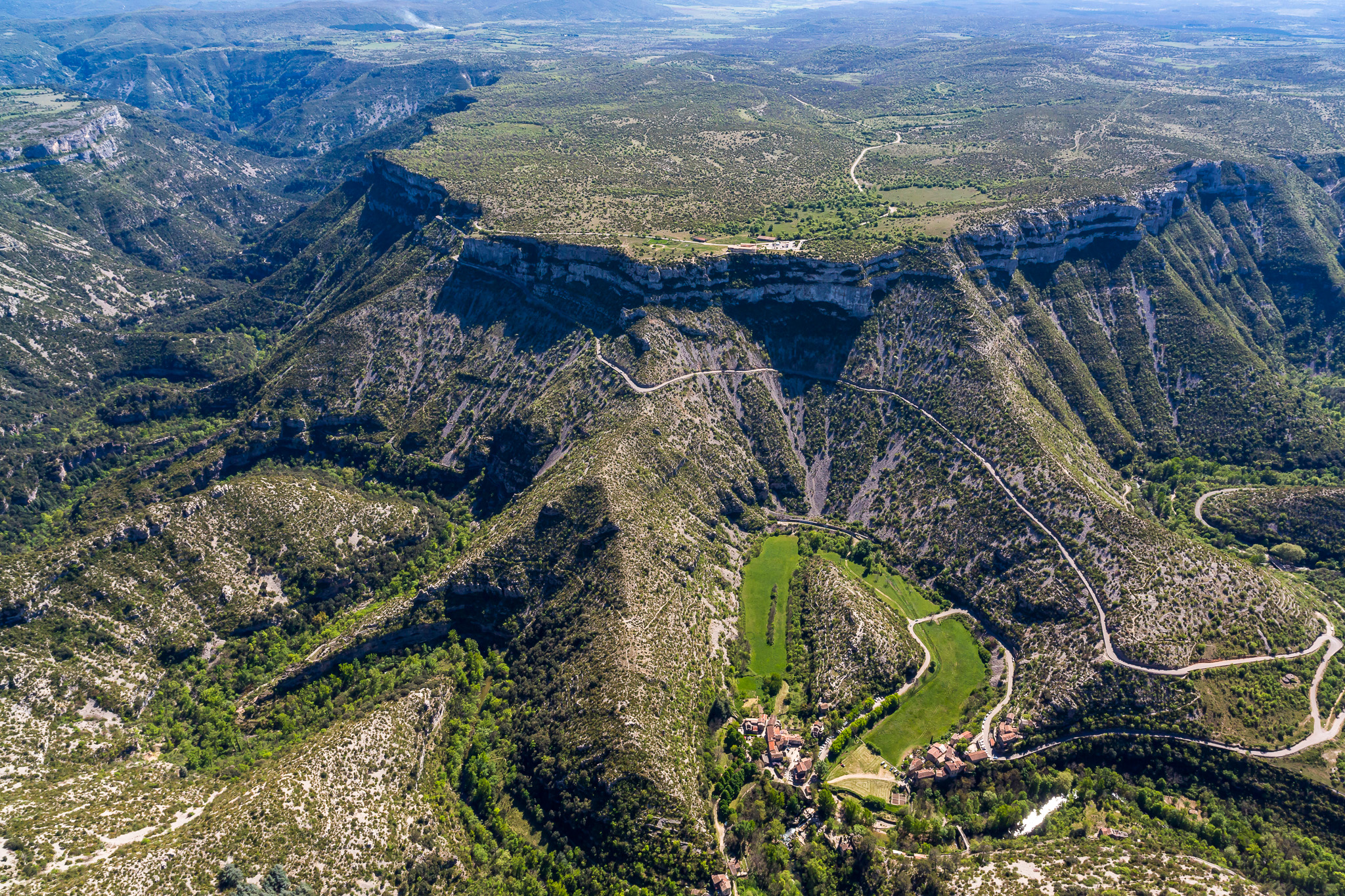
On the arid causses of southern France, the land falls away in a scene that seems to belong to another age entirely. The Cirque de Navacelles is an enormous horseshoe canyon, etched into the landscape by a meandering Vis River, which later forged a shortcut through rock and abandoned its looping course. At 300m deep, it’s also one of Europe’s widest canyons, spanning up to 2km between the rims.
At the centre of the verdant horseshoe bend sits a small oval-shaped hill nicknamed “the oyster” by the locals, and to its side, the tiny hamlet of Navacelles – now home to only 10-20 regular residents. From the belvederes at Blandas and Baume-Auriol, on either side of the canyon, the entire prehistoric-looking valley opens up beneath you. Come prepared to stay awhile, in order to take in the magnitude of the scene.
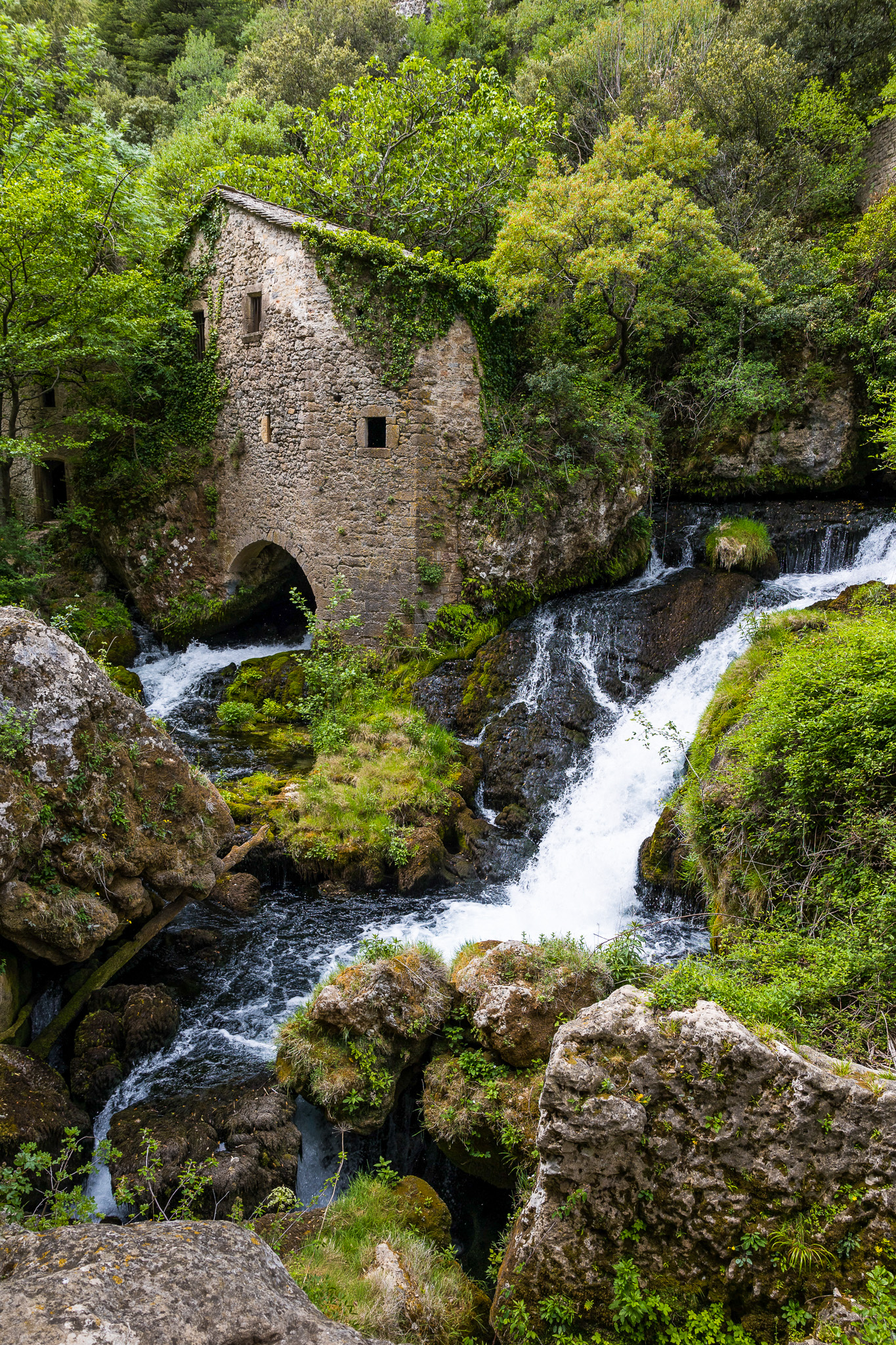
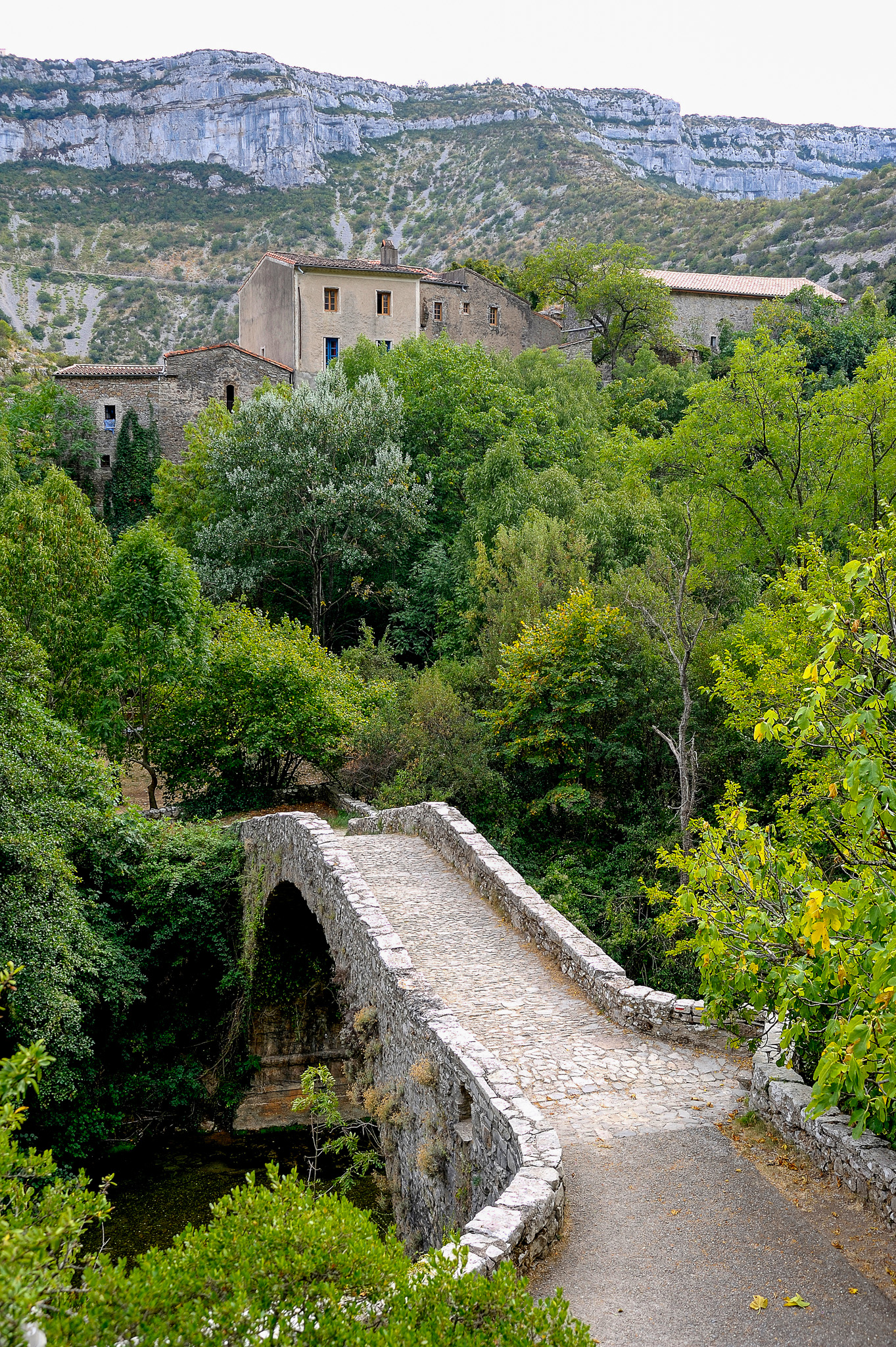
The site sits within the Causses and Cévennes UNESCO World Heritage Site, between Millau and Montpellier. Drive to the viewpoints for the sense of scale, but plan enough time to wind your way down to the hamlet at the bottom to visit the cascades de la Vis and the Roman bridge. While you’re in the canyon, a hike to the nearby Moulins de la Foux is absolutely worth a detour.
The Calanques – a Mediterranean Fjord
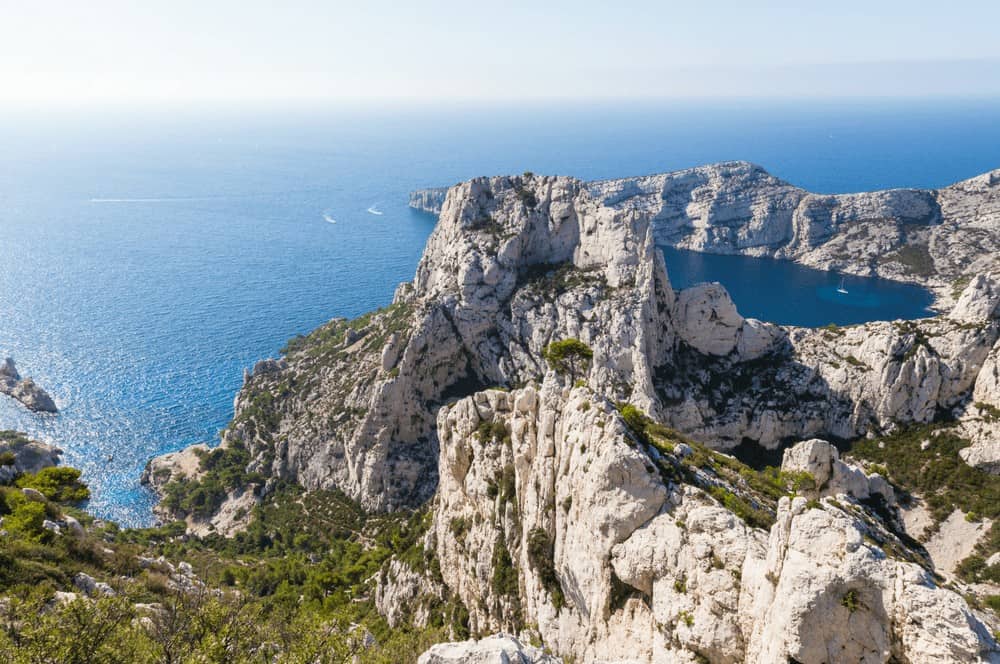
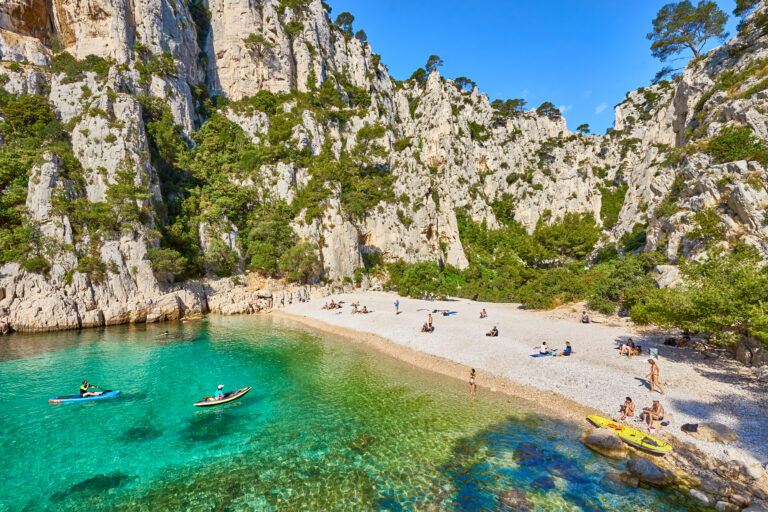
At the southern edge of Marseille, the city gives way to the wooded, mountainous wilds of the Calanques National Park. At its edge, the serrated coastline meets the sea in a series of steep-sided inlets where the limestone cliffs plunge into crystalline water. Narrow and deep, these dramatic coves might remind you more of a Scandinavian fjord than what you’d imagine finding along the Med.
The 20km stretch of coastline between Marseille and Cassis has been protected under the National Park designation since 2012. Some of the calanques, such as Sormiou and Morgiou, have a small scattering of cabanons (fishermen’s huts), and there are small, seasonal restaurants at several, including Marseilleveyre, Sormiou, Morgiou, and Callelongue. However, many like Calanque d’En Vau, Port Pin, and Sugiton remain gloriously untouched and wild.
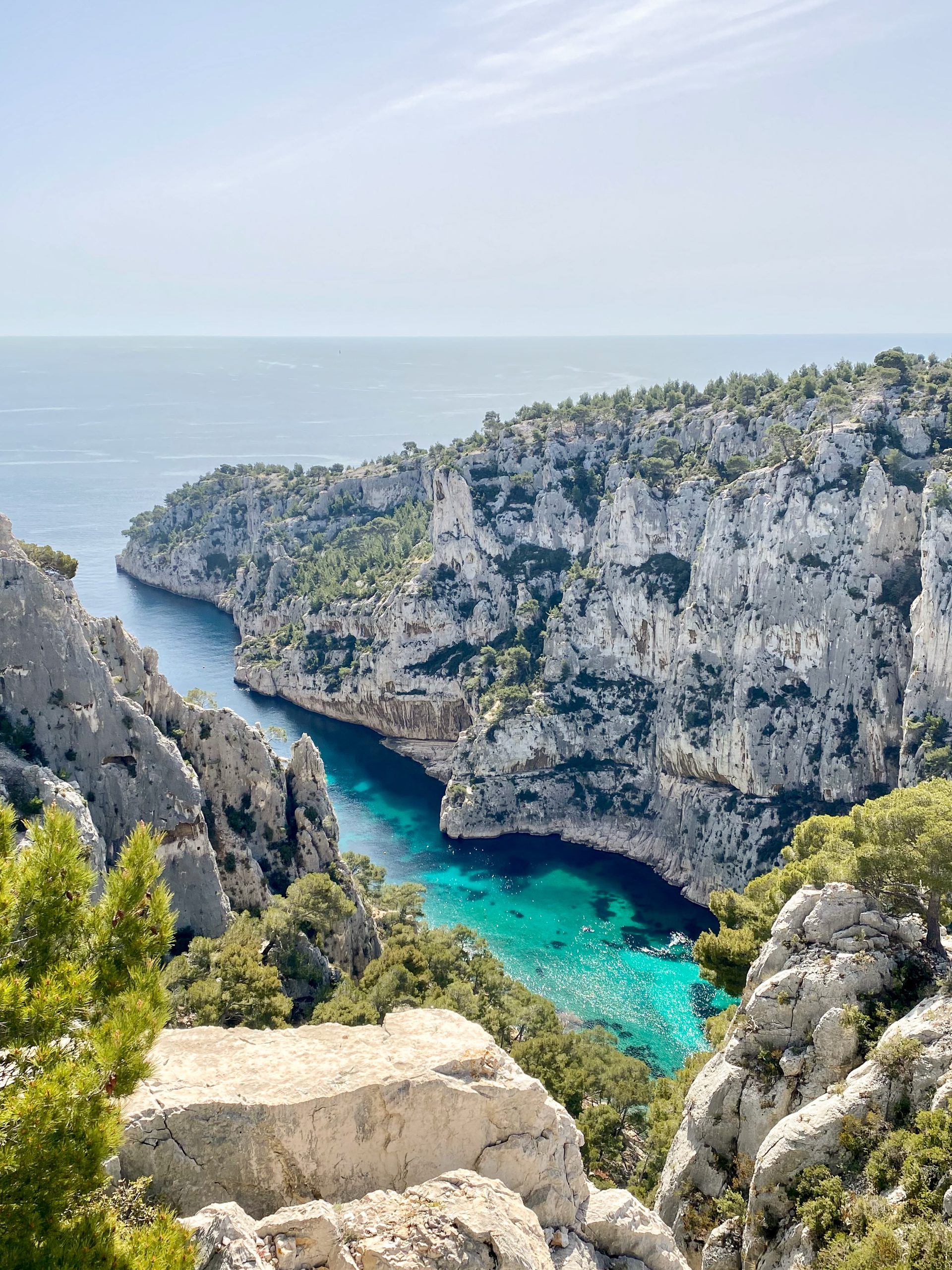
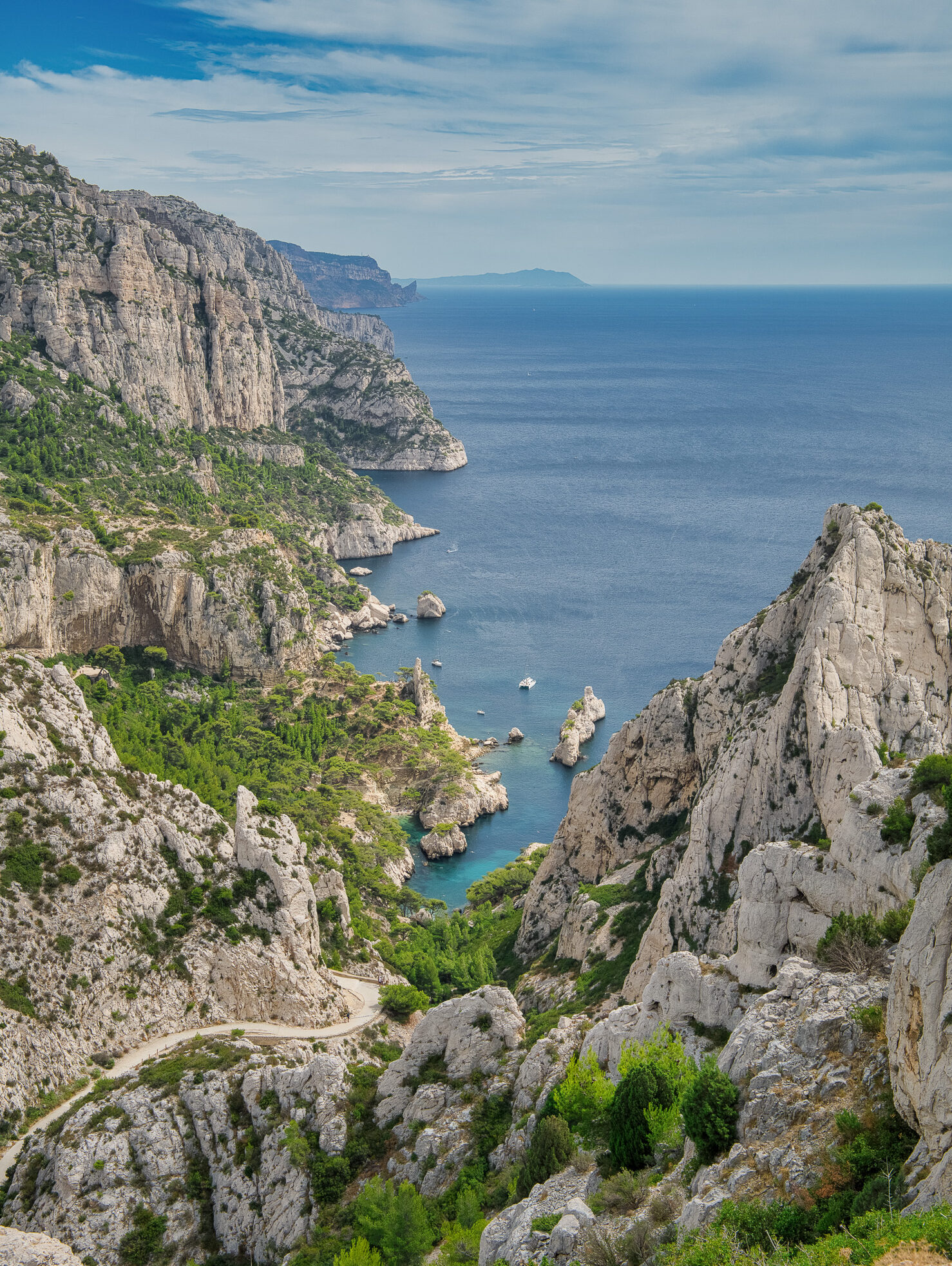
Reaching these more secluded calanques requires a good hike on rocky, exposed trails, so you’ll want to take sturdy footwear and plenty of water, especially in the warmer months. In the height of summer, the park often closes due to increased fire risk, so it’s worth checking the access before you set out. You can find tips for visiting, best hikes, and access regulations here.
Saorge – a Tibetan Village Behind the Riviera
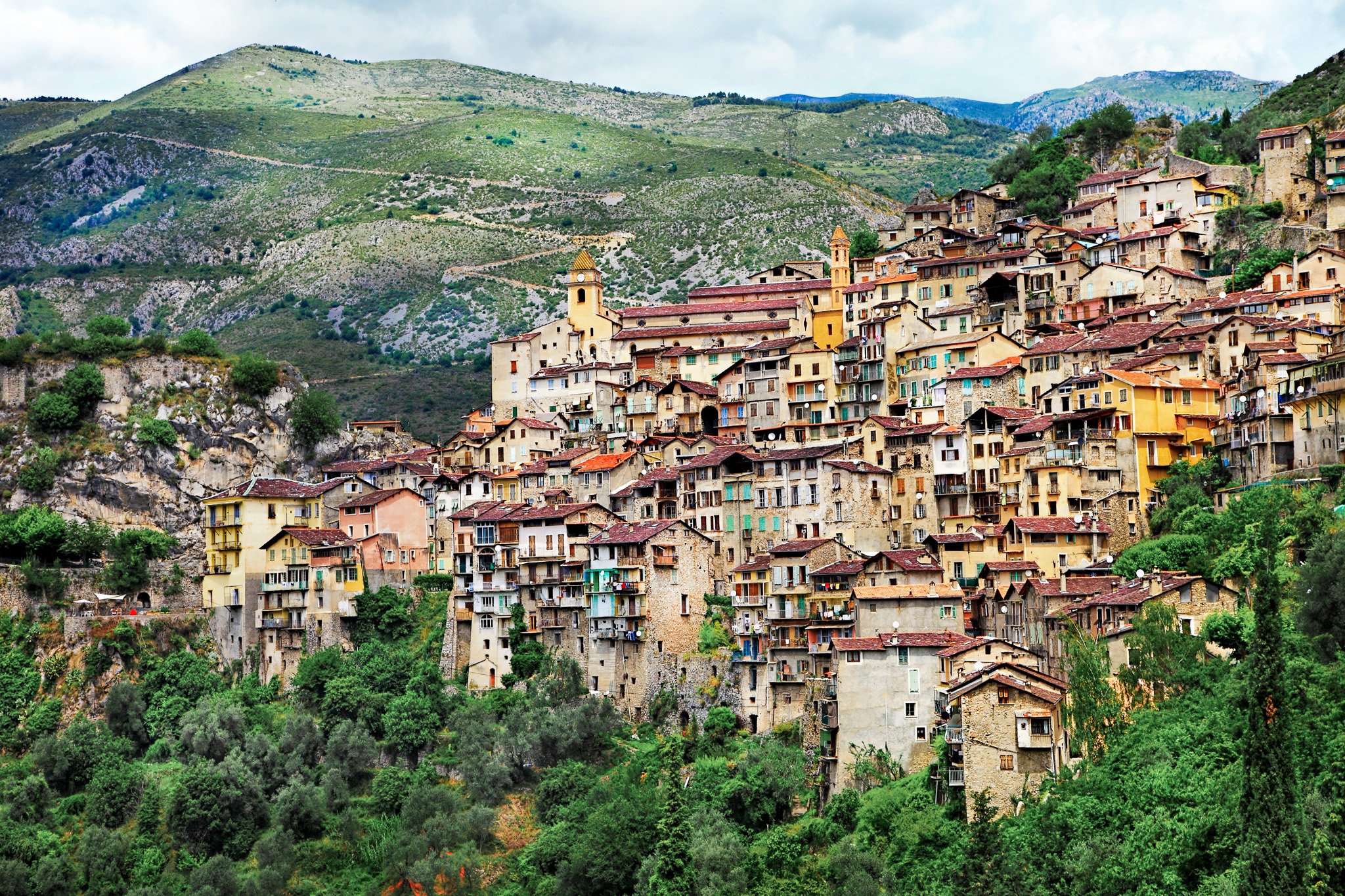
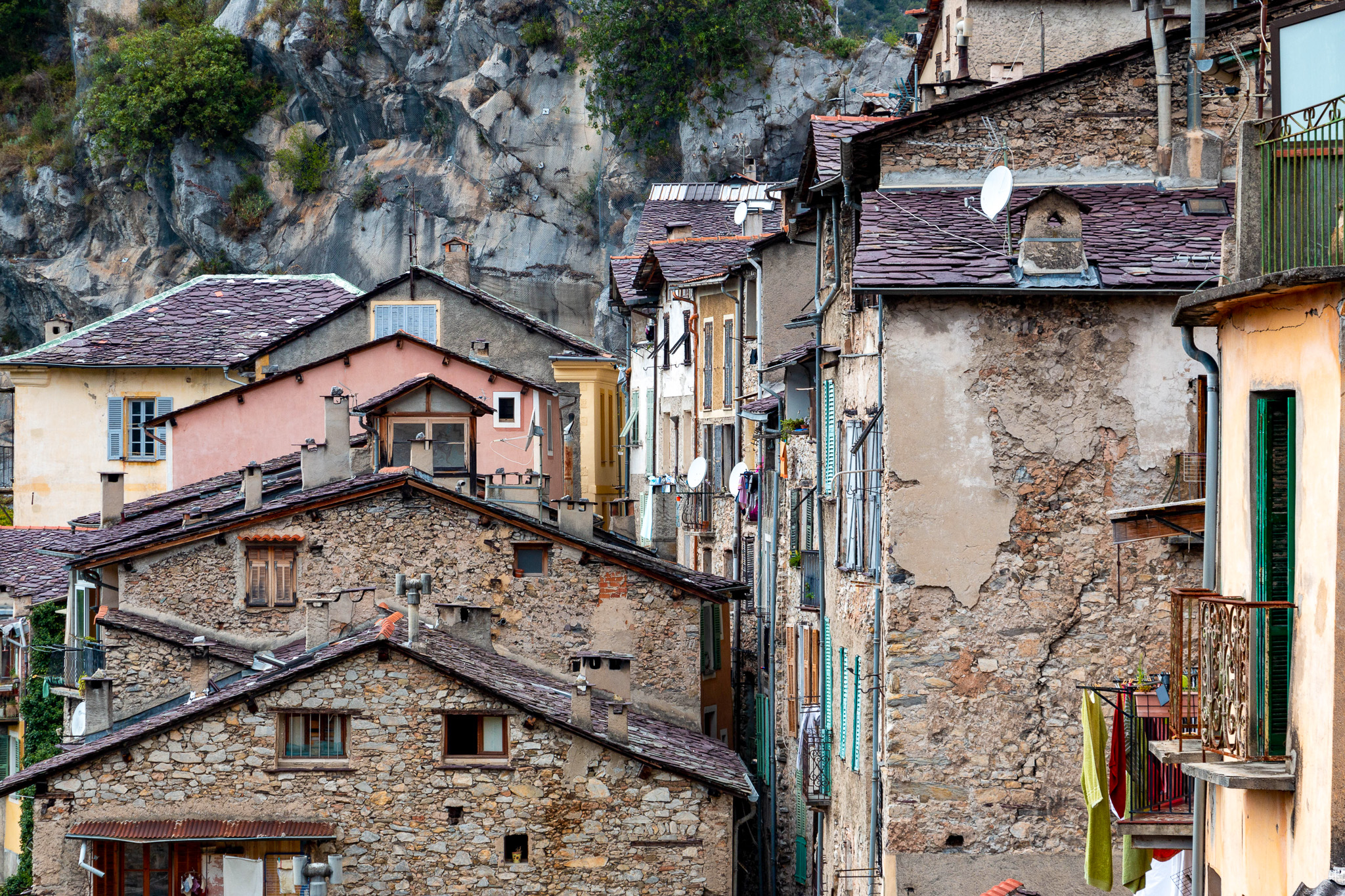
Only around an hour inland from the busy beaches of the Riviera, in the wild Roya valley near the Italian border, sits a village that looks like it could have been airlifted in from the Himalayas. Saorge is a stack of tall, slate-roofed stone houses tiered up an almost vertical mountainside, in a muddle of tight lanes and vaulted passageways.
Named one of Les Plus Beaux Villages de France (most beautiful villages of France), it’s pedestrian-only, so bring your walking shoes and sense of adventure. Two highlights not to be missed are the baroque Saint-Sauveur, whose bell is still rung manually by the village’s master bell-ringer, and the 17th-century Franciscan monastery.
Take time to enjoy the Roya Valley while you’re in the area, either by train or on foot. The Train des Merveilles runs from Nice and winds through the gorges, stopping at hilltop villages, a transport eco-museum, and the Musée des Merveilles along the way. On foot, take the trail from Saorge that leads down to the Bain du Sémite, a natural rock pool where you can cool off on a hot day. Or tackle one of the longer and more challenging trails through the hills for unforgettable vistas.
Related Reading: Best Day Trips from Nice
Sète – The Venice of Languedoc
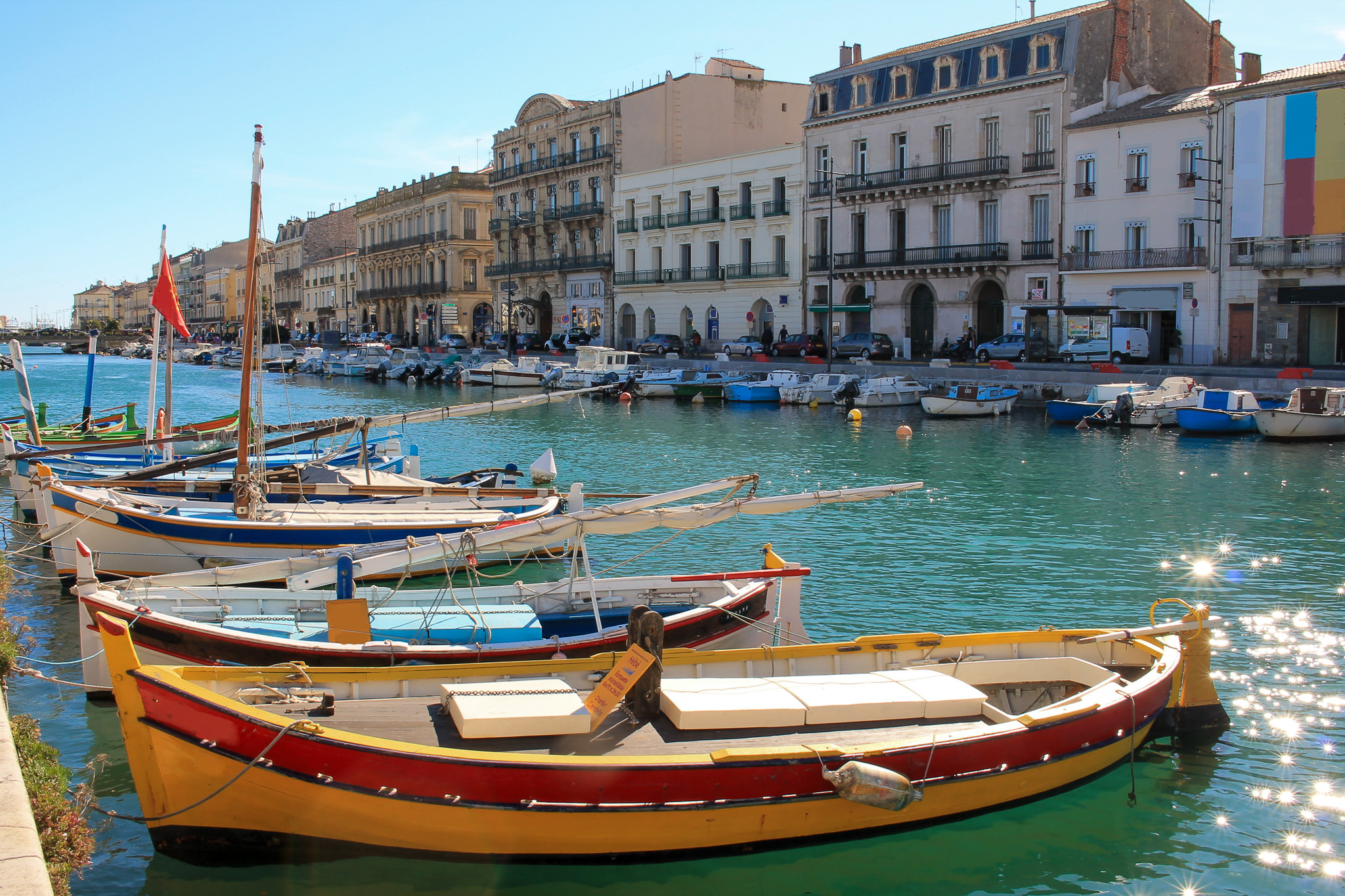
Follow the coast west of Montpellier, and you’ll reach a town surrounded by water. Sète is a working fishing port threaded with canals, where boats are moored up against the city streets, and colourful façades line the waterways. The nickname compares it to Venice, which is a fair call, but some of the canals also remind me of Copenhagen’s Nyhavn. It’s a humbler version of either comparison though, a true working town where you trade the palazzi and gondolas for fishing boats and oyster barges.
Climb Mont Saint-Clair (despite the name, it’s more of a hill) for views over the town, canals, and the vast Étang de Thau lagoon behind, where you can see the wooden frames of the oyster farms. Then head around to the lagoon-side village of Bouzigues to sample them straight from the water.
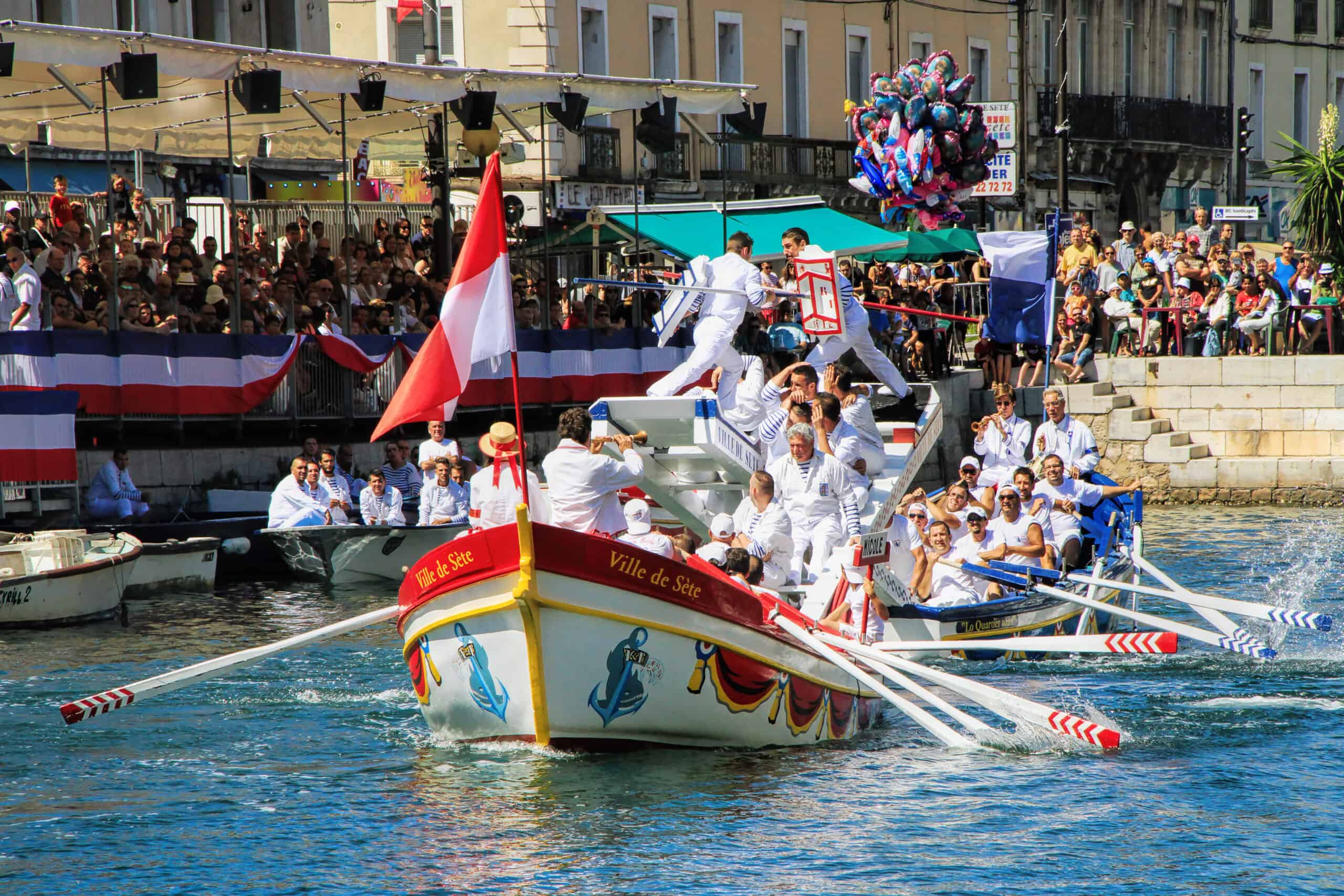
Summer is when Sète really comes to life, with the week-long Fêtes de la Saint-Louis celebrating the town’s maritime history with the famous water jousting events – where opponents stand on the raised prows of decorated boats and charge at each other with lances – alongside parades, fireworks and concerts. It’s Sète at its most joyful, and worth planning a visit around.
From the ochre canyons of the Luberon to the turquoise of the Verdon, the pink lagoons of Aigues-Mortes to the stone giants of Les Mées, the South of France has a real talent for looking like anywhere but itself. It’s one of the things I love most about exploring this part of the country, as it always has another surprise tucked up its sleeve.